Sir Keir Starmer is finished. It may not happen immediately. It may even drag on over the summer. But the prospect of him finishing this new parliamentary session as leader and prime minister is null and void. The question is not if Starmer will go, it is when and how and who will replace him.
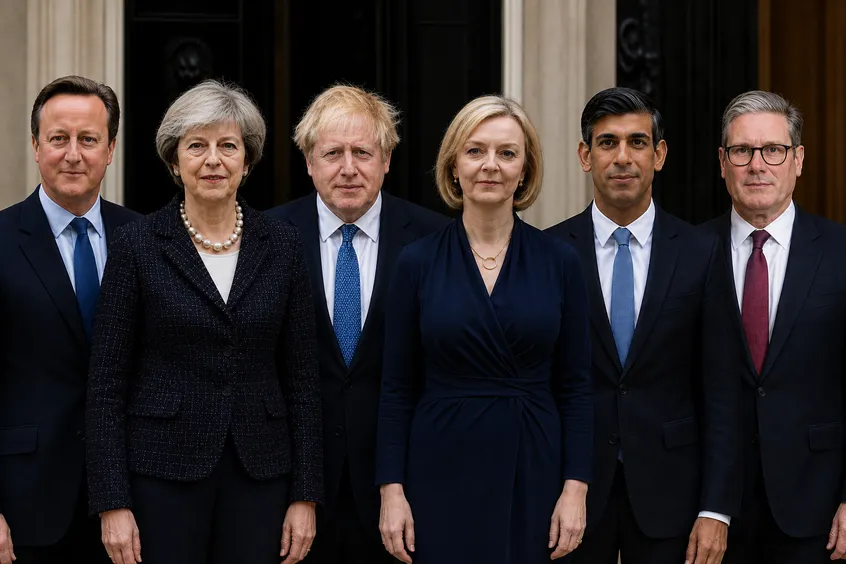
If the leadership transition takes place in 2026, Starmer’s replacement will be the UK’s seventh prime minister in just ten years. By contrast, the previous decade saw four prime ministers, and the ten years before that, just two. Prime ministerial tenures are clearly becoming shorter and shorter!
The instability in Downing Street over the past decade is but one feature of an increasingly fractious and polarised politics. This political chaos comes at a significant price. It means big legislative action is lacking. Key debates about social care, the future of the NHS, defence spending, and immigration are ignored or deemed too toxic to make any meaningful progress. Meanwhile, we live financially as a nation beyond our means, borrowing more money and storing up problems for future generations.
'Strong, stable and servant-hearted leadership'
What we desperately need today is strong, stable and servant-hearted leadership.
By strong, I mean leaders who have a vision for the country and the willingness to explain what that is, repeatedly, to help bring people along. Such a leader is also resolute – not with an unhelpful stubbornness, but rather in a way that stays the course and shows genuine conviction about the direction they choose. In recent times, leaders seem overly governed by opinion polls and focus groups. These have their place, but they must not be viewed as inerrant.
This sort of leadership does not mean you isolate yourself from others. One of the best examples of leadership in the Bible is Nehemiah. He has a clear vision: to rebuild the walls of Jerusalem. He takes time to understand the scale of the problem. He then communicates and brings a team together. He deliberately involves others and takes time to credit them for the work they do. All too often, those at the top of politics seem almost entirely obsessed with themselves and their own legacies.
We also need stable leadership. Long-term, bold legislative changes take time. How on earth can a prime minister be expected to accomplish bold, decisive action in just 18 months? Reforming institutions takes time. But we must also recognise that prime ministers grow on the job. Tony Blair famously said it was only right at the end of his premiership that he felt like he properly understood the levers of power in Downing Street and Whitehall and how to best use them. Stability gives leaders time to grow into the role.
But perhaps the most important thing we need is servant-hearted leadership. This is the most important ingredient because it is what stops strong leaders acting like dictators. We need leaders who care less about themselves. We see this most beautifully in Jesus. He shows us that leadership involves sacrificial courage and a desire to put the interests of others first.
If we look to history, we see examples of good leaders that God, in His mercy and powerful providence, has given us. In fact, each of the men and women who have occupied the role of PM have had some good qualities. But each has ultimately been brought down by their personal flaws.
In Cameron, it was hubris and arrogance in calling a referendum he presumed he could win.
May was brought down by her failure to assert her own will and opinions on the election campaign she called.
Johnson was brought down by lying, Truss by thinking she could change the world in a few short months.
Sunak was a decent man who lost an election. But critics said he failed to take the bold action needed to show people he was truly able to solve issues like small boat arrivals.
And Starmer will go because of a chronic lack of judgement.
No leader is perfect. Scripture is clear. Even the best of men are but men at best. All our politicians are born in original sin, united to Adam in his sin and in need of the salvation only found in Jesus. And even a saved leader would be imperfect and would make mistakes.
The challenge of leadership, therefore, has never been greater. This is why the greatest thing the church can do is put 1 Timothy 2v1-4 into practice. Pray, pray and pray again for the nation! Pray for the prime minister, whoever they are, pray for the cabinet, pray for your MP. Pray for leaders of God’s grace. Pray for His restraining mercy.
Maybe, just maybe, in the fullness of time, a strong, stable and servant-hearted leader will emerge. In fact, I’m certain that one day He will.
en is covering the current political situation with pieces from a range of evangelical commentators from different points on the political spectrum. For more perspectives, see Rhys Laverty's article here and Tim Farron's article here.
To govern is to choose
What is one of the most pressing and urgent political problems we face? The need to sort out defence spending? …