This year’s Masters snooker tournament at Alexandra Palace provided plenty of intrigue, as well as an interesting point for reflection concerning the mortality of even the most capable human beings.
The world’s top 16 players once again descended on the capital’s famous arena to try to win one of snooker’s three major "Triple Crown" events.
While this year’s iteration was perhaps lower on quality than usual, it still threw up plenty to digest.
It featured two semi-final comeback wins which went down to deciding frames, glimpses of magic from all-time greats and newer faces, and the bizarre quirk of all eight first-round matches ending with 6-2 score lines, at odds of 220,000-to-one.
Human limits
However, one reflection from the event was upon the limits of human ability and of the continuing unbeaten streak enjoyed by age over even the best sporting superstars.
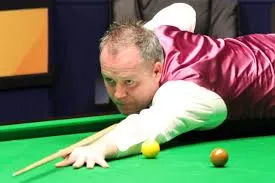
At "Ally Pally," many of the headlines centred around class-of-92 legend John Higgins, who defied the odds to secure comeback wins over current world champion Zhao Xintong and world number one Judd Trump to become the oldest finalist in one of snooker’s three major events at 50.
Higgins, dubbed the "Wizard of Wishaw," relied on a little luck along the way, but also on nerve and sheer brilliance under pressure to snatch victory from the jaws of defeat twice to reach the event’s showpiece match.
However, the Scot struggled to recapture some of the form which took him to the final, losing 10-6 to former world champion Kyren Wilson, 16 years his junior.
The two-time champion faded badly during the evening session, as he appeared to run out of steam, eventually losing 10-6 as Wilson secured his second major triumph.
You could not help but wonder if the winner of nine Triple Crown titles would have had enough to maintain his level had he been a little younger, with this defeat adding to a list of near misses in the game’s biggest tournaments.
Situations such as this once again remind us that time eventually defeats everyone, even those right at the top of the sporting world.
Time waits for no man
We have seen several other such examples of this in recent years; in tennis, the last decade has seen Roger Federer, Rafael Nadal and Andy Murray railing against the clock before eventually retiring, leaving Novak Djokovic as the only remaining member of the "big four," although even he is not what he once was.
In football, Lionel Messi and Cristiano Ronaldo continued to hit remarkable heights well into their 30s, with Ronaldo in particular still seemingly feeling he has something left to prove on the international stage following his rival’s World Cup triumph.
There are many other examples, ranging from the now sad spectacle of watching Tiger Woods continually try to return to major action in golf, to Tom Brady’s remarkable NFL career which ended at the age of 45.
All such examples demonstrate one constant theme, which is that despite all of the best efforts athletes make, their bodies will eventually fail them, as they are finite and limited in capability, even at the pinnacle of human fitness and performance.
Some seem to accept this reality more easily than others, and it can be sad to watch how reluctantly others are to give up their trade, having derived much of their identity from their sporting abilities.
It is enjoyable to watch the likes of Higgins defy the odds as they rail against the confines of age, marvelling that they have been blessed with the ability to continue to compete at older ages than many of their predecessors.
However, we watch in the knowledge that all such efforts are ultimately limited, and we as Christians can be grateful and hopeful in the knowledge that our earthly bodies will be replaced with new bodies, which will never fail or break down, as we worship with the heavenly hosts for eternity. And what could be better than that?
LIV Golf uncertainty – good for the game?
Much sporting focus has gone into the end of the calendar’s traditional summer events and the start of the new …