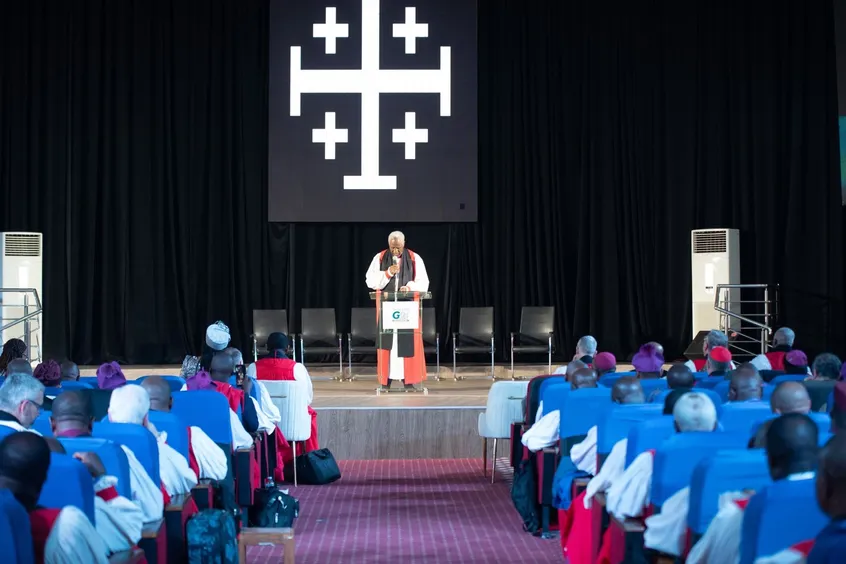
It has only been a short while since Gafcon (Global Anglican Future Conference) issued the Abuja Affirmation, declaring that “reordering the Anglican Communion is now necessary”.
Concerning that Communion, Gafcon also claimed to have “restored its original structure as a fellowship of autonomous provinces bound together by the Formularies of the Reformation.”
For Anglicans across the world, that statement landed very differently. For some, it amounted to the Anglican world tilting on its axis; for others, it was condemned as an illegitimate power grab. The reason for those differing reactions is that Western Anglicanism and the Global South operate with two fundamentally different understandings of what communion is, how it is maintained, and how it can be impaired.
Understanding these two models is essential for interpreting what Gafcon means by “reordering” and why Western critics often misread it as an attempted legal takeover rather than a relational realignment.
Understanding 'communion'
In the West, Anglican identity has long been shaped by the idea that the communion is held together not by administrative authority, but by “bonds of affection”. The Western view is that communion across the Anglican world is maintained through patient consensus-building, shared provisional discernment, participation in the Instruments of Communion, and a willingness to “walk together”, despite profound disagreement.
This model assumes that autonomy is constrained primarily by relationship. Provinces remain recognisably Anglican by staying in the room, continuing the conversation, and deferring, at least symbolically, to the Archbishop of Canterbury’s traditional role as “focus of unity.”
From this perspective, Gafcon’s withdrawal from Canterbury-led structures looks like a repudiation of Anglican identity. If communion is relational, then stepping back from the Instruments appears to be stepping out of the Communion.
This is why some Western Anglicans read Abuja as schismatic or usurping Canterbury. If the Instruments form the golden thread of Anglican Communion, then refusal to participate feels like tearing its fabric.
By contrast, the Global South operates with a different ecclesial mindset, whereby the Anglican Communion is held together not by process but by a baseline of confessional unity, encapsulated in the Scriptures, the creeds, the Thirty Nine Articles, and the 1662 Book of Common Prayer.
The Abuja Affirmation reflects this mindset: “True communion is confessional, rather than defined by a shared history or institutional structures.”
In this model, autonomy is constrained not by relationships but, rather, by faithfulness to core doctrine. Provinces remain Anglican in identity by maintaining continuity with the Reformed catholic tradition of the Church. When a province departs from that tradition, especially on matters the Global South sees as first order, communion is already impaired, regardless of whether the Instruments acknowledge it.
Thus, from the Global South’s perspective, it is not Gafcon but the West that has unilaterally invoked provincial autonomy. As the Affirmation puts it, some provinces have “abandoned the authority of Scripture” and the Instruments have “failed to exercise discipline.”
Seen through this lens, Abuja is not a power-grab, but a recognition of a reality already created by Western innovation.
To be clear
Many of the Western concerns about Abuja stem from reading Gafcon’s language through a Western ecclesial lens. So, when the Affirmation states: “Gafcon has re ordered the Anglican Communion… and we are now the Global Anglican Communion”, Western readers interpret that as a usurpation of authority which no province or coalition can possess.
In fact, Gafcon is not attempting to impose legislation. Instead, they are redefining recognition and relationship among like-minded provinces. In a communion of autonomous provinces with no centralised jurisdiction, this is simply how authority works. Provinces can recognise whom they will recognise. They can also withdraw recognition from others they believe have departed from the faith. They can form new structures of cooperation.
Let’s be clear that this is nothing new. It is how Anglican provinces have always operated. For example, when provinces refused to recognise Gene Robinson’s episcopacy of TECUSA, or when Canterbury refused to recognise ACNA, they did so simply “by saying so.” Recognition is relational, not legal.
The Abuja Affirmation is doing the same thing, but at much greater scale.
Western observers have labelled Gafcon’s actions as schismatic, but the Affirmation explicitly rejects this: “Those who disengage from the Canterbury Instruments are not schismatic… Like Cranmer, we are reforming the Communion from within.”
Historically, impaired communion has always included periods of non-recognition, parallel jurisdictions, and refusal to share sacramental fellowship. Athanasius’ letters urging bishops not to recognise Arian clergy are a classic example. These were severe ruptures, but they were not schism until formally ratified.
In the same way, until the CofE formally ratifies those relational and sacramental ruptures at the institutional level, the overt symptoms of broken communion do not amount to schism.
To use a marriage analogy, Abuja amounts to separation, but not a divorce…as yet.
The Abuja Affirmation is the overt manifestation of two incompatible visions of what holds Anglicanism together. The West sees communion as relational; the Global South sees it as confessional.
Sadly, until these two visions are acknowledged, each side will continue to misinterpret the other.
Churchill & Arday: Double standards?
In 1898, the young Winston Churchill rode with the 21st Lancers at Omdurman, later describing the charge as a desperate …