
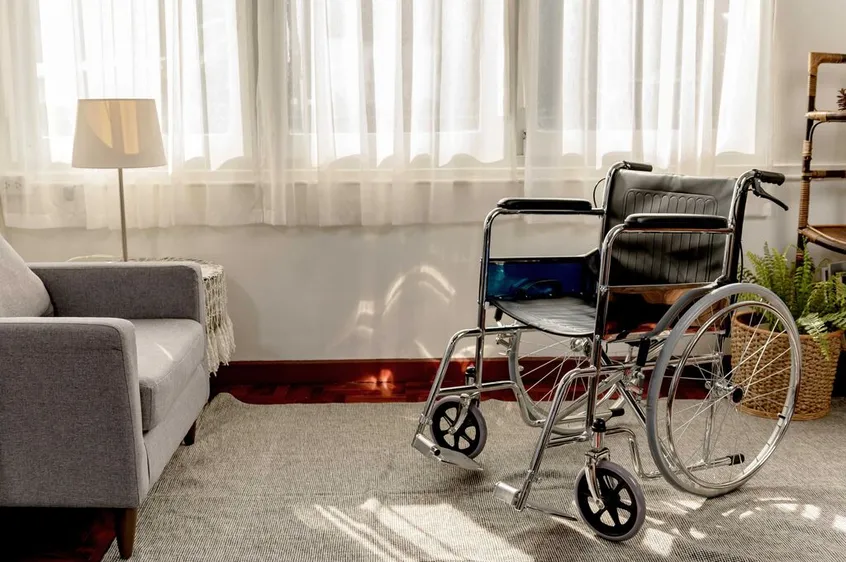
Have you ever had anyone come up to you and say, ‘I’d rather be dead than be like you’?
I have, numerous times! Apparently, people would rather be dead because they can’t see why anyone could want to be alive if they use a wheelchair. And it’s not just physical disability - there are many people who have the same view of autism.
There’s been some ongoing clinical research to find a genetic marker for autism, so it can be tested for. However, many autistic people haven’t taken part, because they saw what happened when they found a marker for Down Syndrome – terminations up until full term. Why would you want to support clinical research that might lead to babies like yourself being terminated, just because autism is seen as a risk, not compatible with a good quality of life?
‘Quality of life’ is a subjective term.
Many years ago, I was asked by a friend to write a letter to a consultant. He was overseeing her son’s care and saying that he wouldn’t do a needed procedure, because he thought this delightful child didn’t have enough quality of life to deem it worthwhile.
Without the procedure, he would most likely be dead today. I wrote to the doctor, dubbed as 'doctor death’ by my friend, to say exactly why this child had a brilliant quality of life. Others wrote too. He had the procedure done, he’s loving life and is living it to the full - complete with his disabilities. If he didn’t have a mum and her friends who were willing to fight for him, he would have been left to die by a medical professional who couldn’t see how a disabled child could have a good life. By definition - euthanasia.
A real fear
The debate around euthanasia and disability is much wider than the current discussion seen in Christian circles. One of the only times I’ve seen it considered recently, is when a Christian mentioned how a Canadian para-athlete had asked for a wheelchair lift and was then offered medically assisted dying.
In the UK, you must understand the current climate of how disability is seen and treated to understand the fear disabled people have around assisted dying being legalised. Here are two points to bear in mind:
- Disability hate crime is at its highest point ever. The last figures showed it had grown by over 700% in the last ten years.
- Add to that, there are many disabled people losing much needed benefits. On average it costs an extra £1,010 a month to live with a disability and as a disabled person you are more likely to live in deep poverty – 40% more than anyone else. The government are currently looking at changing how Personal Independence Payments (a benefit to help people with long-term conditions) are done - but each of the suggestions would not deliver what disabled people really need. Already, those who need a wheelchair are regularly turned down for much needed mobility aids and instead given something they can’t use, meaning they can’t leave their home.
If you were a disabled person who feels hated, is living in deep poverty, can’t get out of the house or afford the care you need, what would you do if offered assisted dying?
A risk of boundary creep
We are told the laws would only be for the terminally ill and have strict safeguards, but there is always a risk of boundary creep. In fact, there is already boundary creep and has been for generations, even before an assisted dying bill was thought of.
For example, disabled people are regularly asked before invasive treatment if they have a ‘Do Not Resuscitate’ [DNR] order. And when they are, some find out they were given one without their knowledge during the Covid pandemic.
We also have to work harder to get the treatment we need. I’ve had so many misdiagnoses in my life, just because disability brings out a ‘can’t be bothered’ attitude in some doctors and an assumption of the lack of quality of life from others. You would not believe just how many disabled people struggle with this, especially those who have a learning disability.
Can you now see why disabled people are so concerned?
When the previous and current governments have done so much to remove ‘quality of life’ from disabled people, it is hard not to find a connection between the two things: if we were dead, it would cost the country a lot less. It feels as though we have a duty to ask to die.
Justice is the right things done the right way.
This isn’t the right way.


Zoo incident sparks debate on disability, care & public reaction
In the news recently, we heard the shocking story of a child being "thrown" into the crocodile enclosure at Johnson’s …