Red alert on Green Paper

en staff  |  UK & Ireland
Date posted:  1 Jun 2018
Share Add       
Red alert on Green Paper

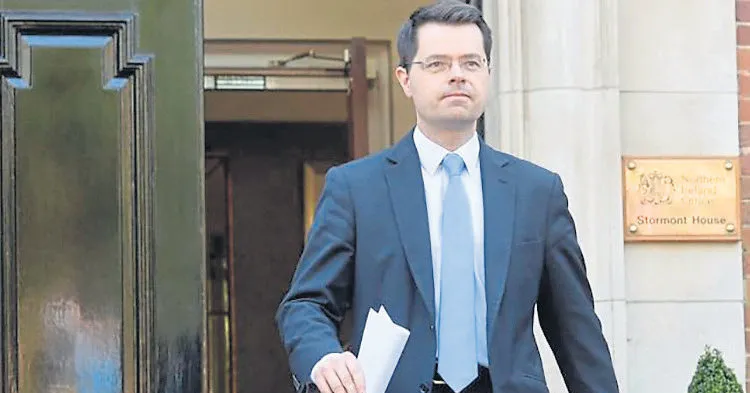
James Brokenshire, the new Communities Secretary

The UK government produced a Green Paper on 14 March setting out proposals for its Integrated Communities Strategy (England), with the public consultation process ending on 5 June.1

The equality oath as proposed by the Casey Review of 2016 has been dropped with no mention of it in the Green Paper.

However, there is much in the Green Paper which is of concern to Christians.

Ofsted in church

Despite the government announcing that it had ‘decided not to pursue the model proposed in our call for evidence’2 where it had consulted on how to monitor out-of-school settings, the question of ‘Ofsted in Sunday school’ has not been dealt a final blow, as the Green Paper asks about it in another form.

Indeed, in the Next Steps section of the report reviewing the evidence of the 18,000 people who had filled in the survey (where 75% opposed the idea of the government inspecting settings using British Values as a measure), it lists several ways it intends to effectively bring about the monitoring of out of school settings: multi-agency working; consulting on a voluntary code of practice for groups; filling gaps in powers with future legislation. ‘These measures will have a positive and rapid impact on identifying those small number of settings of concern … they will give parents choosing out-of-school settings increased confidence that their children will be taught in a safe environment.’

Don’t be naïve

Questions on education in ‘out of school settings’ are phrased in such a way that the unsuspecting may fill in this consultation giving a green light to Ofsted to sit in during Sunday school classes.

One question asks: ‘The Green Paper sets out proposals to support parents with their choice of out-of-school education settings. Do you agree with this approach?’

Being able to compare settings requires some degree of measurement. How will a parent chose an organisation if there isn’t some kind of code/ inspection taking place? The Green Paper states: ‘We will consult on a voluntary code of practice’ for groups. The result? Ofsted will have to be ‘invited’ into the church because otherwise the church will look as if it has something to hide. A way around an accusation of being ‘compelled to voluntarily enrol’ could be the government producing a ‘scale’ to show how ‘open/inte-grated’ a church group is.

The government can ‘appear’ to have dropped the idea of Ofsted in a church, whilst simultaneously introducing it as a ‘voluntary’ act. This is not protecting freedom of religion, or belief. It is a sneaky way of imposing laws that monitor religious freedoms and as such is not in keeping with British Values.

However, the interpretation of these, and what actually constitutes ‘extremism’ in law, is still a moot point. The Casey Review sought to redefine ‘extremism’ as including religious views ‘at odds with the views of mainstream society’ and this included opposition to abortion, support for traditional marriage and attitudes to recreational drug use.3

The Green Paper states: ‘The government will always protect people’s legitimate rights … to free speech, to hold traditional views and to practise their religion within the law … but we will not shy away from challenging … practices that are harmful to individuals or restrict their rights and hold them back from making the most of the opportunities of living in modern Britain.’ But what does a statement like ‘hold traditional views … and practice them within the law’ mean, when one looks at the reality of what it means to say publicly ‘marriage is between one man and one woman’ and ‘your sex is not able to be changed’? Does the law actually fully support people who hold these beliefs even today?

Home education

Warm words are said about ‘good’ home education. However, if the government is indeed ‘looking at ways [it] can support [parents] further’, this help may not be warmly received, especially when it is framed within the idea of the government ensuring ‘the child’s right to a good and suitable education in a safe environment which equips them for life in Britain’. This woolly phrase could mean maths and English in a loving home, or it could be ‘muscular liberal’4 teaching on sex.

In reality all the words in the Green Paper could mean anything, and until it’s tested in the courts, this could still mean that the Casey Review’s definition of extremism stands, i.e. ‘one at odds with the views of mainstream society’ 3.

Although the survey may look daunting at first sight, do try to complete it all. Once a question has been selected from the contents page, one cannot go back to choose another section.

Share
< Previous article| UK & Ireland| Next article >
Read more articles by en staff >>
Features
'Radical discipleship' – ten questions with Karen Soole

'Radical discipleship' – ten questions with Karen Soole

Karen Soole is a writer, speaker, and women’s worker at Trinity Church, Lancaster. She is the chair of the Northern …

UK & Ireland
Knife crime plan hope

Knife crime plan hope

The gospel is bringing hope in the midst of rising knife crime, London City Mission (LCM) says.The capital-based outreach …

Subscribe

Enjoy our monthly paper and full online access for just £40/year

Find out more

Give a subscription

Our monthly newspaper is the perfect gift for those who love to think deeply

Give here