December saw my sixth visit to Latvia in 2023. I have now been coming here for 30 years.
I was accompanied on the first part of the trip by a friend from church who took part in one of the sessions on identity, on the Christianity, Work and Society course at the Latvian Biblical Centre in Riga.
When friends come with me on trips, I try to give them a tour of the city. On my friend’s final morning in Riga it was snowing, so we decided to visit the Occupation Museum, which has been completely revamped in the past year. The exhibition tells the complex story of the 20th century in Latvia, which began under Russian rule then, in the aftermath of the Russian Revolution, saw a period of independence up until the Second World War.

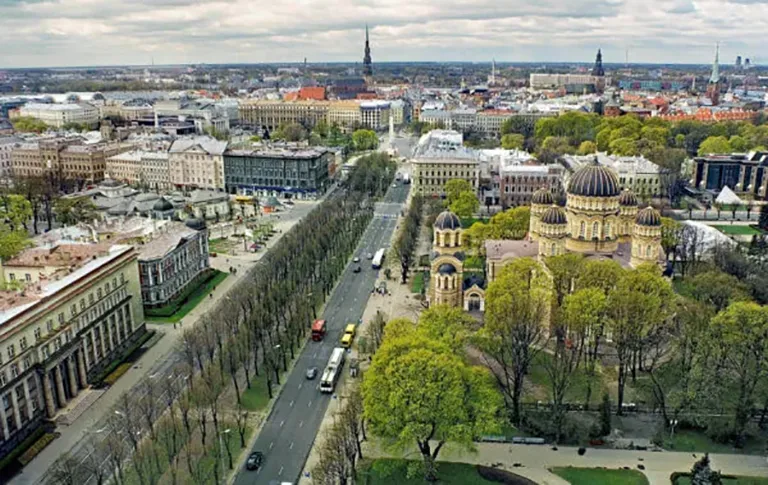
The Soviet Union, at that time in a pact with Germany, invaded Latvia in 1940. The pact broke down as Germany unleashed Operation Barbarossa, an attempt to invade and occupy the Soviet Union. This brought Latvia under German rule until 1944 when the Russians returned on their way to Berlin. During that time Brīvības iela (Freedom Street – see photo) in Riga, the capital, became Lenin Street, Hitler Street, and then Lenin Street again. It’s no wonder that Latvians value their identity and freedom, and fight hard to preserve them.
What does it mean to be a Latvian? Look at the Riga skyline: it is a majestic riot of church spires; yet the evangelical Christian percentage of the population of Latvia is tiny. Someone asked me about distinctive Christian customs in Latvia. They are an interesting mix of Christian celebrations (Christmas Eve being the main event), sentimentality imported from the US, and a deeply rooted range of pagan customs. One of the customs is people dressing up as animals and dragging a large log around the streets and then burning the log (maybe that is where the idea for yule logs came from!) The symbolism is that the log drags up all the negative thoughts, words and actions of the people that are then burnt away in the fire.
I guess that there might be a way to point to that custom and introduce the more effective way of making people new that the gospel proclaims. Observing cultural patterns in society and making connections with the better story of the gospel is one of the things I try to teach my students at the School of Preachers in Riga.
letter from Latvia