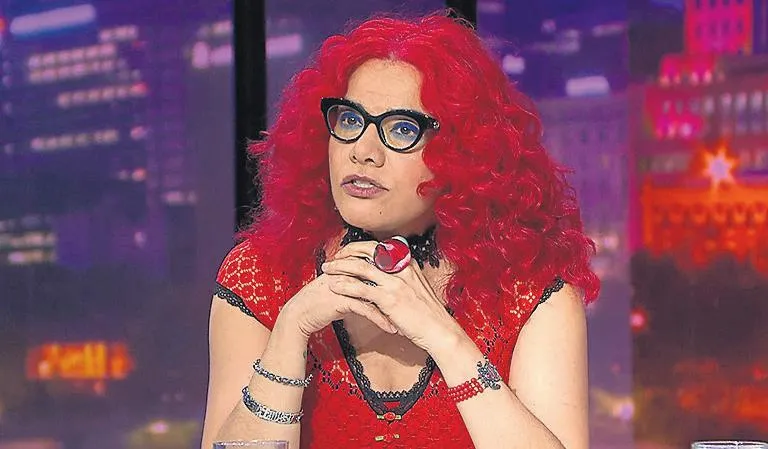
In early November, an Australian television programme came under investigation after it hosted a panel question time where the idea of killing men went unchallenged by the chair Fran Kelly.
ABC’s Q&A programme hosted an all-female panel to coincide with the feminist ideas festival ‘Broadside’. The panel was dominated by journalist Mona Eltahawy, who at one stage asked: ‘How many rapists must we kill until men stop raping us?’
Vigilantism
The discussion began in response to the audience question: ‘When trying to bring about significant change, when is aggression and violence a better option than assertiveness and strong arguments and modelling the behaviour you expect of others?’. Eltahawy suggested that if people raised the question ‘are women are becoming like men if they take on violence’, then there was a bigger question at stake. She said she disagreed with the death penalty and that violence was ‘owned’ by the state. But women needed to not wait any longer to be safe. The audience applauded her peculiar version of vigilante justice.
The questioner said violence begets violence. Other panelists referenced slavery rebellions to support the idea of defending oneself against violence.
Was this just a self-defence argument? If a woman in defending herself against attack kills the attacker, using a ‘reasonable force’ argument, she is unlikely to be convicted of murder. But the discussion took the use of violence several steps forward and suggested some kind of social upheaval and disorder in response to the existence of rape. Panelists said there was no point in reasoning one’s way around oppression and appealing to the better nature of the oppressor, i.e. men en masse. This was essentially about killing men to overthrow the patriarchy.
A different conversation
One woman on the panel, Hana Assafiri, later posted her opinion on violence asserting that a different conversation was needed. She opposed violence and said men should ‘walk’ with women to change the situation. Intelligence and wisdom was required. Assafiri noted that she hadn’t had the opportunity to contribute those two thoughts to that discussion.
ABC received more than 200 complaints and is investigating whether the programme breached editorial policies. The episode was pulled from Australia’s iPlayer equivalent.