Rwanda is a land of contradictions. Arriving at Kigale one is immediately aware that this is quintessential Africa, and yet, ‘This is not Africa as I know it!’
One of the first hints is the airport inspection for plastic bags, banned in the country for environmental reasons. This beautiful, hilly, and in parts mountainous land is spotlessly clean – almost manicured.
Quarter of a million skeletons
The contradictions have deeper roots. Visiting the Genocide Museum where a quarter of a million skeletons are buried from the massacre of a million mainly Tutsis, the greatest slaughter in such a few days ever known, one is conscious of standing in the presence of the memory of one of the most obscene manifestations of the work of the devil in human history. The one who came to steal, kill and destroy did a work there culminating in April 1994.
This not merely shocked the world, once discovered, but paralysed any response to it at the time, so carefully had the genocide been planned, and so swiftly executed in the space of 100 days.
Spark of revival
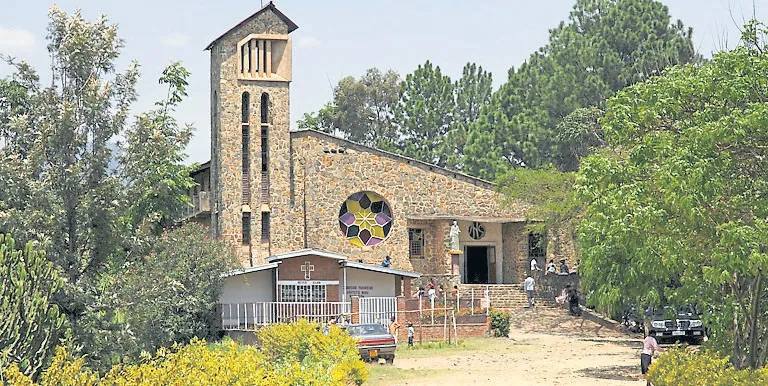
The next day we visited the CMS mission station, now an Anglican diocesan compound where the spontaneous prayer meeting had taken place, only a few decades before the genocide and in living memory, when three men haphazardly met in a hut one evening and prayed for hours, sparking the Rwanda revival. One was conscious of standing in the presence of the memory of one of the most powerful moves of the Holy Spirit of God in human history.
That spark, first in Kampala, Uganda, in September 1929 between an Anglican layman, Dr Joe Church, and a Gandan man, Simeon Nsibambi, and later in Gahini in Rwanda, led to the spiritual awakening that ignited East Africa, leading millions to repentance and faith in Jesus Christ. From there it has had an impact on the Christian church throughout the world. It was no coincidence that the conference in Nairobi in 2013 of the Anglican GAFCON movement, the one remaining potential focus for majority Anglican global unity and spiritual energy, was launched with a day learning from the lessons of the Revival.
An appropriate silence
Both visits, to the Genocide Museum and the revival memorial, had a similar impact on our group, namely the silence which is proper in the places where tides in human history have turned.
But they left the obvious lingering question: how it was that the revival took place first, and within such a short time gave way to the murderous devastation? However, before pointing fingers at a glaring example of an individualised and privatised faith that failed to have power to overcome tribal division, we found ourselves asking the same question of the church in the West, where Christian faith has been described as ‘a lake a mile wide and an inch deep’ – and becoming narrower daily in our increasingly secular society.
Amidst the conflicting thoughts in the space of a few days’ visit, the vengeful evil of our spiritual enemy was one conclusion, but the greater love of our Almighty Lord was another. Joe Church in his later years, at the Keswick Conference in 1976, spoke of the wave of repentance that had led to the revival: ‘People have the oddest idea of revival,’ he said, ‘they think it’s the top blowing off, when in reality it’s the bottom falling out’ – falling in repentance.
Healing and blessing
The gift of repentance is overcoming again – God is healing the divisions and bringing blessing where there was curse. A most striking expression of this recovery is that the twin agendas of justice and forgiveness are pursued together in a way that is very hard to compare in reconciliation processes elsewhere: for example in South Africa or Northern Ireland. The pursuit of both justice and reconciliation in Rwanda are ongoing and penetrating. The whole population takes responsibility for the healing of the nation, with a sense of solidarity and corporate responsibility not only for what went wrong, but for putting it right. On the last Saturday morning of every month the entire population does community service: hence the immaculate roads and fields, not a single weed or rubbish waste in sight – and no plastic bags!
This symbolises the more penetrating integrated mission and ministry of the churches, and of the mission agencies like Tearfund. Their impact is extraordinarily powerful, facilitating the people’s self-recovery through the power of God and their own resources, rather than Western aid, and in projects that model holistic mission, bringing both spiritual and social transformation. This is the best hope for an integration of individual, communal and national cohesion.