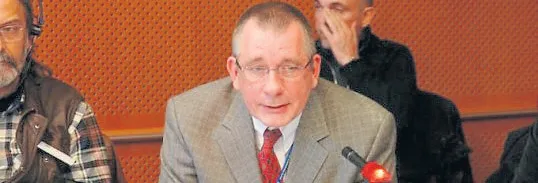
The European Parliament Intergroup on Freedom of Religion or Belief and Religious Tolerance (FoRB & RT) on 30 June launched its third annual report on the state of freedom of religion or belief in the world for 2015.
‘This is a document to change the reality through the European Union institutions’, explained its co-president, Peter Van Dalen, a Member of the European Parliament (MEP). It gives recommendations for the European External Action Service (EEAS), the Council and the European Commission. Van Dalen, however, encouraged everyone to look beyond those pages because ‘people are suffering’.
The intergroup co-presidents welcomed the fact that the European Parliament is increasingly aware of human rights being violated throughout the world. They were nonetheless ‘not content’ with the other institutions. ‘The [FORB] guidelines were embraced by us, but the [European] Delegations [i.e. EU “embassies” in the countries] do not even know them’, complained fellow co-president MEP Denis de Jong.