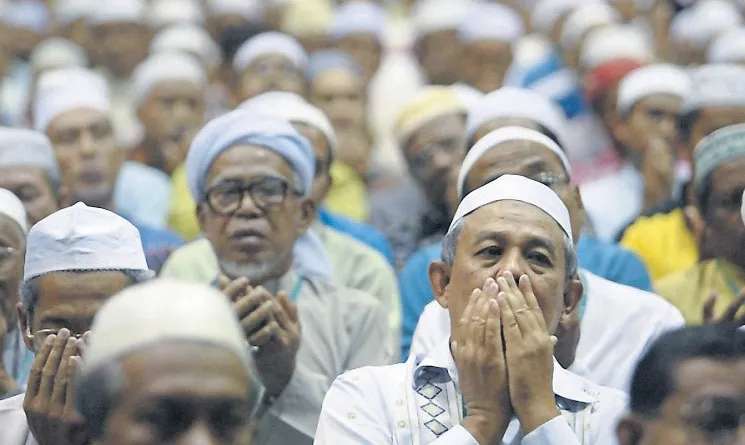
The Muslim communities of Southeast Asia have long been regarded as among the more moderate of the Islamic world.
The world’s largest Muslim nation, Indonesia, sits alongside the smaller but dynamic Muslim communities of Malaysia and Brunei, as well as the sizeable Muslim minorities in Singapore, Thailand and the Philippines. Together these nations are home to around 250 million Muslims.
The region has been largely spared from the tormented conflicts of the Arab world. But the temperature is rising. One of the key bones of contention relates to an increasing push for the implementation of aspects of Shari’a law.

Brunei
On 1 May, 2014, the Sultan of Brunei enacted Shari’a legal codes in his Kingdom, with its vast oil reserves one of the wealthiest countries in the world. This was in spite of vocal opposition from both Muslim and non-Muslim sources, with religious minorities, including Christians, expressing particular concerns about the direction that the Sultanate was taking. The implementation of these codes has been slow and is planned to follow several stages, with the enacting of the harsh criminal codes being the final stage.
Aceh: Christian caned
In neighbouring Indonesia, the province of Aceh has been leading the way in the push for Shari’a legal codes throughout the nation. Shari’a law has been gradually introduced into the province for over a decade, but it has taken an increasingly strict form recently, with the enacting of the criminal codes in mid-2014. This development took a particularly ugly turn in April when a Christian woman aged 60 was publicly caned under Shari’a punishment for having sold alcohol.
There is vigorous opposition to the spread of Shari’a from both liberal Muslim and non-Muslim groups. A key opponent is the 50 million-strong Muslim traditionalist organisation, the Nahdatul Ulama, which issued a declaration in May spelling out its opposition to the narrow brand of Islam promoted by the proponents of Shari’a. This intra-Muslim debate will certainly heat up in years to come.
Malaysia
Meanwhile, the neighbouring state of Malaysia has in some ways been a pioneer in the region for promoting Shari’a law. The Islamic Party of Malaysia (PAS), which has been the principal party in opposition since Malaysian independence in 1963, has used its control of certain states to introduce elements of Shari’a law, though never being able to achieve the same goal at national level because of its inability to win national elections.
In 1993, PAS introduced Shari’a legislation in the Malaysian state of Kelantan where it was in power. This led to a range of measures, including limiting the sale of pork and alcohol, the separation of men and women in supermarket checkouts, the enforcement of conservative dress regulations, and other measures designed to regulate society according to the dictates of Shari’a law. However, PAS was never able to introduce the harsh punishment codes that are associated with Shari’a law in Kelantan because this fell into the jurisdiction of the national government, which promoted Islamic values but stood against a literal implementation of the Islamic legal codes.
Shari’a courts
However, a great degree of concern has been expressed recently with the introduction to Federal Parliament in May of the Shari’a Courts (Criminal Jurisdiction) (Amendment) Bill, which will be voted on in October. This Bill was presented by Abdul Hadi Awang, who is both a member of Federal Parliament and also national President of PAS.
There will be strong opposition to this Bill from both Muslim and non-Muslim groups, because of fear that it will lead to an ever-wider application of Shari’a law throughout the nation. Malaysian Bar President Steven Thiru said the proposed Bill would confer the power to apply the very harsh Islamic punishments (except death) on the large number of Shari’a courts spread across the country. Prominent evangelical scholar and activist Ng Kam Weng declared that ‘if passed, the Bill will place the Federal Constitution on a slippery slide leading to a Shari’a-dominated Constitution.’
End game
The end game is not clear regarding the spread of Shari’a law in the countries of Southeast Asia. But what is clear is that pro-Shari’a groups will continue to advocate for an ever-wider application of Shari’a law, in the face of strong opposition from moderate Muslim groups supported by non-Muslim communities. This is another piece in the mosaic of intra-Islamic tension and conflict across the Muslim world.