A dramatic scientific breakthrough unveiled at an international conference in London is a ‘wake-up’ call for Christians, an evangelical bioethicist is warning.
Scientists say they have created mice with two biological fathers using eggs made from male mice skin cells, in a first for science. One of the scientists said the process could be used to produce human babies within ten years – though similar claims are not new.
However, what is new is that the mice were said to have a normal life-span and produced their own offspring. The development opens up radical new possibilities for treating infertility, but could potentially pave the way to same-sex couples being able to have a biological child together. A surrogate mother would still be needed to carry the baby.
Christian bioethicist Dr Trevor Stammers said: ‘This should be a wakeup call for churches to be more engaged with their congregations and getting scientists in to talk to them. People need to be prepared so that they can pray.’
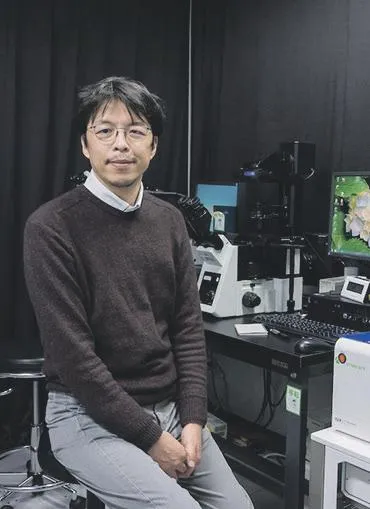
Katsuhiko Hayashi, a well-known scientist who led the work at Japan’s Kyushu University, unveiled his research at the Third International Summit on Human Genome Editing in London in March. He said it will be technically possible to create a viable human egg from a male skin cell within a decade – a move he would favour if it was safe. However, Hayashi acknowledged that it was also a question for society.
Christians within the scientific community warn again an alarmist reaction. Dr Denis Alexander, Emeritus Director of the Faraday Institute, said: ‘A headline such as Mice With Two Dads is sure to gain immediate public attention; Dolly the Cloned Sheep gained even more publicity when announced in 1996… One should not assume that “humans with two dads” will ever be born.’
This raises an ‘immediate’ ethical issue – the ‘waste of time and resources’ involved in trying to apply the findings to humans. ‘Often, such human research can be justified on clinical grounds. But in this case such grounds are lacking,’ added Dr Alexander.
Furthermore, he said: ‘Any such application to humans would involve huge embryo loss and the generation of babies, if any, with unknown health consequences. Experimenting with children is wrong.’
Dr Trevor Stammers, an associate of The Faraday Institute for Science and Religion and a bioethics professor said: ‘When scientists say about any new genetic advance “in ten years we can create a baby using this …” they are usually whistling in the wind. This technique hasn’t even been published yet.’
The process also makes reproduction more inefficient. ‘Out of more than 600 transferred embryos into surrogate mothers, only seven developed into viable offspring,’ he said – with ‘huge problems’ translating this work into humans.
Dr Stammers said decisions about aspects of human genetics are being done without truly representative public involvement, with little public awareness of limited consultations (for example, the ongoing Human Fertilisation and Embryology Authority consultation on embryo research, which closes on 14 April 2023).
Christians in Science (CiS) member Dr Chris Wild said the gap between research and practical development provided ‘a period of grace during which the societal consequences of the work should be debated. Key considerations include the potential to circumvent the natural process of male and female cells being blended together to produce new human life.
‘Within that context it is vital that the church brings expertise in science and theology together to influence the potential future applications of this technology.’
Dr Stammers encouraged churches to invite ‘truly informed’ speakers (CiS has hundreds of members). ‘They need to have someone who first and foremost, as well as being a believer, needs to have the expertise and knowledge.’
He added: ‘God in His wisdom has given many blessings from scientific research, including stem-cell work which has led to cures of a lot of blood cancers; and for that we should be thankful. But there is also potential for great destruction. It’s not so much the tool but the motivation and trajectory that it could be used for.’
The problem of bogus behavioural research
One of my catchphrases is, "Psychology and theology can be friends." We have the truth in Christ, but we also …