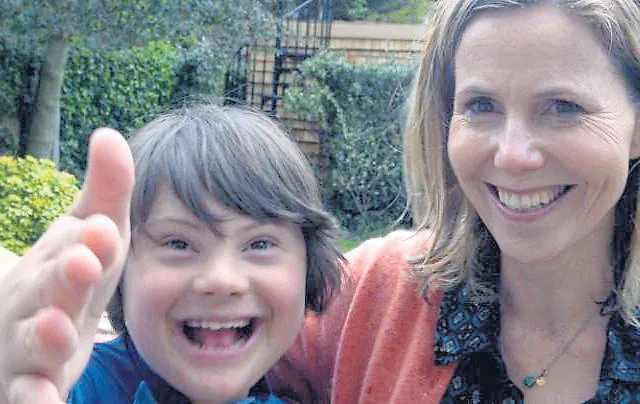
Exploring the new Downs Syndrome (DS) antenatal testing, the actress Sally Philips (she of Miranda fame – ‘Bear with, bear with’) presented a programme on BBC2 on 5 October which was both uplifting and heart-breaking.
Nine out of ten people terminate their pregnancy upon being given a confirmation of DS during screening programmes at around 15 weeks of pregnancy. This rate has risen by 40% in the last ten years. Sally explored the new NIPT/cfDNA tests and the ethics surrounding them, noting that at 99% accuracy, it may even result in the population of people with DS being wiped out.
Endless capacity for joy
Using her experience, Sally questioned what is so intolerable about having a child with DS: ‘I was expecting tragedy, but I got comedy,’ as she showed how her son and many others like him have an endless capacity for joy and a love of life and people that shames society at large.
Sally traced the journey of the state’s attitude to people with DS: only being ‘allowed’ to be educated from the early 1970s; into mainstream education from 1981 via the pioneering work of Sue Buckley; then into the ironic position of more screening being introduced simultaneously, with the result of ‘removing’ people from society via termination prior to birth.
NHS assumes termination?
From the NHS leaflets, given to a parent upon diagnosis, to the NHS helpline which people are referred to, (which almost assumes termination as the outcome of contacting them), society’s response to DS, or to any ‘non-perfect’ child, was shown to be negative. DS is seen as being a disease rather than a person.
Most movingly, Sally told a Professor at Great Ormond Street that, if we have a society that is unable to care for people, ‘then the problem isn’t the person’.
Through 100% termination rates in Iceland to genetic code mapping of the pre-born child, what became clear was that scientific knowledge, technology and screening were not the problem, as these have no morality. Rather the ethics and morality of the society into which applies all this science was the problem. As one professor noted: ‘Ethics change from year to year.’
Questioning whether choice is really ‘all it’s cracked up to be’, the truth of God’s perspective on life would have therefore given the best answer to that and all the questions raised. Sally stated that if one takes the view that it is the woman’s choice to terminate, then any argument against screening, or termination of one kind of person with a certain condition unravels completely. The programme was powerful in challenging society’s response to people who do not fit ‘the norm’ that society has (incorrectly) decided is ‘normal’.
Needing God’s Word
But without any foundation in the Word of God and his creation of people in his image, or belief that the vulnerable should be protected and not dispensed with, then it boils down to ‘your choice or mine’.
And for people with DS, for society in general and before God himself, that just isn’t a good enough answer.