Among the big news headlines recently was the Supreme Court ruling that decided a woman is defined by their biological sex, in accordance with the 2010 Equality Act. The Court also deliberated the meaning of “man,” “woman” and “sex”.
Justices Lord Hodge, Lady Rose and Lady Simler, along with other justices, unanimously agreed that “woman” can only be defined biologically. And therefore this ruling protects women from biological men trespassing into boundaries reserved exclusively for women – for example girls toilets, changing rooms etc.
Women’s world number one Aryna Sabalenka and former men’s Wimbledon finalist Nick Kyrgios have agreed to tennis’s latest iteration of the Battle of the Sexes.
The event, which will take place in late December in Dubai, will be the latest such contest to take place, following Billie Jean King’s high-profile victory over 55-year-old Bobby Riggs in 1973, which is widely considered a watershed moment for the women’s game in its bid to gain greater recognition and funding.
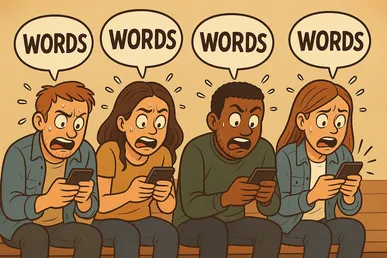
“When words are many,” wrote Solomon – while his wisdom remained with him – “transgression is not lacking, but whoever restrains his lips is prudent” (Prov.10v19). It is a lesson that is especially timely right now.
We have never seen such a proliferation of words as we do today, due largely to the digital communication revolution. The inevitable result is that words become cheapened and debased. In the same way as a cash-strapped government discovers that mass money-printing leads to inflation, so it is with the reckless (mis)use of words. The more people talk – or text, or tweet, or emote, or sound off – the less they truly say. The purchasing power of their words is shrunk.
This time two weeks ago, Charlie Kirk was an unfamiliar name to me.
It was a bit like the morning of 9 December 1980, when John Lennon’s death was announced. I’d never heard of him, though I was familiar with Paul McCartney and knew that the Beatles had been a notable pop group in the 1960s. I suppose my defence was that I was only eleven at the time.
If you’ve ever looked around at the chaos of the current moment and wondered, "Who could have seen this coming?" I have an answer: Walker Percy.
Percy, an American writer, died 35 years ago this week—long before Trump, Twitter, TikTok, or transgender sports debates. But more than half a century ago, he eerily foresaw something like 2025, in which technology, tribalism, and spiritual emptiness converge. If we’re to find our way through the madness, maybe we should listen to what he had to say.
With the death of Pope Francis, my thoughts went in many different directions, but one of them was the memory of my humiliation at the front door of his house.
Invited by the Pope to speak at the Vatican on an evangelical view of marriage and fidelity, I arrived in Rome jetlagged and exhausted, having just finished teaching at a Southern Baptist seminary on Martin Luther’s view of conscience.
‘US President Donald Trump has signed an executive order that prevents transgender women from competing in female categories of sports,’ a recent BBC item says.
Trump’s move followed on an earlier order which restated traditional and indeed scientific truths about men and women, declaring: ‘Ideologues who deny the biological reality of sex have increasingly used legal and other socially coercive means to permit men to self-identify as women and gain access to intimate single-sex spaces and activities designed for women, from women’s domestic abuse shelters to women’s workplace showers. This is wrong.’










How should we relate to the transgender community?
Among the big news headlines recently was the Supreme Court ruling that decided a woman is defined by their biological sex, in accordance with the 2010 Equality Act. The Court also deliberated the meaning of “man,” “woman” and “sex”.
Justices Lord Hodge, Lady Rose and Lady Simler, along with other justices, unanimously agreed that “woman” can only be defined biologically. And therefore this ruling protects women from biological men trespassing into boundaries reserved exclusively for women – for example girls toilets, changing rooms etc.