
everyday theology
'Lord, help me...'

Michael Reeves
Date posted: 30 Dec 2025
In the gospel accounts of both Matthew and Mark, Jesus’s rebuke of the Pharisees for their neglect of their hearts (Matt.15v10-20; Mark7v14-23) is immediately followed by His encounter with the Canaanite/ Syrophoenician woman (Matt.15v21-28; Mark 7v24-30). The juxtaposition of the woman next to the Pharisees is telling, for she lacks the qualities they value – yet she has the qualities that Jesus values and they lack.
Not only is she a Gentile; she is a Canaanite, of the traditional enemies of Israel. “Cursed be Canaan,” declared Noah in Genesis 9v25. The book of Zechariah ends with the thundering denouncement that on the day of the Lord there will no longer be a Canaanite in the house of the Lord Almighty (Zech.14v21). Yet, having heard of Jesus, she seeks Him out for help, showing a startlingly perceptive appreciation of Jesus’s identity. “Lord, Son of David,” she calls Him (Matt.15v22).

everyday theology
Are we people of a sect or of the gospel?
Michael Reeves
Date posted: 9 Dec 2025
In practice, evangelicals have often tended to be individualists in their faith. But our understanding of what it is to be truly evangelical should be taken not from evangelical practice but from the evangel.
Evangelicals are people who have been born again, but to be born again is to be born or baptised into Christ (Rom. 6v3; Gal. 3v27). From the moment of our regeneration, we are part of a bigger whole, the body of Christ (Rom. 12v5; 1 Cor. 12v13).

everyday theology
The gospel, our anchor
Michael Reeves
Date posted: 2 Nov 2025
For people of the gospel, the gospel serves as our mooring anchor. An anchor stops a ship from drifting while allowing it a certain amount of movement on the surface of the water. Just so, the gospel holds us to Scripture’s matters of first importance while allowing some slack for differences of opinion on other matters.
As Paul called the Romans and Corinthians to unity in the gospel and liberty in what to eat, so the anchor keeps us from making shipwreck of our faith (1 Tim. 1v19) without making our every disagreement a cause for schism.
Holiness rooted in the heart
Michael Reeves
Date posted: 16 Oct 2025
The difference between an evangelical and a non-evangelical understanding of holiness can be seen well in a difference between the 17th-century Puritans and their contemporaries, the high-church Caroline Divines. Perhaps the most influential of the Carolines was William Laud (1573–1645), Charles I’s Archbishop of Canterbury.
Laud loved what he called “the beauty of holiness”, by which he meant liturgical orderliness. He strictly insisted that the clergy must follow all the rubrics of the Church of England’s prayer book, and was deeply concerned with clergy attire and the maintenance of church buildings and their physical beauty. And it was a particular sort of building he preferred: despising the Reformation – or “Deformation,” as he called it – he preferred new churches to be built in the pre-Reformation, Gothic style, with an architectural emphasis on an altar instead of a Communion table. For, he said, “the altar is the greatest place of God’s residence upon earth, greater than the pulpit; for there ’tis Hoc est corpus meum, This is my body; but in the other it is at most but Hoc est verbum meum, This is my word.”

everyday theology
Finding true friendship
Michael Reeves
Date posted: 15 Sep 2025
I wonder if you’ve read C. S. Lewis’ The Four Loves? If you haven’t, you’ve got a treat to enjoy sometime. His chapter on friendship is a favourite of mine. It’s an insight-packed paean to friendship. And friendship is a vital part of our life together in Christ, a foretaste of what is to come.
A friendship is not the same thing as an exclusive coterie or cabal. “True Friendship,” says Lewis, “is the least jealous of loves. Two friends delight to be joined by a third, and three by a fourth, if only the newcomer is qualified to become a real friend.” The foundation for friendship, Lewis says, is companionship, which is what we often mean by the term “fellowship”. Companionship entails a basic willingness to get on and work well with others.

everyday theology
Why a band of brothers is better than a ‘great man’
Michael Reeves
Date posted: 30 Jul 2025
“Two are better than one, because they have a good reward for their toil. For if they fall, one will lift up his fellow... And though a man might prevail against one who is alone, two will withstand him – a threefold cord is not quickly broken” (Ecc. 4v9-10, 12).
One of the greatest practical problems I see across the church is the isolation of so many church leaders. There are many contributing factors, but surely one of them is the idea that spiritual growth occurs only or mainly through the purposeful, influential actions of elevated individuals. We might call this the “great man” theory.
everyday theology
Mistakes in the Bible?
Michael Reeves
Date posted: 7 Jul 2025
We can submit to Scripture with confidence because of our Lord. Jesus was consistently clear that what Scripture says, God says.
For example, conversing with the Pharisees, he said: “Have you not read that he who created them from the beginning made them male and female, and said, ‘Therefore a man shall leave his father and his mother and hold fast to his wife, and the two shall become one flesh’?” (Matt. 19:4–6)
everyday theology
Bibliolatry? Us? Really?
Michael Reeves
Date posted: 4 Jun 2025
The reason why evangelicals treat Scripture as their supreme authority is because it is the word of God. In other words, evangelicals believe in what is traditionally called the “inspiration” of Scripture.
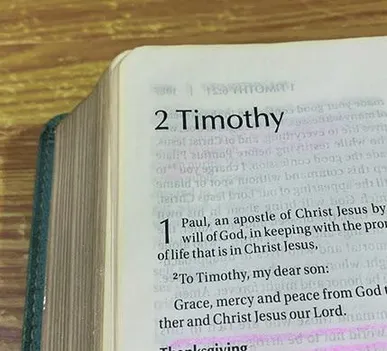
Today, the word “inspiration” can be a little misleading, as if Moses, Paul, and Luke simply felt enthused one day and started scribbling. That is not at all what is meant! By inspiration is meant what Paul teaches Timothy when he writes of how “from childhood you have been acquainted with the sacred writings … All Scripture is breathed out by God and profitable for teaching, for reproof, for correction, and for training in righteousness, that the man of God may be complete, equipped for every good work” (2 Tim. 3:15-17).

everyday theology
To a better understanding of ‘Scripture trumps all’
Michael Reeves
Date posted: 6 May 2025
Again and again since the close of the New Testament, the church has reasserted the essential evangelical principle of the supremacy of Scripture alone. Why so? Quite simply, because that is what Jesus taught about how we can know the truth.
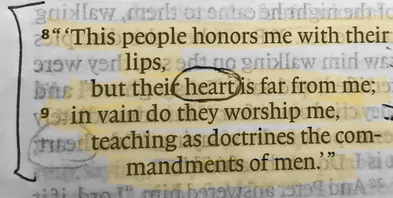
Mark 7:1-13 depicts Jesus’s controversy with the Pharisees over Scripture and its authority. A dispute had arisen over handwashing. The Pharisees’ concern was a religious one, that they might be “defiled” (v.2) and they therefore insisted on a ceremonial handwashing according “to the tradition of the elders” (v.3). Their objection to Jesus was that His disciples did not walk according to this tradition (v.5). To this, Jesus replied: “You leave the commandment of God and hold to the tradition of men” (v.8).

everyday theology
What is the most urgent need of the church today?
Michael Reeves
Date posted: 27 Mar 2025
What is the most urgent need of the church today? Better leadership? Better training? Healthier giving? Orthodoxy? Moral integrity? Each of these are undoubtedly needs, but underneath them all lies something even more vital: gospel integrity.
In Luke 12, when thousands had gathered together to hear Jesus, He began to say to His disciples first: “Beware of the leaven of the Pharisees, which is hypocrisy” (v1). That might have been unsurprising had He been warning the people as a whole, but He said it to his disciples first, to those who had already left all and followed Him.

everyday theology
The good life in Christ: rejoicing in suffering
Michael Reeves
Date posted: 5 Mar 2025
Is ‘the good life’ a life without suffering? Ease and prosperity in and of themselves are not really what make up the good life. Christ Himself was made like His weak and tempted brothers in order that He might help those who are tempted (Heb.2:16-18), and in the same manner, it is weak and suffering people that God has chosen to minister to the weak and suffering.
The great Refiner uses the days of small things. He uses the setbacks and discouragements, and even severe suffering, for our ultimate blessing. He did just that at the cross: it was through that darkest and most discouraging day that He definitively overturned and defeated the very root of darkness and suffering. Through that death He defeated death; through our comparatively light sufferings He is able to defeat our selfish independence and our foolish wandering and to make us more like His free and victorious Son. For those who have even glimpsed the unfettered beauty of Jesus, that thought itself puts mettle in our joy.

everyday theology
Even our trials are in His kind hands
Michael Reeves
Date posted: 29 Jan 2025
‘Beloved, do not be surprised at the fiery trial when it comes upon you to test you, as though something strange were happening to you. But rejoice insofar as you share Christ’s sufferings...’ (1 Pet. 4:12–13).
Peter can urge us to rejoice in our sufferings not because he’s a religious masochist but because he knows: Christ is the firstborn, our forerunner, and where He goes, we follow. He is our Head, and like in a birth, the body must follow where the head goes. This is the pathway through suffering to glory.