Found 4 articles matching 'Leonardo De Chirico'.
evangelicals & catholics
Relic religiosity

Leonardo de Chirico
Date posted: 1 Oct 2023
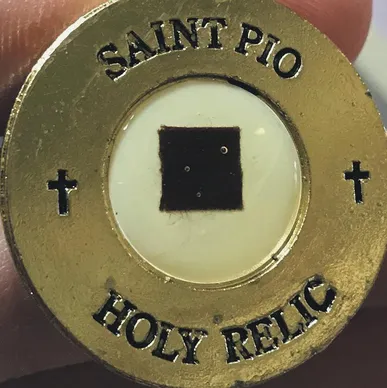
The veneration of relics is tragically alive and well.
This September, a relic of the heart of Saint Pio (Padre Pio) will be exposed for veneration in San Giovanni Rotondo (southern Italy), where Saint Pio (1887–1968) lived most of his life and is buried.
evangelicals & catholics
Tell a Catholic – part two
Leonardo de Chirico
Date posted: 1 Jul 2023
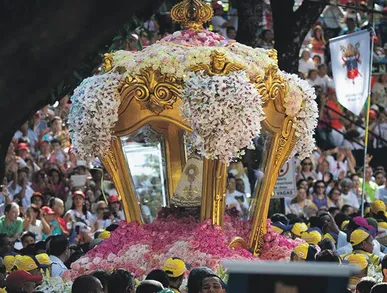
Because of the massive number of Roman Catholics around the world (1.3 billion people!), there is a high probability that all of us have neighbours, friends, family members and colleagues who are such.
Wherever you are in the world, Roman Catholics will likely to be your next door neighbour. Many Catholics believe and behave like most Western secular people do: without any sense of God being real and true in their lives. In other words, they are not born again, regenerated Christians.
evangelicals & catholics
Top tips for telling Roman Catholics about Jesus
Leonardo de Chirico
Date posted: 1 Apr 2023
We may well know people who are professing Roman Catholics. They may be friends, colleagues, family members, neighbours.
They may be practicing or just nominal. They may be disconnected from their church or serious about their loyalty to it. They may be interested in starting a ‘spiritual’ conversation or indifferent towards religious things. They may be consistent with what they profess to believe or have their own ‘fruit salad’ type of belief system where elements of Roman Catholicism are combined with Eastern religions or secular practices. That is to say that Roman Catholics can be very different people. How can we communicate the gospel to them?
evangelicals & catholics
Paradigm shift?
Leonardo de Chirico
Date posted: 1 Feb 2023
It was the historian Paolo Prodi (1932– 2016) who coined the expression ‘Tridentine paradigm’ to indicate the set of identity markers that emerged from the Council of Trent (1545–1563) and which shaped the Catholic Church for centuries, at least until the second half of the 20th century.
Prodi explored the self-understanding of the institutional Church of Rome which, in the wake of and in response to the ‘threat’ of the Protestant Reformation, closed hierarchical and pyramidal ranks up to the primacy of the Pope. The Church consolidated its sacramental system, regimented the Church in rigorous canonical forms and parochial territories, and disciplined folk devotions and the control of consciences. It promoted models of holiness to involve the laity emotionally and inspired artists to celebrate the new vitality of the Church of Rome in a memorable form.
-
Previous
- Page 1 of 1
-
Next