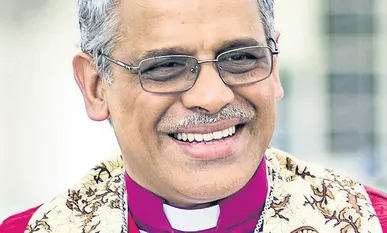
EFAC reorganises & renews its mission
Chris Sugden
Date posted: 1 Feb 2018
At a meeting of Trustees in October, the
Evangelical Fellowship
in
the Anglican
Communion (EFAC) restated its vision and
appointed new leadership.
EFAC’s purpose remains to encourage and
develop biblically
faithful
fellowship and
mission throughout the Anglican world. It
is adjusting its goals and strategies to best
serve its constituency, which has seen tremendous change since John Stott founded
the Fellowship in 1961.

Leadership and the Oxfam scandal?
Chris Sugden
Date posted: 1 Apr 2018
The scandal surrounding Oxfam staff in Haiti in 2011 has brought to light the need for the leadership in global organisations to address the imbalance of power between well-resourced institutions and desperate people struggling to survive in a disaster zone.
At the heart of the issue is accountability. The history of Christian mission, and of the Anglican Communion in particular, suggests that accountability must be rooted in the local situation. Anglican bishops around the world long since ceased to be accountable to any UK-based ecclesial body. They are leaders in their own ‘provinces’ and accountable to their own people. Powerful charities, which are the 21st-century equivalents of 19th-century missionary societies, could do well to develop similar models of local accountability, to address the issues and implications of the imbalance of power and its misuse.
Just who is raising objections?
Chris Sugden
Date posted: 1 Oct 2017
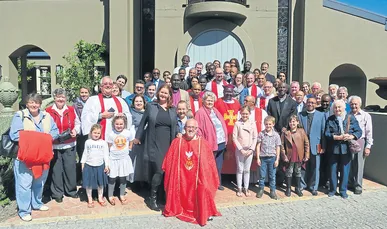
Five bishops in the Anglican Church of Australia have asked their church lawyers whether bishops can take part in consecrating another bishop of a church which is not formally part of the Anglican Communion.
They raised objections to the consecration in May of the Rt Revd Andrew Lines of the Anglican Church in North America by the Archbishop of Sydney and bishops of Tasmania and Northwest Australia. These proceedings were set to dominate the meetings of the Church’s General Synod in September.
Looking outwards with the gospel
Chris Sugden
Date posted: 1 Apr 2017
In February, the Secretary General of the
Anglican
Communion,
a
Nigerian
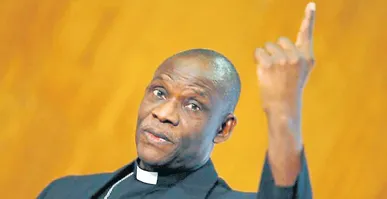
Archbishop, Josiah Idowu-Fearon, addressed
the General Synod of the Church of England;
and Growth and Decline in the Anglican
Communion – 1980 to the Present, edited by
David Goodhew of Cranmer Hall, Durham,
was launched at a conference.
Archbishop Fearon clarified that the term
‘Anglican Communion’ referred to churches
which find their common roots through the
CofE and its tradition to the witness and mission of the apostolic church. ‘The very word
anglicana implies a living tradition of faith in
the gospel as this church has received it …
from Augustine of Canterbury … to renewal
in
the English Reformation and beyond.’
‘They feel they owe so much of their faith, in
human
terms,
to
the
faithful giving of
Christians in the CofE over the centuries.’

Global South & GAFCON collaboration
Chris Sugden
Date posted: 1 Nov 2016
Delegates from 16 Anglican Provinces attended the sixth Global South conference at All Saints Cathedral, Cairo from 3-8 October, along with guests from Australia, Canada and England.
They issued a conference communiqué which gives strong counsel to the Church of England and foreshadows development of a structure to sustain orthodox Anglicanism. The Primates Councils of the Global South and GAFCON issued a further joint com-muniqué concerning same-sex unions.
Africa: Council of Anglican Provinces
Chris Sugden
Date posted: 1 Oct 2016
The Council of the Anglican Provinces of
Africa (CAPA) was
founded
in 1979
in
Chilema, Malawi, by the Anglican Primates
of Africa. It reaches out to individuals, communities and groups through more than 40
million dedicated Church members in the
25 African countries with an Anglican presence. That 40 million
is over half
the
Church-going Anglicans in the world.
CAPA is headed by a council to run the
Provinces’ activities. Its secretariat, headed
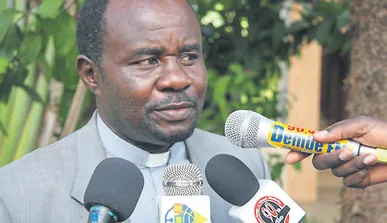
by General Secretary Canon Grace Kaiso
from Uganda, is based in Nairobi, Kenya.
Sudan: new GAFCON province bishop
Chris Sugden
Date posted: 1 Apr 2016
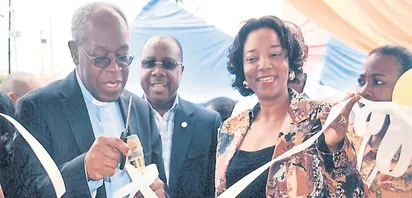
Canon Precious Omuku from Nigeria, the Archbishop of Canterbury’s Adviser on Anglican Communion Affairs and seconded from the Anglican Communion Office, was consecrated assistant bishop in Juba, South Sudan, in a televised ceremony on 3 January at the age of 68.
Bishop Omuku will remain in London as a special envoy of the Archbishop of Canterbury and be an international advocate for the Anglican Province of Sudan and South Sudan.
South Africa: a vision for new freedoms
Chris Sugden
Date posted: 1 Jan 2016
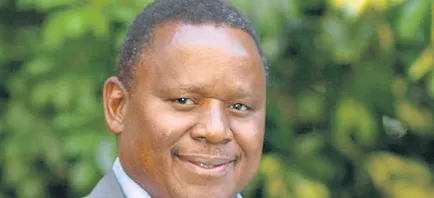
South Africa witnessed
two major campaigns in October and November. Tens of
thousands of students protested against a
rise in student fees, ‘Fees must fall’, and the
Anglican Archbishop, Thabo Makoba, and
the Director of the Evangelical Alliance of
South Africa, the Revd Moss Ntlha, led an
anti-corruption march of 6000 people.
These protests against the government by
churches which had
supported
the anti-apartheid struggle marks an important step
in the development of South Africa since
freedom from apartheid came in 1994.
Reaching for the summit?
Chris Sugden
Date posted: 1 Nov 2015
‘Summitry’ was a regular part of the Cold War. The USSR and the USA faced each across the Iron Curtain with separate alliances, the North Atlantic Treaty Organisation and the Warsaw Pact. Their leaders could not meet as part of one organisation, without recognising the unrecognisable: the West did not recognise the division of Berlin. In 1963 John F. Kennedy proclaimed across the Berlin Wall: ‘Ich bin ein Berliner’.
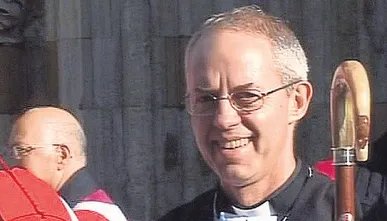
But US and Russian Presidents did meet in ‘summits’. And Archbishop Justin Welby has called a summit of Anglican Primates in Canterbury for 11–16 January 2016 in these words:
New term, fresh faces
Chris Sugden
Date posted: 1 Oct 2015
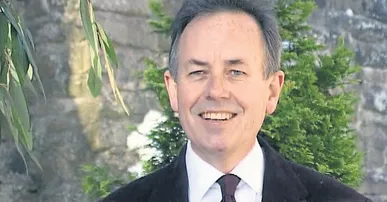
In the Western hemisphere, September saw a new year for schools, universities and many professional bodies. This year it saw the elections for the new five year term of the Church of England General Synod and four new appointees in the Anglican Communion and the Church of England take up their office and ministries.
They all come from evangelical and orthodox backgrounds and commitments.

Christian Aid?
Chris Sugden
Date posted: 1 Apr 2015
Christian Aid Week in May is an established national institution. Thousands of volunteers, including me, drop red envelopes through people’s letter-boxes and collect them at the end of the week. Thousands who never attend church respond generously to appeals to help the most deprived in the world.
Christian Aid began in response to the refugee crisis at the end of the Second World War. It puts into practice the teaching of Jesus to love our neighbours and to obey him in helping the poor, the hungry and the naked. Jesus did not specify that these poor people had to be Christian.
Locating Lambeth?
Chris Sugden
Date posted: 1 Dec 2014
Transition of leadership is always a testing time for organisations.
This is certainly true for the Anglican Church in North America (ACNA), which came into being in 2009. Following the consecration to the office of bishop of a man who was in a samesex relationship, those who could not accept this within a Christian church formed a new church, faithful to Anglican teaching. It was recognised by the Global Fellowship of Confessing Anglicans (GAFCON), which first met in 2008 in Jerusalem.
Nigeria: David Cameron gets it right
Chris Sugden
Date posted: 1 Jul 2014
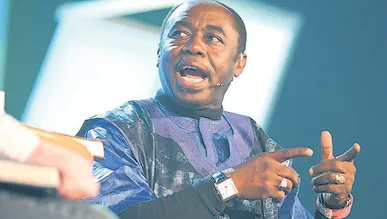
On Sunday June 29, Canterbury Cathedral hosted a service of Celebration and Thanksgiving, marking the 150th anniversary of the consecration of Samuel Ajayi Crowther in the Cathedral as Bishop of the Niger.
Bishop Crowther had been a slave and was made the first Anglican black bishop, of the Niger. He was an evangelist and church planter and promoted ‘wholistic mission’ especially combatting the slave trade. His slogan was ‘The Bible and the Plough’. The tragedy was that the Anglican church worldwide had no further non-white bishops until Bishop Azariah in India in 1912. Crowther, who was a distinguished linguist with a DD from Oxford, was too much of a threat.
GAFCON: largest since Lambeth
Chris Sugden
Date posted: 1 Dec 2013
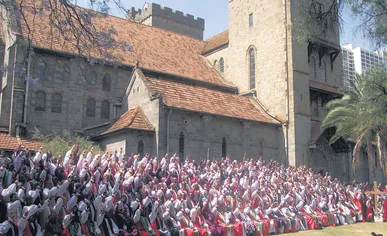
GAFCON 2013, which met at the Conference Centre and Cathedral at All Saints Nairobi, can legitimately claim to be the largest worldwide gathering of Anglicans since Lambeth 1998 which was attended by all Anglican bishops and their wives.
331 bishops and archbishops and 1,358 delegates, including over 300 women, met together, among whom 120 were from England, Ireland and Wales.