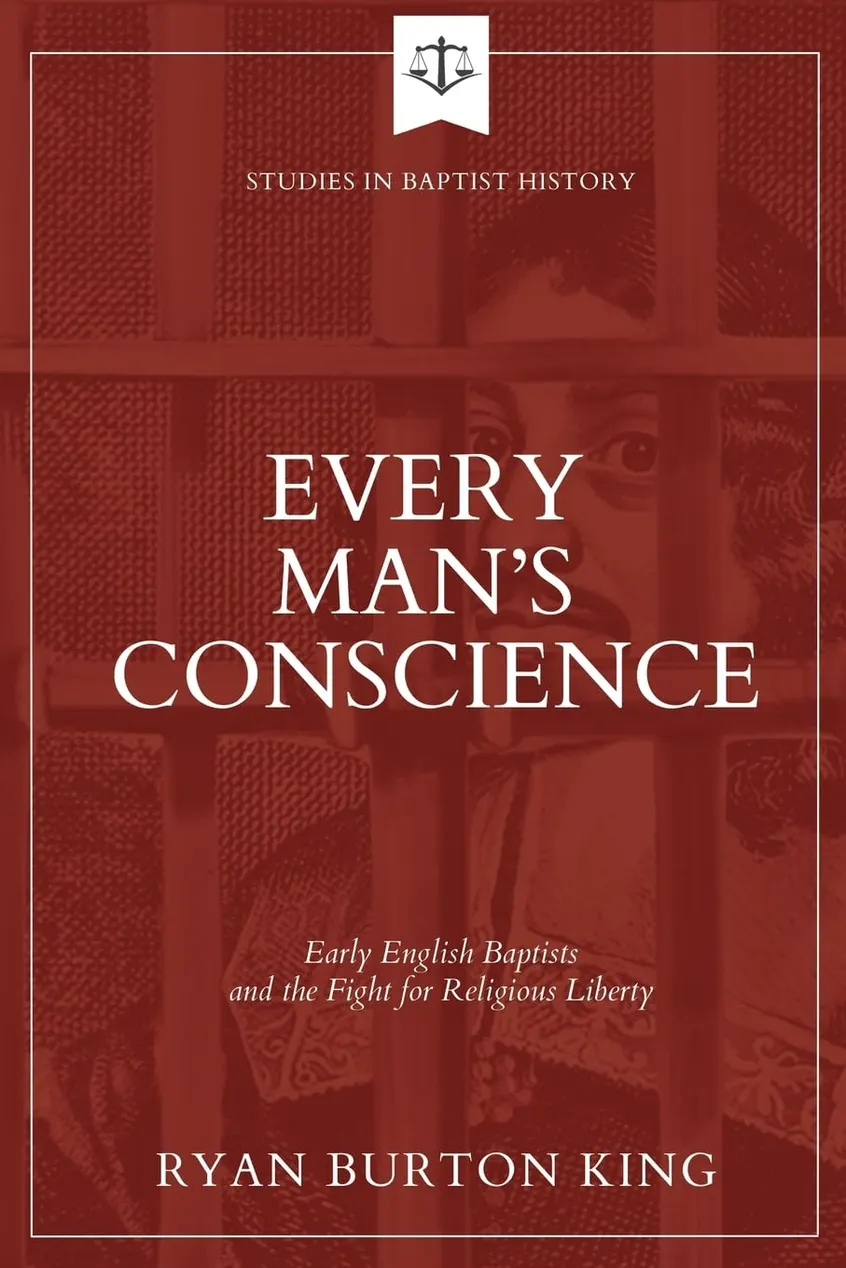
“Every man’s conscience is vile and depraved. You cannot depend on it to be your guide.” So says the preacher in Bob Dylan’s Man in the Long Black Coat. Here, by contrast, we encounter “the sanctity of every human conscience”. In doing so, we are introduced to people that we benefit from meeting, even when we may hesitate to give them our vote.
These include Thomas Helwys, Leonard Busher, William Kiffen, Roger Williams (of whom others have written) and Christopher Blackwood. There are occasional unexpected absences. Andrew Fuller, for example, who spoke and wrote helpfully on matters of Christian patriotism, William Knibb, and other Particular Baptists, are missing.
Several issues are helpfully raised, including the relation of views on religious liberty to positions on infant or believers’ baptism, the hazards of Erastianism as manifested in a state church, the rise of various forms of Christian nationalism, and positions on Christian liberty taken in the major and lesser-known Confessions of Faith. There are occasional paragraphs in the Westminster Standards, for example, that may make Presbyterians wince. He is helpful in this regard in making clear that on matters of Christian liberty, among Baptists at least, we should not view it solely through a lens of Calvinist and Arminian differences. “It was not Arminianism or Calvinism that defined Baptist views on liberty, but a simple desire to follow the Bible’s teaching.”