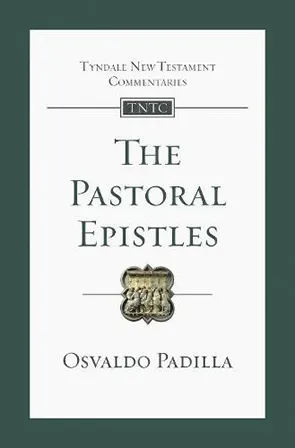
THE PASTORAL EPISTLES
Tyndale New Testament Commentaries
By Osvaldo Padilla
Intervarsity Press. 284 Pages. £16.99
ISBN 978 1 789 744 040
The Tyndale NT commentary series has long been an accessible and trustworthy resource, and I am grateful to IVP for updating and refreshing it with the best modern scholarship.
Aimed at the thoughtful reader, of value to pastors and congregation members alike, these commentaries have a laudable commitment to verse-by-verse exposition and thoughtful application.
Perhaps the greatest contribution of Osvaldo Padilla’s The Pastoral Epistles is the opening section, which provides clear and well-argued reasons for treating these letters (1&2 Timothy and Titus) as Pauline and forming a natural corpus within the New Testament. He highlights their contribution in offering instruction to church leaders addressing specific congregational problems. The commentary offers careful analysis of the text with commentary on its significance for today.
There is much to be praised in this book and it will be a welcome addition to many shelves. It does, however, have some shortcomings. Two may be highlighted in the treatment of a single chapter:
The first is a result of the format. The series is deliberately not over-technical and indeed this is one of its strengths: it remains accessible to a non-specialist audience. When it comes to highly contested passages, such as 1 Timothy 2:9-15, however, this book cannot do justice to the arguments involved. This might not be displeasing to those readers who instinctively agree with Padilla’s egalitarian reading of this text, but it will leave others unsatisfied.
The second stems from lack of engagement with the structure and flow of the letters. The handling of the instruction to pray for civic leaders at the beginning of the chapter, for example, is anaemic, because it is treated in isolation and neglects that the reason the Ephesian Christians are not living ‘peaceful and quiet lives’ is more internal than external. This church, after all, had to be told that prayer meetings should not be punch-ups and that appointing drunkards to positions of oversight was inappropriate.
A thoughtful reader wanting an aid to understanding in reading the Pastorals will find much to appreciate. A preacher grappling with preaching these letters will benefit more from Mounce’s volume in the Word series.