The ‘old’ question

Hugh J Thomson  |  Reviews
Date posted:  1 Feb 2016
Share Add       
The ‘old’ question

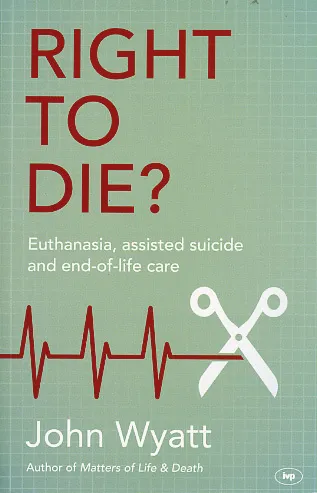
RIGHT TO DIE?
Euthanasia, Assisted Suicide and End-of-life Care
By John Wyatt
IVP. 191 pages. £8.99
ISBN 978 1 783 593 866

This book’s ambiguous title captures the issues well: are there circumstances in which it is right to bring about death, and has an individual a right to that course?

Following an introduction setting out the recent shift in thinking from relief of pain to individual choice and control, Dr Wyatt gives us a timeline of publications and laws on euthanasia, demonstrating that this is not a new debate.

Nazi concept

After a series of contemporary case studies in Chapter 1 we are faced with the Nazi concept of the ‘life not worthy to be lived,’ and a description of the current situation in the Netherlands and a number of other countries, with particular mention of the Dignitas Clinic in Zurich, available to people who are just ‘tired of life’.

Chapter 3 focusses on the UK, noting that the Voluntary Euthanasia Society changed its name in 1961 to Dignity in Dying, mislead-ingly implying a natural process. The mushrooming elderly population with poor health, loneliness and an increasing incidence of dementia constitute a ‘demographic time bomb’. Chillingly, we read the utilitarian argument that euthanasia would save money, limit overpopulation and provide organs for transplant.

A blessed burden

Chapter 4 then examines the ‘argument from compassion’, which claims that the loving thing to do is to bring to an end unbearable suffering. Chapter 5 critiques the ‘argument from autonomy’ in which patient choice rules. Wyatt calls this ‘the ethics of the kindergarten’.

Chapter 7 gives a Christian perspective, and we read that ‘in God’s creation order we are meant to be a burden to one another’. Perhaps it would have been helpful to remind us here that suffering, illness and death were not in God’s world before the Fall and will no longer exist in the new creation.

Chapter 8 deals with the medical issues – ‘death becomes defined by what doctors can and cannot do’. Why should doctors be expected to be professional killers, when palliative care can help someone to ‘live until they die’? After setting out the legal framework the final chapter explores what it might mean to ‘die well’. A wider biblical perspective might have raised the issue that in one sense there is no such thing as a ‘good death’ – death is not what we were designed for and it is ‘the last enemy’ (1 Corinthians 15.26).

Thorough and thoughtful

This book opens up these complex and disturbing issues with a thoroughness and thoughtfulness which should challenge us and drive us to prayer.

Share
< Previous article| Reviews| Next article >
Read more articles by Hugh J Thomson >>

About en

Our vision, values and history

Read more

New here?

Register and get three free articles each month!

Register