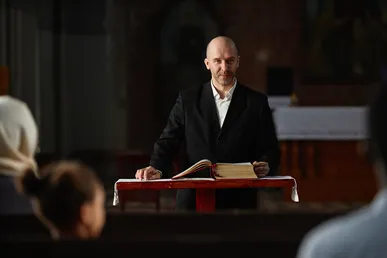
Why is being a pastor ‘a noble task’? Could you be one?

Alasdair Paine
In December 1926, a 27-year-old doctor, Martyn Lloyd-Jones, left a London medical career in which he was making stellar progress to become pastor of a small church in a steelmaking town in South Wales. His move provoked public astonishment, even reaching the papers. Headlines included this: “Leading Doctor Turns Pastor: Large Income Given Up for £300 a year.”
One result of his move was that he was sometimes asked to give his testimony about the sacrifice he had made. He always refused. On one such occasion, he said: “I gave up nothing. I received everything. I count it the highest honour that God can confer on any man to call him to be a herald of the gospel.”1

New report reveals Gen Z's priorities - not just in the West, but worldwide

Lydia Houghton
A new report, published today and authored by Peter Dray, reveals that "Generation Z" prizes living better, not just living longer.
Gen Z Insights for Global Student Ministry - published by the International Fellowship of Evangelical Students (IFES) - examines four "Gen Z" traits across multiple countries: pursuit of wellbeing; digital immersion; cultural awareness; and spiritual openness.

Rooted shepherds: A vision for healthy pastoral ministry

Dan Steel
In a busy, bustling world, healthy pastoral ministry begins not with motion, but with a kind of stillness, an abiding, a willingness to dwell where God has placed you, even when your heart feels tired or stretched thin.
Many pastors and ministry leaders quietly carry the weight of wondering whether they should be doing more, producing more, or moving on to something larger. Yet the gospel’s invitation is gentler than that.
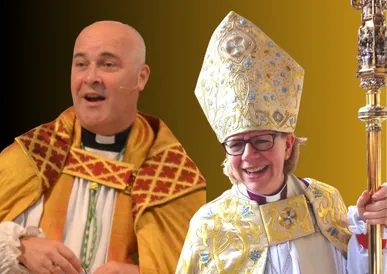












































































Prospective Christian leader, are you scared of failure?
When did it become unacceptable for leaders to fail? I don't mean in the category of moral failure, but rather being responsible for a leadership decision that frankly didn't work or, in hindsight, was a bad call.
The much-documented crisis in so few people choosing to train for ministry positions is complex, but my conversation with many who considered the path into Christian leadership but chose not to pursue it often was explained as a fear of being overwhelmed by criticism. It seems to me that the fear of failure in our culture has grown exponentially – and to the detriment of Christian leadership – precisely because it has become such a taboo.