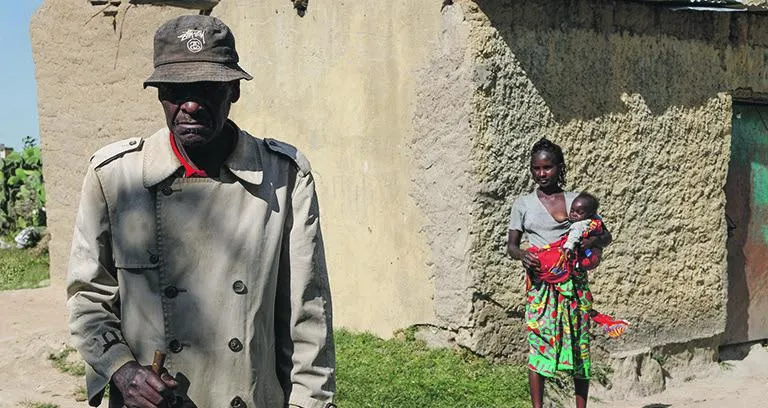
At dusk in Ondjiva, a few young Angolans may gather on plastic chairs with a Bible, a notebook and a question: who will help this neighbourhood follow Jesus?
It is not a platform. It is not a conference hall. It may be a yard, a veranda, or the shade of a mango tree after a long day of school, work and family responsibilities. Someone prays. Someone reads Scripture. Someone speaks honestly about fear, sin, family pressure or unemployment. Slowly, quietly, disciples are being made.
This kind of work rarely makes international headlines. Yet it may be one of the most important things God is doing in Angola today.
To many outside observers, Angola does not look like an obvious missionary priority. It is widely identified as a Christian country. Mission researchers estimate that more than 90% of Angolans identify in some way with Christianity, and roughly a quarter of the population is evangelical. But Christian identity and deep discipleship are not the same thing. Angola is not spiritually empty, but neither is it spiritually finished. The urgent need is for men, women and young people not merely to call themselves Christian, but to know Christ, obey His Word, grow in holiness, and learn to help others do the same.
That need is sharpened by Angola’s youth. With more than 36 million people and around half the population under the age of 18, Angola is a young nation. When we sit with a teenager in Lubango, Benguela, Huambo, Luanda or Cunene, we are not only sitting with one person. We may be sitting with the future of a family, a neighbourhood, a church and, under God, a nation.
At the same time, Angola lives with striking contrasts. It is rich in natural resources, yet many ordinary families face daily economic pressure. Oil dominates the national economy, unemployment weighs heavily on young people, and informal work is a normal part of survival. In such a context, short-lived religious excitement is not enough. Angola needs durable discipleship: believers rooted in Scripture, formed in character, trained for witness, and sent on mission.
Through The Navigators Angola, we are seeking to cultivate a simple, Biblical and reproducible culture: disciples who make disciples. We are not trying to build a ministry around events. We are praying for ordinary believers who help others follow Jesus in ordinary life – in homes, schools, universities, workplaces, markets and neighbourhoods.
One of the main ways this happens is through small communities in homes. These are Bible-centred groups where people pray, study Scripture, confess struggles, care for one another, share the gospel, and learn to serve. A home-based community is not merely a weekly meeting. It is a spiritual family where people are known, loved, challenged and sent.
This vision is now taking a particular shape in Cunene Province, in southern Angola. In 2026, we are preparing a four-week discipleship training camp in Ondjiva, bringing together teenagers and young adults from several provinces where discipleship work, home communities and missionary initiatives already exist. The theme is simple: Evangelise. Disciple. Equip.
The camp is not designed as a holiday programme, nor merely as a retreat. Each day will form young people in the Word of God, Christian character, evangelism, discipleship and leadership. In the mornings, participants will learn to meditate on Scripture, study the Bible, memorise God’s Word and pass it on faithfully. They will also work through practical areas of Christian formation: repentance, holiness, integrity, time management, Biblical finances, forgiveness, humility, and dependence on the Holy Spirit.
In the afternoons, the training moves into the streets. Teams of five or six will enter different areas of Ondjiva to build relationships, share the gospel and begin simple evening communities. The aim is not aggressive or superficial outreach, but faithful presence. They may play football with young people, speak in barbershops, visit families, listen to prayer requests, share testimony and invite neighbours into a simple Bible conversation.
Our prayer is that, by the end of the month, around 20 new communities will continue in Ondjiva. We do not want the fruit to vanish when the camp ends. For that reason, the plan includes local hosts, emerging leaders, existing relationships, church partnerships, WhatsApp follow-up, mentoring visits and ongoing discipleship. The goal is not a successful event. The goal is a multiplying movement of disciples who make disciples.
But the story is bigger than Cunene. Angola is not only a mission field. God is forming Angola into a missionary force.
For many years, African nations were often spoken of mainly as places that received missionaries. We thank God for those who came, suffered, preached, taught and planted seeds. But the Spirit of God has not finished His work. The gospel that came to Angola must also go through Angola. We are asking God to raise Angolan disciples, evangelists, leaders, workers and missionaries who will serve within the country, cross borders, and bless the nations.
We are already seeing early signs. This year, four Angolan leaders are being prepared to take part in Navigators Africa training in Kenya.1 That may sound like a small detail, but to us it is deeply significant. Angola is not only receiving training from outside; Angola is beginning to contribute leaders, faith, experience and workers to the wider African mission field.
We have also already sent five Angolans for a two-year missionary discipleship training programme with The Navigators Nigeria.2 They have now returned, and the fruit is already being seen. One of them, Ignaldio Junior, is serving long-term in Namibia. He is a small but visible sign of what we are praying God will multiply: Angolan disciples formed deeply enough to serve Christ beyond familiar borders.
Short-term mission has also become part of this formation. In recent years, Angolan disciple-makers connected with our work have served on mission trips across around 11 provinces of Angola and beyond the country’s borders, including Namibia, Zambia, Kenya and Mozambique. Each trip stretches faith. Each trip exposes young leaders to new cultures, needs and forms of obedience. Each trip tells the Angolan church: the nations are not as far away as they seem.
Another important step is the preparation of Angolan leaders for global mission spaces. We are mentoring several young Angolans who are preparing for YLG 4, the Lausanne Movement’s global Younger Leaders Gathering, planned for Brazil in 2027.3 For us, this is not simply an opportunity to travel. It is a way of helping young Angolan leaders see global mission with humility, theological depth and responsibility.
Sometimes mission begins not with a formal sending service, but with work, migration, and obedience in the place where God puts a person. Elizandra Reis moved to Portugal for employment, but she did not leave discipleship behind in Angola. She continues to make disciples there. Her story matters because diaspora believers can carry the gospel naturally into workplaces, friendships, homes and cities that formal missionaries may never reach.
This is where Angola’s missionary potential becomes clear. Angola has a young population, a deeply relational culture, a history marked by suffering and perseverance, and a natural place within the Portuguese-speaking world. Angolans can build bridges in Mozambique, Guinea-Bissau, São Tomé and Príncipe, Cape Verde, Portugal, Brazil and African diaspora communities across the world. The Portuguese language opens doors. African experience creates understanding. Angolan community life provides strong soil for relational discipleship.
My own doctoral research strengthened a conviction we were already seeing on the ground: missionary movements are not born only from clever strategies. They grow when culture changes. When the church stops treating discipleship as a programme and begins to embrace it as a way of life. When leaders measure fruit not only by large meetings, but by disciples who make disciples. When young believers stop asking only “What can I receive?” and begin asking “Whom can I help to follow Jesus?”
That is why our long-term vision is bold. By 2050, we are praying to see 10,000 disciple-makers trained in Angola, with 1,000 of them sent to more than 100 nations. By 2070, we are asking God that Angola will have sent missionaries to every nation. This is not a statement of human confidence. It is a prayer before the Lord of the harvest.
For British evangelicals, Angola challenges an older missionary imagination. Mission can no longer be understood simply as the West sending and the rest of the world receiving. By God’s grace, the global church is becoming a shared missionary body. The kingdom of God does not belong to one continent. It advances as all peoples receive Christ and then join in the mission of Christ.
Angola still has much to receive from the wider church: prayer, training, encouragement, resources, and faithful friendship. But Angola also has much to give. Angolan believers know the strength of community. They understand perseverance in hardship. They value relational presence. And they can carry the gospel with cultural humility into places where others may face greater barriers.
Our dream is not simply to run programmes. It is to see a generation formed: young Angolans who love Jesus deeply, know the Scriptures faithfully, live holy lives, make disciples courageously, build authentic Christian communities and carry the gospel through Angola and to the nations.
Please pray for Angola. Pray not only for conversions, but for disciples. Pray not only for meetings, but for multiplication. Pray for young people in Cunene, Lubango, Benguela, Huambo, Luanda, and many other regions. Pray for communities that continue after the excitement of a camp has passed. Pray for local leaders to emerge, churches to be strengthened, and Angolan missionaries to be sent.
One line from our preparation material has stayed with me: “This is not the end. It is only the beginning.”
That is how we are praying in this season. May God make Angola not only a country with many churches, but a nation of disciple-makers. And may some of those being discipled in Angola one day bless the nations with the gospel of Jesus Christ.
FOOTNOTES 1. Full list of Kenya training participants: Ludmila Manico, Eusébio Satengue, Evaristo Saly and Hedmilson Manuel. 2. Full list of Angolans who completed the two-year Nigeria training: Henrique and Isidora Jacinto, Freitas and Isabel Canhanga, and Ignaldio Junior. 3. Full list of YLG 4 participants mentored by The Navigators Angola: Osvaldo Satengue, Ludmila Manico, Henriques Bié, Feliciano Peti, Ignaldio Junior and Rogério Mutunda. Other Angolans are also involved in the wider gathering.