
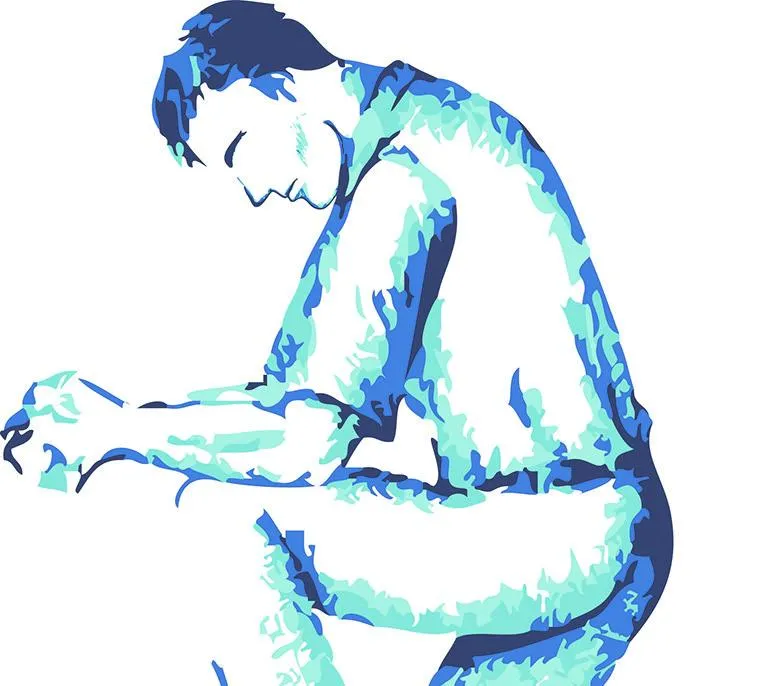
Like me, you may be more intimidated than inspired by stories of figures like Martin Luther rising before dawn to get in three hours of prayer before the day began. These examples seem utterly unattainable for the ‘normal’ believer. Yet even Luther’s early morning vigil falls a long way short of the call to “pray without ceasing” (1 Thess. 5v17). If we can’t even manage three hours a day, what hope do we have for prayer that never ends?
This is not a new question for believers. Roughly 1,600 years ago the North African pastor, Augustine, was wrestling with just that. His reflections, especially on Jesus’ teaching in Matthew 6, give us cause to rethink what ‘counts’ as prayer.
Prayer is a disposition of the heart
Embedded in the middle of the Sermon on the Mount (where Jesus famously reframes external practices in light of the deeper state of the heart), His teaching on prayer moves us away from thinking first and foremost about what we say and when we say it. Instead, prayer has at its foundation a disposition of the heart towards God.




'An angular Messiah is our only hope'
Having devoured Jonathan Freedland’s The Escape Artist (2022) with fascination, I wasn’t going to miss reading his latest, The Traitors …