From poles apart to magnetic points

John Woods  |  Features
Date posted:  1 Jul 2023
Share Add       
From poles apart to magnetic points

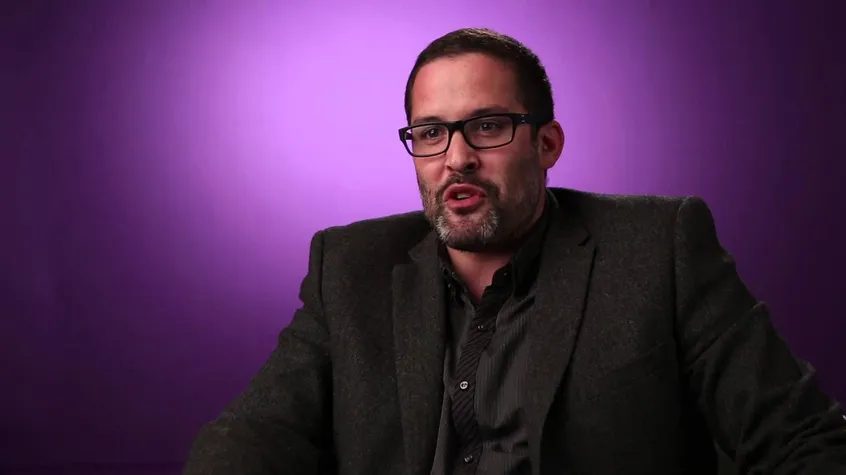
Dan Strange

en reviews editor John Woods interviews Dr Dan Strange, Director of the Crosslands Forum.

Before joining Crosslands full time, Dan was College Director for Oak Hill Theological College. A former UCCF worker with a PhD in Theology and Religious Studies, Dan lives in Gateshead with his wife Elly and most of their seven children, where they are part of Hope Community Church. He is a trustee of Tyndale House and author of several books including Making Faith Magnetic.

en: You are a busy man, Dan. Thank you for making time to speak to en. What do you do to relax?

DS: I love music, classical and jazz especially. I am a big follower of West Ham United Football Club. I enjoy sport in general and am looking forward to the Ashes. I try to amble around the parkrun each Saturday to keep fit.

en: You lead Crosslands Training – what distinctive things does it bring to the table of theological education?

DS: It is theology for life, wherever you are at in your discipleship. We are aspiring to offer formation from the first steps of discipleship to PhD through our faculty and seminary. I am responsible for Crossland Forum. We aim to supplement training that is already going on in the local church. Our foundational courses are like Lego blocks that leaders can use. I am seeking to help pastors think through cultural engagement. We also put a lot of effort into an underdeveloped area of theological education: pedagogy (learning design).

en: You have written an enthusiastic introduction to a new edition of J.H. Bavinck’s The Church Between Temple and Mosque. You say: ‘The little book you are about to read preserved my spiritual sanity.’ How did you first encounter Bavinck, and why was it so important?

DS: I was converted through The Boys’ Brigade and wanted to go to study theology at university. I realised very quickly that as an evangelical believer it was going to be hard. It was a radical department, and the reading list I was given made me wonder how I was going to navigate this. I was wandering around Bristol University library and found a copy of the Scottish Bulletin of Evangelical Theology that reproduced chapter 7 of Bavinck’s book: Human Religion in God’s Eyes. That was a lifeline to me, orientating me concerning what I was being taught and what I believed.

en: What does Bavinck bring to the table that other writers like Leslie Newbigin and Norman Anderson do not?

DS: There is an explicitly Reformed theological foundation. I have always appreciated Bavinck’s writing; it is very suggestive and evocative. There seems to be a real interest in and love for people. I found it solidly theologically Reformed but at the same time wanting to be creative and innovative. I was in Belfast last year speaking at a church. A lady in her 80s came up to me and said ‘I can’t believe you are talking about J.H. Bavinck. I was a missionary; he came to preach at my church when I was a girl, and even then he was a controversial figure, not in his personality, he was not bombastic, but he wanted to talk about contextualization and indigenisation, and understanding the culture well.’

en: Words like contextualization and missional are widely used. What might Bavinck have said about those terms?

DS: On contextualization Bavinck has a brilliant section on Acts 17, but he realises the danger of inhaling pagan concepts. But he says that the missionary must do this because he must start somewhere. He is cautious in terms of contextualization, but he realises that [he should be cautious] because he has such a good theological foundation.

In terms of being missional, Bavinck goes back to the Reformed concept of mission as the three-fold: glorifying God; building up the church; and evangelising of unbelievers. All three are interlinked and necessary. Bavinck used the social sciences, but his use of them had a solid theological foundation. He said: ‘Let’s look at Romans 1 and Acts 17. Let’s look at what the Bible is saying here. That must be our starting point.’

en: This book gives the background to Bavinck’s five magnetic points that inspire your book, Making Faith Magnetic. Why was this such a gamechanger for you?

DS: What this does is to build a Biblical anthropology, that says every human being has a religious consciousness. The five magnetic points are the itches that we must scratch. I find them very attractive, not just in studying other religions but also, as I seek to outline in Making Faith Magnetic, as a way to engage our post-Christian context. There are some constant human questions that human beings are asking, and Bavinck grounds that theologically.

en: You write about how Bavinck’s use of Romans 1:18-32 was a touchstone for you, helping you see the framework and posture needed to construct a thoughtful theology of religions.

DS: I hope the evangelical method is that we interpret the world through the word. I think that sometimes in the academic discourse between Christianity and other religions, people say Paul and the rest of the Bible did not have to deal with religious pluralism. I don’t agree with that. Paul lived in a very pluralistic world, and he still writes what he does in Romans 1, and Luke tells us what the apostles do in Acts.

We can’t deny in our context, that we have had 2000 years of Christian influence. Going back to the base, what is a human being, and how do human beings tick? There is a kind of paradox that all human beings know God, that they are running to him and running from him. They know him and they don’t know him. Whether you are Bavinck dealing with a Hindu in Indonesia, or me in Gateshead dealing with a secular Brit, it is the same theological anthropology that is going on.

en: I was interested to read about your family background; did it make you curious about other faiths? Do fellow Christians lack curiosity about other faiths?

DS: My Dad was from Guyana, his parents were Hindu, so that did get me interested in looking at other religions. Paul wanders around the objects of worship in Acts 17. How do we wander around the objects of worship of those we know and want to share Christ with? It comes back to a curiosity about life, how people tick. Understanding otherness, listening well. To really listen is to understand people, so if you repeated back to them what they thought, they would think we have understood it better than they do. It is an important Christian virtue to listen like this in a polarized age, where people are talking past each other.

en: How do you suggest that people approach reading Bavinck’s book?

DS: Bavinck writes well. He has an interesting way of dealing with the subject.

First, he deals with how we define religion. Secondly, he talks about these magnetic points chapter by chapter. In the remaining half of the book, he asks: ‘What does the Bible say?’ Then he goes back to the magnetic point as he looks at how the gospel shines a light on this. After 60 years some of his understandings of other religions are a bit dated, but the theology isn’t. Pick it up and start reading it, and I hope you enjoy it.

en: You talk about the church between the mobile phone mast and football stadium, between government building and mass demonstration. How can Bavinck’s thinking help us to engage those who are indifferent to Christianity?

DS: I would be disappointed if people thought that this was just a niche book for those who are studying theology and other religions. The transferability of the Biblical thinking on humanity is so useful for us as we seek to engage post-Christian secular culture. Bavinck in his later work does drop hints on how this might work in a more secular context.

en: How can the magnetic points be used imaginatively to reframe our approach in personal witness and the witness of the church.

DS: Individually thinking about how we can reach people we know and love. In local churches thought needs to be given on how people in the area are scratching the itches addressed by the magnetic points. The other thing I am starting to think about is what I am calling magnetic spaces. Where the church could create spaces where people could come and talk about issues of everyday life.

There is a brilliant resource for teaching English, called Utter Wisdom [reviewed in the May edition of en]. It is a tool to talk about proverbs, the distilled wisdom from a variety of cultures, that form a bridge to worldviews, and then lead to Jesus, who is the true wisdom of God. Could we have a magnetic framework for doing a course on parenting? This might be a way helping us to get to know people better and for them to get to know us. It is what Tim Keller called pre-pre-evangelism; and I wonder if we need to be doing more of it.

en: If you could give one piece of advice to preachers on using Bavinck, what would it be?

DS: In Making Faith Magnetic I make use of the appendix to talk about preaching on these themes. I am not saying that in every sermon we need to say: ‘Here are the magnetic points!’ Rather in your preparation in might be helpful to think through the passage and ask what magnetic points might be resonating.

en: There is something attractive about the way Bavinck writes with a timeless freshness and penetrating insight. His ability to see things clearly appears to arise in part from his personality and temperament. In what ways can he teach us not only how to think clearly about the magnetic points but also provide for us a humble model of a magnetic life?

DS: He talks about the importance of meeting in love. He is hard-line on idolatry being a terrible thing, and on the need for repentance and faith in Christ, but he realises that Christianity is one beggar telling another beggar where to find bread. He says: ‘The wounds which we inflict on the other person with the gospel, we need to recognise that they have been inflicted on us first.’ It seems that he was a very gentle guy. No malice or vainglory in the way he wants to encounter the other. It is a meeting in love, even if hard things need to be said. That posture is the sweet spot of what I think we should be looking for in apologetic engagement.

en: Not only be a better thinker but be a better man?

DS: Yes. Bavinck stresses that when we are dealing with those from another religion, we are not dealing with a religion but a person.

Like Tim Keller, who had a real academic hinterland of social science theory, but there was a very personal element to it. I think we need to do both.

Amen to that!

THE CHURCH BETWEEN TEMPLE AND MOSQUE:
A Study of the Relations between Christianity and Other Religions
By J.H. Bavinck Westminster Seminary Press. 209 pages. £29.99 (hardback)
ISBN 978 1 955 859 059

Share
< Previous article| Features| Next article >
Read more articles on:   evangelism
Read more articles by John Woods >>
Reviews
Rest refocussed through Christ

Rest refocussed through Christ

It is always a treat to receive one of these silver-covered volumes in the “New Studies in Biblical Theology” series. …

Reviews
Friendly church? Love more and more!

Friendly church? Love more and more!

BECOMING A FRIENDLIER CHURCH: A Pathway to Genuine CommunityBy Matthew D. KimBaker Books. 167 pages. £16.99ISBN 978 …

About en

Our vision, values and history

Read more

Looking for a job?

Browse all our current job adverts

Search