John Wesley judged rightly when he described slavery in America (and by implication, that of other parts of the New World) and the British slave trade as ‘that execrable sum of all villainies’.
Now, it is intriguing to note that he made this judgment not long after the death of his good friend George Whitefield, who had been entangled in the introduction of slavery into Georgia.
In making the judgment that he did, Wesley was drawing upon the now-unknown work of the Quaker Anthony Benezet (1713– 1784), whose abolitionist writings were equally and certainly available to Whitefield. Quaker opposition to slavery was well known in Whitefield’s world. It is thus an easy out to say that Whitefield’s involvement in this sinful activity was owing to the fact that he was a child of his time. For there were those in Whitefield’s day who would have rightly criticised the evangelist.
Edwards’ inconsistency
The same holds true for Jonathan Edwards, who was critical of the slave trade, but who somehow managed, sinfully and wrongly, to justify slavery. Edwards did not view the ownership of slaves as sinful. He did, on the other hand, castigate the Atlantic slave trade as morally reprehensible.
For white Europeans to use the Bible – as some did – to justify the stealing of men and women and children from various parts of Africa was ‘monstrous’ and unbiblical, Edwards argued. And yet, Edwards owned slaves and never denounced such as sin.
‘God is blasphemed’
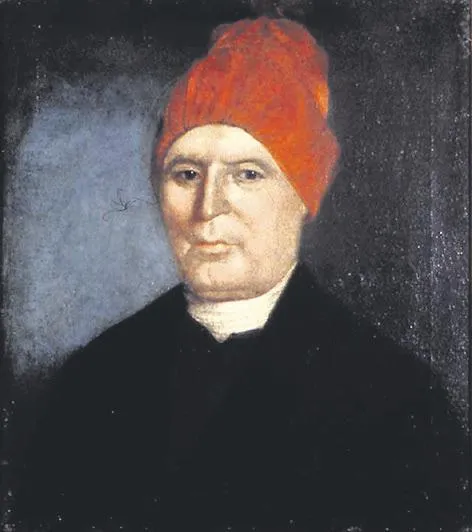
And yet, it is significant is that one of the stoutest critics of slavery in the last third of the 18th century was Edwards’ mentee and first biographer, Samuel Hopkins (1721– 1803). Following Edwards, Hopkins was horrified by the savage inhumanity of the slave trade. But he went beyond Edwards and rightly applied Edwards’ arguments against the slave trade to the institution of slavery as a whole.
At the outset of the American War of Independence, Hopkins denounced the hypocrisy of the Americans fighting for freedom (and Hopkins believed that this cause was just) when they kept Africans in slavery. Hopkins argued for immediate abolition of the vile institution.
As Hopkins stated: ‘Not only the merchants who have been engaged in this trade, and for the sake of gain have sacrificed the liberty and happiness, yea, the lives of millions of their fellow-men, and the captains and men who have been tempted by the love of money to engage in this cruel work, to buy, and sell, and butcher men, and the slaveholders of every description, are guilty of shedding rivers of blood, but all the legislatures who have authorized, encouraged, or even neglected to suppress it to the utmost of their power, and all the individuals in private stations who have in any way aided in this business, consented to it, or have not opposed it to the utmost of their ability, have a share in this guilt. It is, therefore, become a national sin, and a sin of the first magnitude – a sin which righteous Heaven has never suffered to pass unpunished in this world. For the truth of this assertion we may appeal to history, both sacred and profane.’
‘By slavery,’ Hopkins said succinctly in a recently-discovered sermon, ‘God is blasphemed’.
This remark and the longer quote above are patent critiques of the failure of his mentor, the elder Jonathan Edwards, to name slavery for the abominable sin that it was. Hopkins had lived in the Edwards home for more than a year and would have seen some of those African-Americans who were kept enslaved by Edwards.
In this year, the tercentennial of the birth of Samuel Hopkins, and in our current context of tension about past British and American involvement in the enslavement of Africans, we would do well to remember Hopkins and his friends who were pioneers in the struggle for the abolition of slavery and the slave trade. And we should thank God that there were those who saw the evil of this institution in that day.