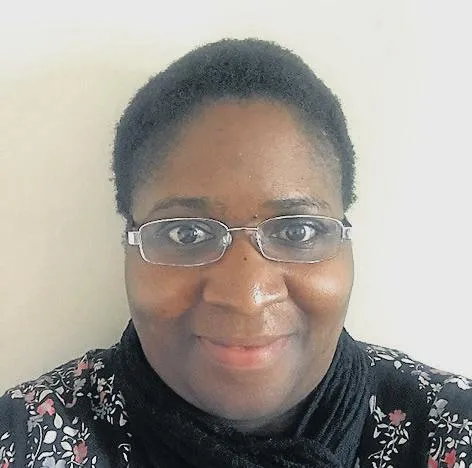
Foluso Enwerem
1. How did you become a Christian?
I went off to University in Leeds, resolved to ‘look into Christianity’ but very much from the sidelines, in order to weigh up whether or not I wanted to ‘jump’ in. Upon arrival in my halls of residence, I ‘just happened’ to make friends with a young Christian woman who very enthusiastically talked to me about Jesus and invited me along to church with her – I started going along with her each week and God continued ‘drawing me in’!
By the end of my first year, I realised that I’d ‘somehow’ gone from observing from a safe distance to being right in the middle of believing in Jesus – I couldn’t say exactly when it happened, I just knew that there was a ‘before Jesus’ and an ‘after Jesus’ to my life now.
2. What lessons have you learnt since that you would want to pass on to a younger Christian version of yourself?
“Don’t waste your time and energy believing in a ‘fault-finding God’. For maybe the first four years of my life as a Christian, I still had an image of a ‘fault-finding’ God, who was always ‘hovering around’ waiting for me to mess up – which obviously, I would – so that He could then tell me off! I’d want to tell my younger Christian self: ‘Focus on “In the beginning God…” – in the beginning, the God who is love, created…’
3. How would you describe your prayer life?
Patterned – morning, evening and night prayer; ‘in the everydayness of life’ – spontaneous prayer throughout the course of the day, often short, conversational, sometimes out loud, sometimes silent ‘in my head’; individual/personal and corporate (I really value both praying alone and praying with others).
4. Which two or three Christian books apart from the Bible have most influenced your faith?
Christ for Real by Charles W. Price; Is God Colour-blind? by Anthony G. Reddie; Exclusion & Embrace: A Theological Exploration of Identity, Otherness, and Reconciliation’ by Miroslav Volf
5. Who or what have been your biggest Christian influences?
My parents – seeing faith in God lived out engaging with the everyday reality and complexity of human life – Christian faith that doesn’t give up on God when the going gets tough; St James’ Church Muswell Hill (lots of opportunity to learn, to serve and to share the gospel); a very formative, residential year of Biblical studies at the Institut biblique de Genève (IBG) in Switzerland – their tagline was ‘Now you no longer have to choose between theory and practice’!
6. What are the main challenges you believe Christians face today?
To repent of underlying ‘imperialist’ (i.e. exclusionary, nationalistic/tribalistic) theological understandings of Christianity and to develop instead, together, a rich, intercultural theology that results in living out our Christian faith in deeply transformative ways. I really believe that will impact everything.
7. What encourages and what discourages you?
Encourages: making Jesus known in thought and word and deed – everything that speaks of the triune God who is love.
Discourages: the dehumanisation of human beings by other human beings – especially when those doing the dehumanising are Christians.
8. What makes you laugh?
Some of the gems of wisdom in Proverbs! (the one about ‘the sluggard’ and his spoon and the person turning in their bed like a door on a hinge, come to mind!)
Relaxing with family and friends, young and old, sharing anecdotes old and new, without worrying about taking ourselves too seriously.
9. What would you want to say to the wider evangelical world?
As disciples of Jesus, we all have some theological blind spots; if, as Evangelicals, we can keep growing in sharing the best of our tradition generously rather than defensively, and also receive from – with humility rather than suspicion – the best of other theological traditions, then the whole body of Christ will rejoice together. (I’m closely paraphrasing one of my tutors from theological college, there – he might recognise his words!)
10. Which Biblical person do you most look forward to meeting in glory and why?
I’m not sure if it is looking forward to as such, but I’ve long been very curious about King Hezekiah; I’d like to ask him more about what he was really thinking and feeling as he lived out the extension-of-life years that he requested and that God granted him – and during which a whole lot of trouble was set in motion!