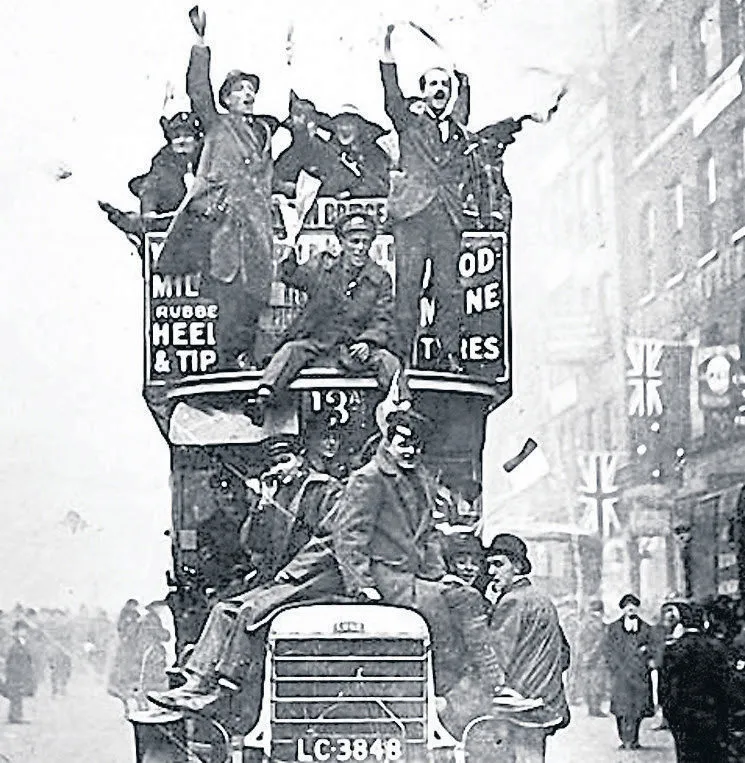
On 11 November 2018, Britain will remember the Armistice which ended fighting on the Western Front.
SASRA (Soldiers’ and Airmen’s Scripture Readers Association) has marked this through the publication of Army Scripture Reader Bill Ransley’s 1918 journal. Bill visited sick and wounded soldiers in military hospitals near Boulogne, France. His journal includes comments about making a clear stand as a believer and the end of the war:
Making a clear stand
A mother of a wounded patient in hospital on a visit to her son, said: ‘I have been living the Christian life for the last 16 years. Last night, I had one of the greatest temptations of my life. As you may be aware, in the YMCA Hostels the husbands have to sleep in one room and the wives in another. In my bedroom there were five other women. When I retired to rest, I was fearfully tempted to act the coward by not saying my prayers openly; but after a great struggle I gained the victory and knelt by my bed. I realised then what an ordeal it must be for our boys to say their prayers openly before their comrades. Next morning, I told my husband of my experience overnight. He said: “I had a similar experience.”
‘This day, the son of one of the five women in my bedroom, died. At night, she and I were in the room by ourselves, and she was crying bitterly in her sorrow. She came up to me, and said: “I saw you saying your prayers last night; I wish I was a Christian, and had Christian consolation now. Will you pray for me?” We knelt down then and there, and I prayed, and tried to lead her to put her trust in God. She was greatly comforted. I was so glad I had prayed openly the night before, when I found it led to my being able to help her.’
The war ends
Talking to a number of wounded patients about the Armistice, and how glad we all were that the horrible wounding and killing was over, they all told me … that: “many men will serve God as the result of their experience in the war.”
Those who have survived all the horrors of it can never again regard war as the ‘glorious’ thing which poets and rulers have represented it to be. The man behind the front, who has escaped the hardships, privations, sufferings and horrors of war, and who therefore is incapable of understanding what it means, may continue to indulge in the sentiment: ‘How glorious it is to die for King and Country.’ But the man from the front, who has ‘had some’, as Tommy expresses it, knows it to be what it really is – a cruel and terrible science, which sweeps away by death and destruction, in the most devilish manner, the flower of the youth of all countries, and the prosperity of many generations. And it will be heart-breaking if from this stupendous cataclysm of war no lasting good to the world and to Britain can be brought forth.
The main cause of the Great War, with all its horrors, was that the teachings of Jesus Christ were despised and denounced as a ‘slave morality’, and this not only by Germany, but also by many Britishers, if not in word, at any rate by action. An essential feature of any real reconstruction must be the recognition of the principles taught by him.
For information about SASRA’s 100 Days Prayer Event visit www.sasra100days.org.uk SASRA has marked the centenary of the First World War through the publication of Army Scripture Readers’ journals.