Reformers and mission II

Michael Haykin  |  Features  |  history
Date posted:  1 Aug 2018
Share Add       
Reformers and mission II

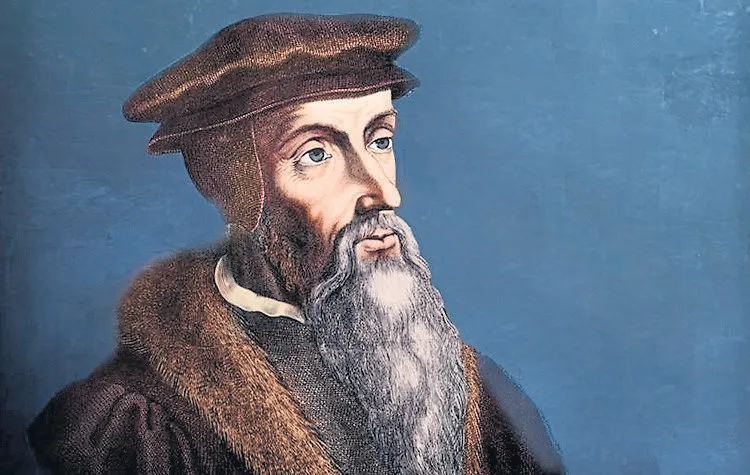
John Calvin

Last month we begin to think about the argument that the Reformers had no missionary vision or passion.

This month we continue to ponder this important theme by looking at John Calvin’s thinking about the missionary advance of the church.

God, the architect of missions

First of all, Calvin is quite certain that the extension of Christ’s kingdom is first of all God’s work. Commenting on Matthew 24.30, he can assert that it is not ‘by human means but by heavenly power … that the Lord will gather his church’. Or consider his comments on the phrase ‘a door having also been opened to me’ in 2 Corinthians 2.12:


[The meaning of this metaphor is] that an opportunity of furthering the gospel had presented itself. Just as an open door makes an entrance possible, so the Lord’s servants make progress when opportunity is given them.

The door is shut when there is no hope of success. Thus, when the door is shut we have to go a different way rather than wear ourselves out in vain efforts to get through it but, when an opportunity for edification presents itself, we should realise that a door has been opened for us by the hand of God in order that we may introduce Christ into that place and we should not refuse to accept the generous invitation that God thus gives us.

For Calvin, the metaphor of an ‘open door’ spoke volumes about the way in which the advance of the church is utterly dependent on the mercy of a sovereign God.

Human involvement vital

Now, this does not mean that Christians are to be passive in their efforts to reach the lost and can sit back and wait for God to do it all. In his comments on Isaiah 12.5, Calvin deals with this common misinterpretation of God’s divine sovereignty. Isaiah ‘shows that it is our duty to proclaim the goodness of God to every nation. While we exhort and encourage others, we must not at the same time sit down in indolence, but it is proper that we set an example before others; for nothing can be more absurd than to see lazy and slothful men who are exciting other men to praise God’.

As David Calhoun, Professor Emeritus of Church History at Covenant Theological Seminary in St Louis, rightly observes: ‘The power to save [souls] rests with God, but he displays and unfolds his salvation in our preaching of the gospel.’ While missions and evangelism are indeed God’s work, he delights to use his people as his instruments.

Prayers and missions

The first major way in which God uses his people for the conversion of others is through prayer – our prayers for the conversion of unbelievers. In Calvin’s words, God ‘bids us to pray for the salvation of unbelievers’ and Scripture passages like 1 Timothy 2.4 encourage us not to ‘cease to pray for all people in general’. We see this conviction at work in Calvin’s own prayers, a good number of which have been recorded for us at the end of his sermons. Each of his sermons on Deuteronomy, for instance, ends with a prayer that runs something like this: ‘May it please him [i.e. God] to grant this [saving] grace, not only to us, but also to all peoples and nations of the earth.’ In fact, in the liturgy that Calvin drew up for his church in Geneva, there is this prayer: ‘We pray you now, O most gracious God and merciful Father, for all people everywhere. As it is your will to be acknowledged as the Saviour of the whole world, through the redemption wrought by your Son Jesus Christ, grant that those who are still estranged from the knowledge of him, being in the darkness and captivity of error and ignorance, may be brought by the illumination of your Holy Spirit and the preaching of your gospel to the right way of salvation, which is to know you, the only true God, and Jesus Christ whom you have sent.’

Moreover, Calvin would admonish believers not to be discouraged if they do not see fruit immediately issuing as a result of their prayers. As he states in his comments on Genesis 17.23: ‘So, at this day, God seems to enjoin a thing impossible to be done, when he requires his gospel to be preached everywhere in the whole world, for the purpose of restoring it from death to life. For we see how great is the obstinacy of nearly all men, and what numerous and powerful methods of resistance Satan employs; so that, in short, all the ways of access to these principles are obstructed. Yet it behoves individuals to do their duty, and not to yield to impediments; and, finally, our endeavours and our labours shall by no means fail of that success, which is not yet apparent.’

Share
< Previous article| Features| Next article >
Read more articles by Michael Haykin >>
Features
The martyrdom of Cyprian

The martyrdom of Cyprian

The church in North Africa was a leading centre of Christianity throughout the Ancient World. It was only with the …

Features
Martyrdom and schism

Martyrdom and schism

Tertullian (c.160/170–c.220) had a genuine knack for pithy sayings that stick in the mind. For instance, there is his well-known …

Need to advertise?

We can help you reach Christians across the country

Find out more

New here?

Register and get three free articles each month!

Register