Paul Kent remembers a man who set the tone for discipleship which has lasted nearly 100 years
How many of us will be remembered 100 years after we die?
Most people are largely forgotten in a few years, after their spouses, children and friends pass on. To be known – even revered – a century after death is rare indeed, an honour reserved for a special few who lead nations or movements.
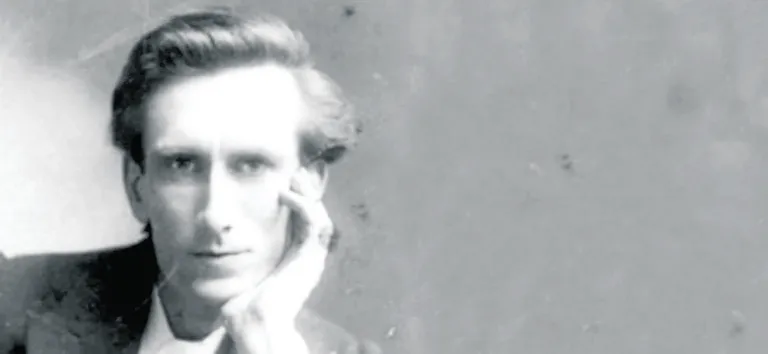
And then there is Oswald Chambers.
A travelling preacher, Bible teacher and military chaplain from Scotland, he died young in 1917. But today, every day, potentially hundreds of thousands worldwide read and ponder his thoughts in the classic devotional My Utmost for His Highest.
Influenced by Spurgeon
Born 24 July 1874, Oswald was the seventh of eight surviving children of Clarence and Hannah Chambers. Both parents had been influenced by the ministry of Charles Haddon Spurgeon (Clarence attended Spurgeon’s theological college), and Oswald himself would accept Christ at 15 after hearing ‘the Prince of Preachers’.
The Chambers family had moved to London, where Oswald joined the Rye Lane Baptist Church in Peckham. He quickly immersed himself in ministry, from street preaching to sharing Christ with ex-convicts.
Naturally creative, he dreamed of representing God to the ‘Aesthetic Kingdom’ of music and art and poetry. He enrolled in the National Art Training School in South Kensington, performing well enough to earn a scholarship for study abroad. But he ultimately declined the opportunity since, as a brother recalled, he had seen others ‘come back from their travels moral and physical wrecks’.
God’s plan?
Oswald began another arts programme, at the University of Edinburgh, in 1895. But within a year he found himself in financial straits, wondering what exactly God planned for his life. At this point, a friend’s devout father ‘astounded’ Oswald by stating he would be a minister. The idea became a conviction, and a humorous ‘prophecy’ Oswald had once made to another friend was fulfilled: ‘I shall never go into the ministry until God takes me by the scruff of the neck and throws me in.’
Unbeknown to Oswald, Clarence Chambers had asked that information from a small Scottish theological college be sent to his son. Oswald was interested, and entered Dunoon College in February 1897. He would spend nine years there, both as student and tutor, relishing the mentorship of Principal Duncan MacGregor. Decades later, Oswald’s wife wrote that if he had been asked about the most important years in his early life, ‘unquestionably he would have replied, “The years at Dunoon.” ’
Here the groundwork was laid for much of Oswald’s life and service. He weathered a long spiritual crisis, 1897–1901, finally overcoming this ‘hell on earth’ when God impressed Luke 11.13 on his heart: ‘If ye then, being evil, know how to give good gifts unto your children: how much more shall your heavenly Father give the Holy Spirit to them that ask him?’
Oswald met the Japanese evangelist Juji Nakada, with whom he would minister in the United States and Japan in 1906 and 1907. And Oswald absorbed MacGregor’s educational philosophy, which he later used in his own Bible college in London.
Biddy and BTC
God provided a supportive wife to enhance Oswald’s ministry. In May 1908, Gertrude Hobbs – a woman he’d met briefly in his oldest brother’s church – was sailing to the United States to seek work. Knowing that Oswald was also sailing for the states on the same ship, Gertrude’s mother asked him to keep watch over her daughter … and the nine-day passage proved time enough for love to kindle.
Oswald nicknamed Gertrude ‘Beloved Disciple’. That was abbreviated to B. D. and ultimately became Biddy, the name by which we know her today. They would marry in May 1910.
For much of the preceding decade, Oswald had served with the League of Prayer, an interdenominational effort to spur revival and holiness in the church. Within months of Oswald’s marriage, the League rented a building in London’s Clapham area for a Bible college, giving the newlyweds about a month to organize the Bible Training College (BTC).
Over the years 1911–15, Oswald and Biddy oversaw the BTC, serving more than 100 residential students, ‘of all ages, all classes, all Protestant creeds’, one student recalled. By day, 3,000 others would attend classes.
The Great War
Biddy, an accomplished stenographer, took verbatim notes of each sermon and lecture Oswald spoke. She continued this practice after he closed the college and volunteered as a chaplain to British Commonwealth troops in the Great War.
Oswald served with the YMCA, which erected ‘huts’ to provide wholesome activities to soldiers. Chambers’ programme, in the large Australia and New Zealand camp at Zeitoun, Egypt, swapped dances, movies and athletics for biblical talks that surprised other YMCA officials by their popularity. Oswald spoke many times a week, often four times on Sundays, with hard-hitting lessons such as ‘The Lord as Our “Dear Dread,”’ and ‘Is Christianity Worthy of God?’
An Australian probably spoke for many fellow soldiers when he said: ‘Christianity was at a very low ebb in our camp when along came Oswald Chambers, with a positively unquenchable spirit alight in his face, a habit of taking the lowliest for himself, and a clear-cut personality that impressed one very much. I well remember his first night at the hut. His predecessor had found it necessary to plaster the walls with notices such as ‘Please remember you are in a YMCA hut and don’t use bad language’. All those notices came down. It was never necessary to ask the men not to swear when Mr Chambers was about.’ Another soldier said: ‘This keen-faced, lean and alert man, this man with a thousand tasks, but with no suggestion ever of hustle or weariness, was the greatest man I have ever met. Here, one felt, was a prophet, a teacher, a disciple of Jesus Christ.’
Oswald and Biddy, along with their daughter, Kathleen (born in 1913), provided a touch of home to soldiers training in a harsh desert environment. They were aided by several former students, who formed the ‘BTC Expeditionary Force’.
Biddy said Oswald’s ‘radiant spirit’ made life ‘full of joy to us all’ – and his death on 15 November 1917, due to complications from an appendectomy, stunned everyone who knew him.
Turning notes into books
Less than a week later, God reminded Biddy of the last words she’d heard her husband speak: ‘Greater works than these shall he do, because I go unto my Father’ (John 14.12). At that moment she sensed ‘a work yet to be done’ – it became a four-decade labour of converting notes of Oswald’s teaching into some four dozen books.
The work began simply, with the printing of monthly sermon leaflets for the soldiers. The first book was published the year after Oswald’s death, and a handful of others through 1924, after Biddy and Kathleen returned to postwar England. In 1927, after three years of editing (while also managing a boarding house in Oxford), Biddy published the book for which Oswald is best known. My Utmost for His Highest has remained in print continuously, been translated into 40 languages and sold a documented 12 million copies – though the actual total may be considerably higher.
Oswald had dreamed of a ‘literary work’ and he and Biddy had taken certain steps towards that. But it is hard to believe that he envisioned the worldwide fame he would possess a century after his death.
Then again, he never tried to force such things. ‘It is more and more impossible to me to have programmes and plans because God alone has the plan, and our plans are only apt to hinder Him and make it necessary to Him to break them up,’ Oswald wrote in 1907. ‘I have the unspeakable knowledge that my life is the answer to prayers, and that God is blessing me and making me a blessing entirely of His sovereign grace.’