What happened to mark the 50th anniversary of the 1967 Abortion Act
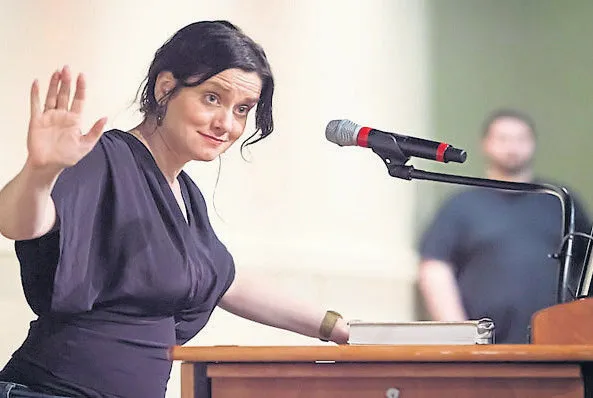
Gianna Jessen, is a survivor of abortion.
She states: ‘I am not a right. I am a human being.’ That is what many Catholic Christians boldly proclaim, but what many evangelical Christians find hard to articulate 50 years after the UK Abortion Act of 1967 which has seen 8 million children killed before they had a chance to live.
Gianna, who has cerebral palsy from being born at just over seven months after an attempt to abort her ‘failed’, speaks around the world about the uncomfortable truths of abortion. The pitting of ‘right to choose’ against a ‘right to life’ actually means something when your birth mother attempted, effectively, to burn you alive via a saline injection.
Matter of life or death
But hers and many other emotive stories of survivors of abortion, or of women who changed their minds and went on to give birth to children who they then love so deeply, still leaves too many evangelicals silent over an issue which is a matter of life or death.
Perhaps the desire to be loving towards people who have to face difficult choices, or to be seen as forgiving to those who’ve had an abortion, drives Christians to say so little. The desire not to see a return to women brutalising their bodies and risking their lives with back-street abortionists, (which the Abortion Act sought to address), is a right concern to have. It is without doubt a good thing to be modelling Christ’s loving acceptance of people no matter what their past. But does this silent acceptance shift one imperceptibly towards tacit affirmation of abortion?
Have we forgotten that we have been ‘knit together in our mother’s womb’ and so lost the horror of what an abortion entails?
Outside Parliament
Abort67, a pro-life group, alongside other similar organisations, held a vigil in Parliament Square in London marking 50 years since abortion became legal, on 27 October. Using graphic images of dismembered and bloodied corpses of the pre-born in full colour, and a van with similar images touring the streets of the capital, their aim was to highlight the reality of abortion.
Rightly, we recoil from this as images of tiny, unmistakably human bodies, horrific-ally distorted during a ‘medical procedure’ do not make pleasant viewing.
BBC coverage
During what amounted to a celebration of the 1967 Act, the BBC produced many programmes about the subject during October. The World At One, Radio 4, on 19 October went into the West London clinic in Ealing, which was in the news due to the prayer witness (or as the Observer in October referred to it: ‘protest’) by pro-life supporters. Listeners were taken through the process a woman may experience attending the clinic. Early abortion was explained whereby the doctor would use a manual suction to remove the ‘products’ from the woman. The use of ‘product’ and not foetus or embryo is so that women hear ‘clinical’ terms, as often they ‘feel guilt’ about what they are doing, according to the clinic nurse.
What happened?
It was at this point that the visit swiftly moved to the post-operative waiting room. No information was given as to what happens during a late-term abortion where premature babies who are deemed ‘viable’ in one part of a hospital are kept alive, and children of the same gestation are killed.
Late-term abortions count for less than nine per cent of the total number of abortions performed each year. They are legal up to birth when the child has a ‘disability’, and pressure is mounting for this ‘right’ to be extended to all pregnancies.
Perhaps the BBC felt a lunchtime audience didn’t want to hear about the dismembering of a baby, or about the real possibility of live births happening –it has been reported in the USA that babies have been ‘left on the side’ to die. Or about the pathologist who was traumatised after seeing the face of an aborted 3lb baby with a look of ‘horror’ on its face. Or about the women who change their minds at some stage in the process, but are persuaded, or in some reported instances almost forced, to proceed (various pro-life sites report stories from former abortion clinic workers). In October it was reported that bonuses were awarded to staff working in abortion clinics who encouraged women to have abortions (CARE).
More pressure
Without any public consultation or parliamentary scrutiny, Scotland has begun allowing the use of abortion pills at home alone. Further challenges to Northern Ireland’s abortion law have been made citing that it is not compatible with the European Convention on Human Rights.
Despite criticism from the United Nations about UK law allowing abortion up to birth where a disability is identified (en October), pressure groups are keen to see the law extended regardless of the health of the baby, and doctors voted to support this in Autumn 2017. At the end of October, 113 MPs signed a letter to Home Secretary Amber Rudd proposing buffer zones outside clinics as trying to make a woman change her mind on abortion amounted to ‘misogynistic’ abuse.
Unfair reporting
Reporting of ‘protests’ by pro-life groups outside clinics in the UK has been unfair at best, and examples of poor journalism at worse. An article in the Observer suggested that the groups of people praying outside clinics had become ‘more aggressive’, according to the manager of a Marie Stopes clinic. No police reports were quoted, so the reliability of the article was questionable. No evidence was supplied to support the allegation, of filming and live streaming by one pro-life group, of women going into the clinic: illustrating this was a picture from the US of women being dragged off the street by police officers – hardly a fitting photograph for an article about the UK setting.
In this year of the Protestant Reformation, celebrating a biblical separation from the Roman Catholic church, should we be humble enough to admit that perhaps Catholic siblings in Adam are in this instance, doing better in leading the way?