How many people around the world don’t have the Bible in their language?
We have access to over 120 versions of the Bible in English, which can make it easy to assume that everybody must have access to some version of the Bible. I used to make that assumption.
One in five
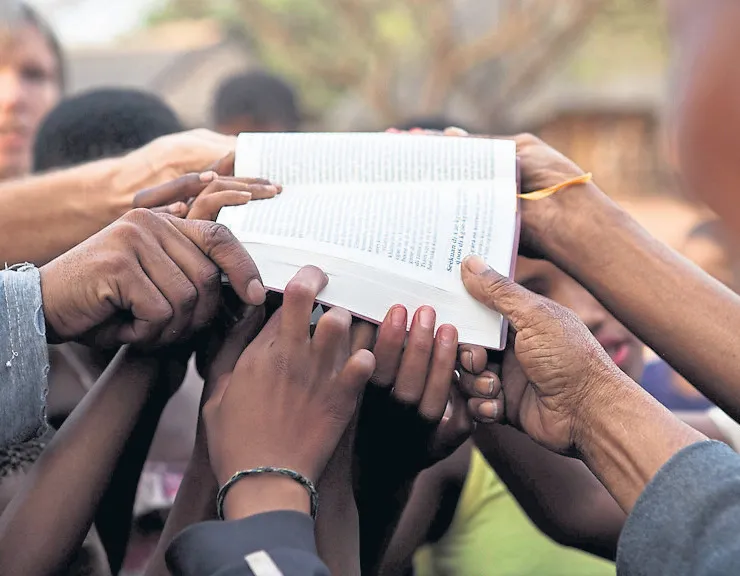
So I was surprised – as many people are – to learn that 1.5 billion people worldwide, that is one in five people, are still waiting for a Bible in their language. This means access to the Bible is more limited than 500 years ago when Martin Luther nailed his 95 Theses to the door at Wittenberg. There are now more people waiting for the Bible in their language than were on the planet 500 years ago.
This is a serious injustice – and a significant obstacle to the spread of the gospel throughout the world. Why would people want to know a God who doesn’t speak their language?
But when the Bible is translated, remarkable things start to happen. And one of the thrilling things about working with Wycliffe is hearing some of the stories about how encountering the Bible for the first time changes lives – and communities.
Conversion of a con artist
One such story is about a man called Tèbè, who had a considerable reputation as a con artist in the part of Benin he lives in. Tèbè read the New Testament when it was published in his language, Ifè. God spoke to Tèbè through the words of the Bible, he became a Christian, turned his back completely on his old life, and now serves as a leader in a local church.
This radical change displeased his former friends, who persecuted him in order to get him to turn back to his old life. But Tèbè is determined and committed. He says he will follow the Lord for the rest of his life.
Testing the translation
Another exciting story came from a part of the world that we can’t name for security reasons. Wycliffe translators there told us about going to test a newly completed translation of Matthew in a local village. Community testing is a central part of the rigorous process of Bible translation, as a translation needs to be not only theologically accurate, but clear to mother-tongue speakers. While Christians often help with community testing, this is not always possible, and in this case Mohammed, the local Imam (Muslim leader), was involved.
During the reading of Matthew, the Imam was concentrating very hard as he grappled with and made comments about what Jesus was declaring. On their third day together, the Imam seemed to be bothered by something and was thinking deeply. The Bible translators stopped and pointed out that he didn’t seem to be following the reading. The Imam responded by saying: ‘I am following; it’s just that these words are very powerful and force me to think about my life.’
‘The death of our religion’
When he finished reading Matthew, and later John after it was translated, the Imam said: ‘When you have finished translating the Bible, this town will understand the truth and will change. That will be the death of our religion.’
That is the power of the Word of God in someone’s own language. And that is also why the ongoing, urgent work of Bible translation is so central to reaching people around the world with the gospel today.