‘I believe in the Holy Ghost, I believe in the Holy Ghost.’
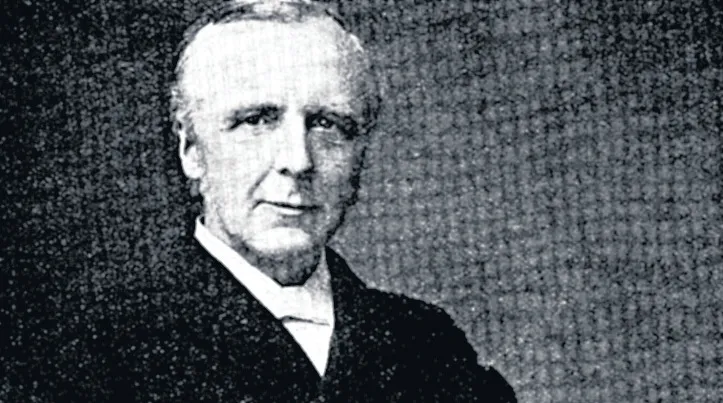
It was apparently the habit of the great Baptist preacher, C. H. Spurgeon, to say this quietly under his breath every time he mounted the steps of the pulpit at the Metropolitan Tabernacle in London. Even if the story is apocryphal, Spurgeon’s ministry affirmed the importance of the Spirit’s work: ‘Men might be poor and uneducated, their words might be broken and ungrammatical; but if the might of the Spirit attended them, the humblest evangelist would be more successful than the most learned divine or the most eloquent of preachers.’
Word and Spirit together
One of the features of the Keswick movement throughout its history has been its commitment to ensure that the Word and the Spirit are held together – sometimes powerfully evident, sometimes less so, but always seen as an essential element of evangelical spirituality. We know that often there is an unhealthy polarisation, but any attempt to divorce Word and Spirit is to divide what God has joined together. The Spirit inspired the Scriptures and enlightens the hearers. The Spirit equips us to proclaim the gospel and confess Christ’s Lordship. More than this, we know that the Spirit is the one who convicts us of sin and of our need of Christ, who opens our hearts and minds to the truth of the gospel, who brings us new life and who points us to Christ. And, from Keswick’s beginnings, there has also been considerable stress on the role of the Holy Spirit in enabling every Christian to lead a holy life.
Murray, Meyer and Revival
In 1895 Andrew Murray made a huge impact when he spoke at Keswick on the baptism and filling of the Spirit. Similarly, F.B. Meyer did much to take the message of the empowering of the Spirit to different parts of the Keswick movement around the world. In the early 20th century Keswick found itself closely linked with the Welsh Revival of 1904-5. In 1903 the first Llandrindod Wells Keswick Convention was held, with many seeking the fullness of God’s blessing. A contingent of about 300 people from Wales came to the 1905 Keswick Convention. Many people, deeply affected by what had been taught, remained in the tent to pray until three o’ clock in the morning.
In 1951, when there was a record attendance at Keswick, George Duncan said he had not known a Convention at which God seemed so near. A year later a Scottish minister, Duncan Campbell, spoke at the Convention about the revival he had experienced in the Scottish Hebrides and his dramatic story had an enormous impact on the thousands present. These are snapshots that reveal a longing for the experience of the power of the Holy Spirit, and the desire for revival surfaced regularly in the years that followed.
Depending on the Spirit?
Today, while it is heartening to see the steady development of Bible-teaching churches, we must ask if that is matched by a deep dependence on the Spirit’s work for our Christian growth, for our preaching and our prayer gatherings, for our godliness and our mission. Are we still urgently committed to seeking his convicting and empowering ministry?
Do we not long to know God better? Then listening to God’s Word in a prayerful mode, seeking the Spirit’s illuminating presence and transforming power, is vital for every believer. Do we not long to live for Christ? Then we need the Spirit’s work, convicting us of sin, convincing us of God’s grace and equipping us to live Christ-like lives. And do we not long to serve God’s mission? As Andrew Murray said at Keswick in 1895: ‘If we are to be real missionaries, if we are to give our money as we ought to give, and give ourselves and our children, and pray as we ought to pray, and live as we ought to live, we must have nothing less than the power of the Holy Spirit flowing freely in us to overflowing. You cannot do the right mission work unless the Holy Spirit fill every heart. Oh Christ, we want to live and die like Thee, for God’s Kingdom! Give Thine own Spirit within us!’
It’s an urgent prayer for our lives and churches today.