Martin Salter thinks through the BBC’s recent Reith Lectures
Mistaken Identities was the title of the most recent Reith lectures.
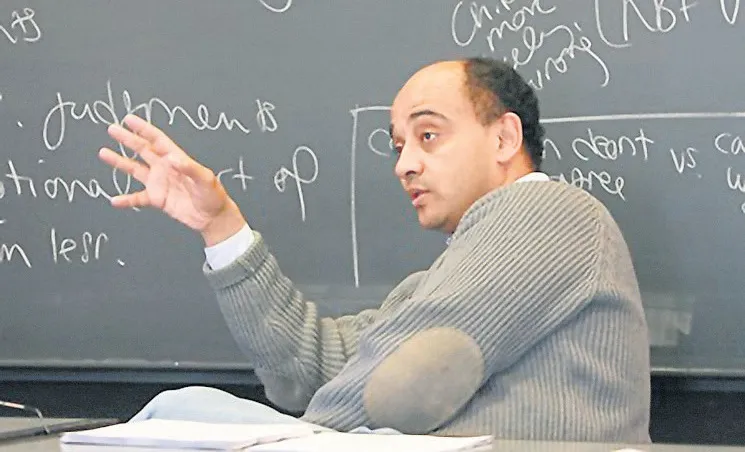
These are an annual series of talks given by leading thinkers of the day, broadcast on BBC Radio 4. The 2016 lectures were delivered during November by Kwame Anthony Appiah, Professor of Philosophy and Law at New York University.
His four lectures covered creed, colour, country and culture, his overall thesis being that our identity is something that ought to be constructed from within, not imposed from without. Appiah himself has an interest in this subject. He is a British-born Ghanaian-American, the son of an English Anglican and a Ghanaian Methodist. In 2011 he married his long-term partner in New York City, two weeks after same sex marriage was recognized by the state. He has also written elsewhere on this subject.
‘Fixedness’
In each of the four lectures Appiah examined the supposed ‘fixedness’ of identity and questioned the legitimacy of such a view. For example, in his lecture on ‘country’ he demonstrated the difficulty of defining nationhood. Is nationhood primarily concerned with ancestry, territory, language, or something else? Is national independence a matter of self-determination, and if so, how do we understand competing claims (Kosovo and Serbia would be an example from recent history).
Romanticised accounts of ‘nationhood’ often forget the complexity of the historical process which led to the contemporary situation. His lectures on ‘colour’ and ‘culture’ similarly explored the social construction of identity. Is race a fact or fate? Is culture an aspiration or descriptor? What does it mean to be ‘Western’ and is ‘Western civilization’ a state of being or a process of dialogue? Appiah’s lectures were engaging, illuminating and stimulating, offering much on which to ponder and reflect.
Creed
The lecture which may perhaps cause most consternation for Christians was his lecture on ‘creed.’ Here Appiah argued that religion is primarily a matter of personal practice, not dogmatic belief. He suggested that we over-emphasise orthodoxy at the expense of orthopraxy. He proposed that the notion of Scripture as determinative for faith and practice is fallacious.
Scripture, argued Appiah, is always open to latitude in interpretation. Each new generation and community brings their own cultural lens through which Scripture is reinterpreted. In essence, Appiah was arguing for dialogue regarding the application of Scripture since human interpreters are fallible.
All of the competing claims on our identity – country, colour, culture and creed – believe that there is an unchanging core which is the essence of our identity. However, argued Appiah, legacies are lost or exchanged and labels move on. The tides are ever-changing. Rooting identities is possible in narratives, but not in essence.
What we can agree with
We ought to acknowledge that Appiah articulated some points with which we would agree. Identity should not be rooted in colour, country, culture or even, in a certain sense, creed. All human beings are made in the image of God – this is our fundamental identity.
For the Christian we can go further and define our identity in terms of our union with Christ. He is the head, we are the body; he is the vine, we are the branches; he is the cornerstone, we are the bricks and mortar; he is the groom, we are his bride.
It is all too easy to claim an identity as a form of opposition, security or superiority against another who, in ontological terms, is every bit our equal. Black, white, Latino, Asian, English, Scottish, Welsh, Irish, middle-class, working-class, hipster, emo, Catholic, Presbyterian, Methodist or Anglican are not the primary descriptors of our identity. They are not nothing, but they do not capture the essence of our identity as hä|´ädäm – God’s workmanship, bearing his image, rightly named and claimed by him. Appiah, in God’s common grace, has seen something of the truth here. Who am I? Not the sum of my hue, birthplace, ancestry or even values. Who am I? A son of God, whether I know it or not, in rebellion or submission.
Where we disagree
But this is of course integrally related to my creed, and here we must respectfully disagree with Appiah’s proposal.
It is not just Appiah’s casual dismissal of the divine inspiration of Scripture, his postmodern hermeneutic, or his ham-fisted handling of scriptural texts, which cause concern – it is much more fundamental than that. Appiah’s whole approach is built upon a questionable foundation.
So here’s the foundation, followed by the question. His foundation is the doctrine of human autonomy. Fundamentally, Appiah believes that human beings should be the architects of their own identity. He stated at the end of his lectures: ‘We ought to be masters of our identities, not mastered by our identities.’ If we pushed Appiah on the question ‘who am I?’ his own system would require him to answer: ‘I am who I am’ (which sounds hauntingly familiar) or at least ‘I am who I say I am.’ We are little gods over our little kingdoms – important enough in our own eyes to call ourselves ‘master’, but, sadly, in the context of seven billion other ‘masters’, not very important at all.
This foundational assertion of autonomy raises the obvious question – who says so and where did they get it from? If you like big philosophical words it’s a question of epistemology. Upon what basis do we decide that identity is a human construct? Upon what basis do we think individuals or societies could, let alone should, determine their own identity? Who says so and where did they get it from?
Appiah never addressed such foundational questions, which is unfortunate since methodology is more than a little important in determining the answers to such meta-questions as identity. He simply asserted his case and expected it to be self-evident to all. This may suggest that his epistemological authority is something like ‘modern Western civilization’ which is ironic, given that he devoted an entire lecture to undermining the notion.
But how does Mr Modern-Western-Civilization know that human autonomy is the foundation stone for the architecture of identity? Who made him judge and jury? Answer: Mr Modern-Western-Civilization did. Neat eh!? Alas, ’twas ever thus. ‘The tree was desirable for gaining wisdom, and becoming like God’ (Genesis 3.6). ‘Everyone did what was right in their own eyes’ (Judges 21.5). ‘They exchanged the truth about God for a lie’ (Romans 1.25).
The heart of sin is the bid for autonomy – independence from God – the desire to usurp God’s rightful authority. Humans want to de-God and be God. Better to reign in hell than serve in heaven, in the words of Milton’s Satan.
Closed off possibility
Recently, a friend recounted a conversation with someone exploring the Christian faith. This person admitted that the root issue was not simply whether it could be believed, but whether they really wanted it to be true, with all the implications that may carry. Appiah may have been correct in his caution regarding the construction of identity around colour, country, culture and even, in some sense, creed. This does not, however, lead to the conclusion that identity cannot be conferred from without and must therefore be constructed from within. To be sure, if the ‘without’ is defined in terms of the fallible and changing world around us we have a problem. But Appiah appears to have closed off the possibility of the ‘without’ being an infallible unchanging other – an ‘other’ who is all-knowing and all-loving, an ‘other’ who became one of us, to rescue, redeem and restore to a rightful reign. This ‘other’ – our brother – rescues us from our own frantic identity-construction projects and sets our feet on solid rock, so that we might be rooted and built up in him, to overflow with thankfulness. That is no mistaken identity.