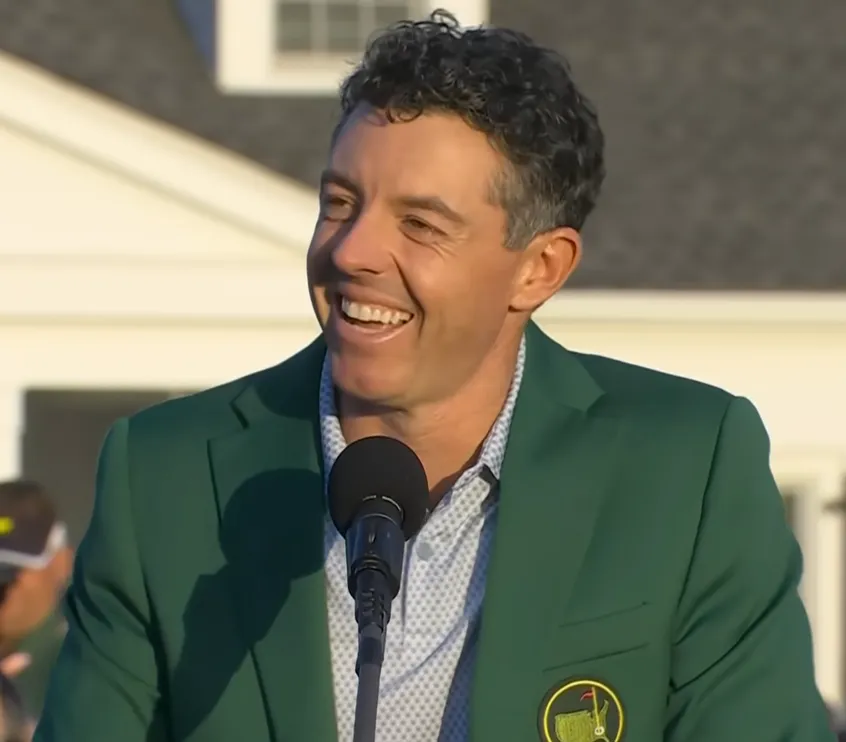
Rory McIlroy’s latest Masters victory is, by any standard, a remarkable achievement.
To defend a Green Jacket at Augusta places him in rare company, and to do so amid pressure, inconsistency, and fierce competition only heightens the accomplishment.
It is right to enjoy such moments. The Christian need not hesitate to recognise excellence in sport as part of God’s common grace – gifts given widely, for the good of all.
There is something fitting, even quietly instructive, in the qualities McIlroy displayed. His resilience after setbacks, his disciplined preparation, and his composure under pressure reflect virtues Scripture commends in ordinary life. Skill refined over years, the ability to recover from failure, the refusal to be ruled by anxiety – these are good gifts in a world still sustained by God’s kindness.
What, or Who, can satisfy our longings?
C. S. Lewis helps us go a step further. Writing as an Irishman who loved games, literature, and the pleasures of this world, he was clear that such joys are not to be dismissed – but neither are they to be mistaken for the thing itself.
In The Weight of Glory, he famously describes how our experiences of beauty and joy are not the fulfilment of our deepest desires but "only the scent of a flower we have not found, the echo of a tune we have not heard." They awaken longing precisely because they cannot finally satisfy it.
That insight maps well onto moments like Augusta Sunday. The drama, the tension, the sense of release when victory is secured – these are powerful experiences. McIlroy’s triumph feels, in the moment, like a kind of completion. Yet it does not last. Another season begins; new pressures emerge. Even the greatest sporting achievements have a built-in incompleteness.
Made for joy, made for more
Lewis would say that this is not a flaw in sport, but a clue about us. We are the kind of creatures who take real pleasure in these things because we were made for joy – but also the kind who cannot rest in them because we were made for more. The danger is not enjoying McIlroy’s brilliance; it is expecting from it something it was never meant to give.
The Bible directs that longing more clearly. It speaks of a victory that is not provisional but final. Christ’s triumph over sin and death does not require repetition or defence. It is not subject to form, injury, or pressure. It is complete, and it is given, not earned.
Seen in that light, McIlroy’s victory can be received with gratitude and proportion. It is a fine instance of human excellence under God’s common grace. It stirs admiration, even a kind of joy. But it also, if we are attentive, sharpens our sense that even the best moments in this world are pointing beyond themselves.
We enjoy them as real gifts. But we do not ask them to be ultimate.
England vs. Argentina and the verdict that matters most
For England supporters, Wednesday night was painful.After taking the lead against Argentina, hopes of reaching another World Cup final …