The draft transgender guidance for schools has been published, clarifying that schools are not required to accept a child’s request to socially transition; and parents will generally have a right to know if their child has made a request.
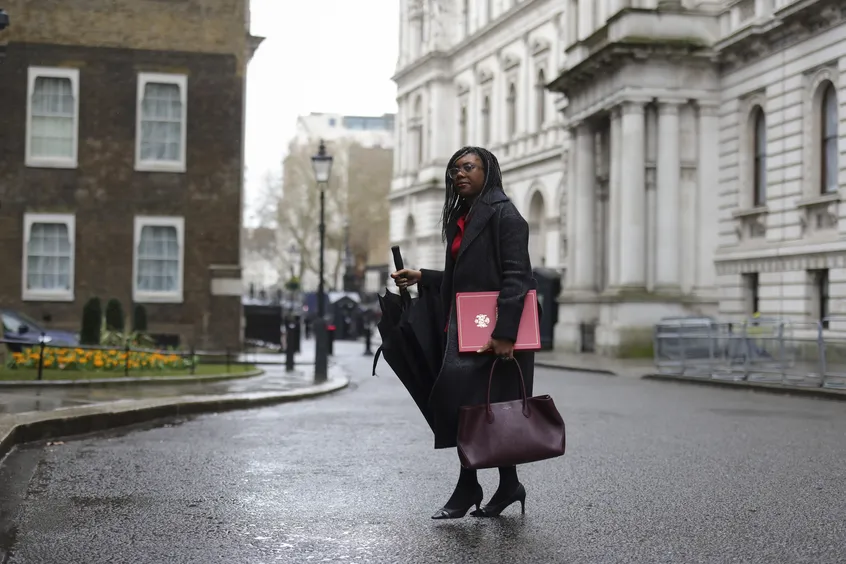
Minister for women and equalities, Kemi Badenoch, said the guidance is intended to give schools ‘greater confidence when dealing with an issue that has been hijacked by activists misrepresenting the law’.
According to the guidance, single-sex spaces such as toilets, showers and changing rooms, are to remain single-sex; and instead of children and teachers being required to use ‘preferred pronouns’ - alternatives should be found, such as using first names.

However, the guidance will be non-statutory, which means schools will not be compelled to follow it. This, said Miriam Cates MP, an evangelical Christian, is the ‘main flaw’ of the guidance.
‘Government seems to think it’s not legally possible for guidance to be statutory or unequivocal, because under the Equality Act there may be grounds for claims of indirect discrimination,’ Cates commented. ‘This may be so, but if the law prevents us from upholding truth and safeguarding vulnerable children then we must change the law.’
A step in the right direction
Lizzie Harewood, executive officer at the Association of Christian Teachers (ACT), said the new guidance represents progress. She added: ‘With estimates suggesting that over half of teachers teach a student who identifies as trans or non-binary, this long-promised guidance was disappointingly late for many in the profession.
‘At ACT, we broadly welcome the cautious approach of a “presumption against transitioning” and know that many Christian teachers will be relieved that the guidance acknowledges the potential for significant consequences of social transitioning.
‘It will bring some relief to staff in schools who are committed to the Christian worldview and base their view of gender and sex on the Bible's teaching, but it still leaves questions to be answered about how decisions about “exceptional” or “limited” circumstances are made for supporting transitions, and how schools actually define social transitioning.’
Harewood also warned that the ongoing consultation (which ends on 12 March) poses a risk of activists diluting the guidance with ‘some leaders and teachers already vowing resistance to government instructions’. She added: ‘A firm government commitment is therefore needed to hold schools accountable.’
Andrea Williams, chief executive of Christian Concern said: ‘We are glad to see significant steps forwards in the government’s draft guidance addressing transgender ideology in schools.
‘We believe that the government has listened to many of the problems we have been raising through legal cases and with the department over the last ten years. Had this guidance been followed, many more children would have been protected and several Christians we are supporting would not have lost their jobs.’
She added: ‘The recognition that schools do not need to accept a child’s transition and protections for freedom of speech and conscience are most welcome. However, the government must go further to equip schools to resist damaging social transitions and to protect free speech by giving this guidance the force of statute.’
An epidemic
Speaking in the Commons on 6 December – two weeks before the draft guidance was published – Badenoch warned: ‘We are seeing… almost an epidemic of young gay children being told that they are trans and being put on a medical pathway for irreversible decisions, and they are regretting it… we are traumatised by what is happening to young children, and we will run away from this issue no longer.’
A helpful challenge – but I don’t recognise those views
This article was written in response to the article "Same-sex attraction and identity: Are evangelicals on the right track?" …