SURRENDER OF THE FAITH?

en staff  |  UK & Ireland
Date posted:  1 Feb 2020
Share Add       
SURRENDER OF THE FAITH?

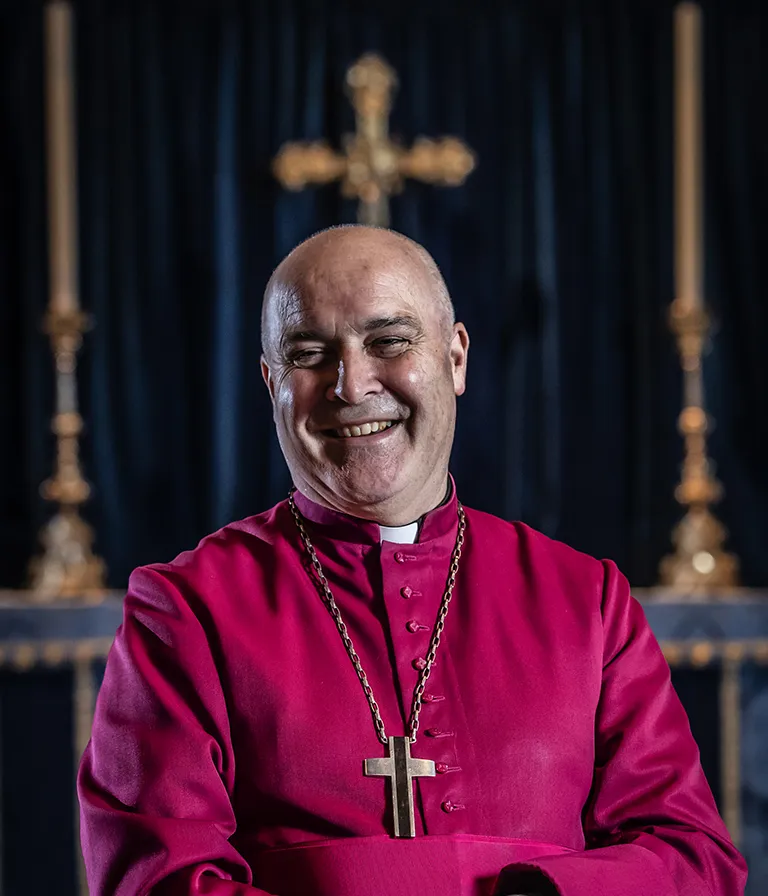
Bishop Stephen Cottrell | photo: PA Images

On 17 December the deeply controversial appointment of Stephen Cottrell as Archbishop of York was announced.

Carefully selected quotes from his speech to the press1 present a picture of an evangelical whose focus is on Christ. ‘What binds us together is … our faith in Jesus Christ. It’s our baptism and belonging to each other which is what really matters.’ However these quotes are removed from their context, and the context provides an entirely different view of the incoming Archbishop.

Embrace society’s norms?

At the press conference in December, Cottrell was asked about comments he had made two years before, regarding issues of sexuality and biblical teaching. In March 2017 he had expressed views that are at odds with the traditional teachings of the Church and, more importantly, with the Bible.
In that address to his diocesan synod2, he warned that the Church’s stance on same-sex relationships means that the Church is ‘seen as immoral by the culture in which it is set’ and suggested that prayers of thanksgiving for these [same sex] relationships – ‘perhaps a eucharist’ – should be offered.

Cottrell went on: ‘… same-sex relationships and same-sex marriage are not only considered normal, but positively taught and encouraged in many homes and schools as a social good … it would be particularly foolish for us to ignore the missiological damage that is done when that which is held to be morally normative and desirable by much of society and by what seems to be a significant number of Anglican Christian people in this country, is deemed morally unacceptable by the Church.’

It appears Cottrell is suggesting that if culture rejects the Bible’s teaching, then the Church must reinterpret those bits of the Bible that are unpalatable and shape every belief to that of the prevailing culture. For Cottrell it appears that the very worst thing for the Church is to be seen as counter-cultural.

Indeed, what Cottrell means by ‘binding faith’ in his recent speech is unclear because the Bible, which explains that faith, is mutilated to fit in with the beliefs of the people who fundamentally hate the Bible. Yet the Church should be counter-cultural and risk being called ‘immoral’ if the culture is opposed to the Bible.

As Melvin Tinker wrote3: ‘The Confessing church in Nazi Germany was certainly considered to be ‘immoral’ by the cultural regime of its day, not least for its positive attitude towards the Jews. It was the Reich Church who heeded the Nazi culture’s “morality.” It is only when Christ is acknowledged as Lord that the church is free to challenge culture, rather than, as in the case of the progressives like Cottrell, simply echo culture.’

In his own words

Again in 2017 Cottrell said: ‘Though I am proud to confirm that all of us, whatever our views on this matter, are united in our condemnation of homophobia, we must also acknowledge that it is of little comfort to young gay or lesbian members of our Church to know that while prejudice against them is abhorred, any committed faithful sexual expression of their love for another is forbidden … Our ambivalence and opposition to faithful and permanent same-sex relationships can legitimise homophobia in others.’

Asked about this in December, he said that the Church: ‘…must be the Church for everyone. I mean those who find it most difficult even to contemplate that there might be any change in the Church’s traditional teaching and those who are campaigning for radical change … There is absolutely no place for homophobia in our Church, and absolutely everyone, regardless of their sexuality, is welcome in that Church.’

With this last statement, all can agree. But what does ‘welcome’ mean? Jesus welcomes all to repent, and to submit the whole of life to His rule. Cottrell partially quoted Genesis by saying ‘it is not good for human beings to be alone’, but this wasn’t about the male and female unity of God’s design, this was about Cottrell trying to apply this Scripture to same-sex couples being welcomed into the Church and seen as ‘faithful Anglicans’.

He said ‘all stand in need of repentance and forgiveness’. But put with the rest of Cottrell’s comments, it does not seem that the repentant welcome of the Bible is on the mind of Cottrell. At times he appears to suggest that the Church needs to repent of its biblical attitude. Other actions of Cottrell again show a confusing expression of that inclusive welcome he is keen to extend.

Welcome?

As Bishop of Chelmsford, Cottrell was linked to the resignation story of John Parker (en July 2019), a vicar who left the Anglican Church over the treatment of a child in the school where he was a governor who was ‘transitioning’ to the opposite ‘gender’. The Mermaids transgender support group were invited into the Church of England school to train staff, and Parker’s concerns about this group and what was happening to the child went unheeded. A lack of support from Cottrell’s diocese led to Parker’s resignation, as the diocesan education body approved of the trans ideology within the school.

Cottrell had earlier spoken to a group of 30 clergy stating that if they disagreed with the approach the diocese was taking on matters of human sexuality, they should follow their consciences and leave. There he spoke of God ‘doing a new thing’ as he cited Acts 15 to justify his view on same-sex relationships. He said that if Parker felt same-sex marriage was a salvation issue and that he was not prepared to pursue good disagreement, then Parker could leave.

Yet Cottrell issued a formal letter – ad clerum – denying that he had told Parker he should leave due to his biblical views on LGBT issues not being welcome in the church. However 29 other people support Parker’s version of events (en August 2019).

Confused and confusing

Upon his appointment, Cottrell said: ‘We will be a much better stronger Church for being more diverse in leadership.’ With regard to reflecting the ethnic diversity of the people in the pew, then this is a good aim to have. But Cottrell, in his own words, has been shown to be embracing a new Bible, and a new diversity.

Tinker, a CofE minister, ends his essay with this: ‘This appointment marks a tragic day for Christian orthodoxy and the moral and spiritual regeneration our country desperately needs. The track record so far is that Cottrell is not a defender of the Faith but a surrenderer of the Faith. Cottrell raised the question: ‘Do we really feel safe with Donald Trump’s finger on the [nuclear] button?’ Perhaps a similar question could be raised with regard to the new Archbishop: can he be trusted at all?’

Share
< Previous article| UK & Ireland| Next article >
Read more articles by en staff >>
Features
'Radical discipleship' – ten questions with Karen Soole

'Radical discipleship' – ten questions with Karen Soole

Karen Soole is a writer, speaker, and women’s worker at Trinity Church, Lancaster. She is the chair of the Northern …

UK & Ireland
Knife crime plan hope

Knife crime plan hope

The gospel is bringing hope in the midst of rising knife crime, London City Mission (LCM) says.The capital-based outreach …

About en

Our vision, values and history

Read more

Give a subscription

Our monthly newspaper is the perfect gift for those who love to think deeply

Give here