 letter from Australia
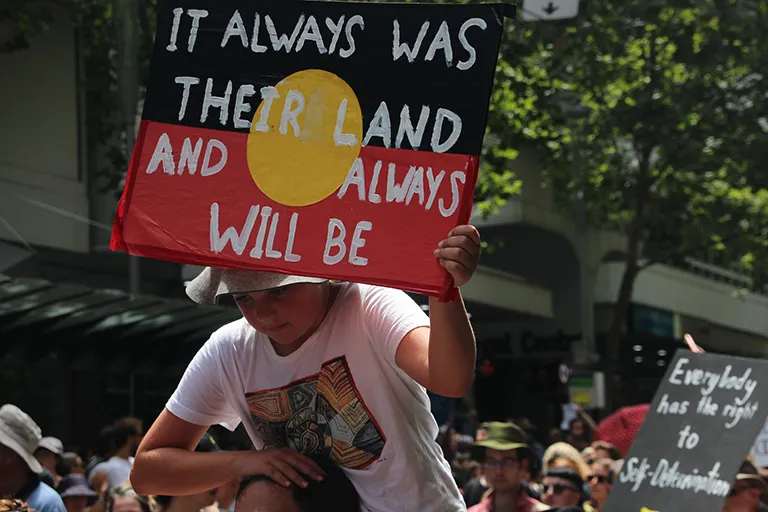
Australia Day is traditionally celebrated across the country with public events, sporting fixtures and diverse festivities. However, for some, it represents a day of shame that should be scrapped.
January 26, 1788 was the date that the First Fleet under Captain Arthur Phillip sailed into Sydney Harbour, bringing a mixture of free settlers and convicts to establish a new colony for the British Crown. Some 237 years later, Australia is a thriving member of the international community, with firm democratic structures and serving as an economic powerhouse in the Asia-Pacific region.
However, some Australians, including some indigenous Australians, are strongly opposed to the national day falling on 26 January, preferring to refer to that date as ‘Invasion Day’. Such opposition to the current Australia Day garners quite strong support from the churches.
Neville Naden, Indigenous Ministry Officer at Bush Church Aid, writing in The Melbourne Anglican, sought to present an even-handed approach: ‘For many, this day is an opportunity to celebrate the freedoms, opportunities, and beauty of this country. However, it is also a time to acknowledge the harm colonisation brought to First Nations peoples – the dispossession, pain, and injustice that still impacts communities today.’ He stopped short of calling for the date of the national day to be changed, which is a common refrain among activists.
Some church spokespeople suggest that there should be no Australia Day at all. Reverend Canon Glenn Loughrey, an indigenous clergyman, stated in an interview: ‘For First Nations people who have not been included in the significant moments of this country and have no treaty or voice and have never ceded sovereignty over our lands, no day that celebrates Australia will include us.’
The left-leaning Uniting Church of Australia has set 26 January as ‘The Day of Mourning’ – an annual observance to reflect on the effects of invasion and colonisation on Australia’s First Peoples.
Nevertheless, support for maintaining 26 January as the national day is holding firm, including among many church groups, with flag flying, celebrations and festivities across the nation in recognition of the contribution of successive waves of migrants from diverse backgrounds to the success story that is Australia in the 21st century.








Bondi Beach: When Jewish history repeats itself
Bondi Beach forces our wider society to ask the difficult question. Why are Jewish people not safe? Hanukkah offers …