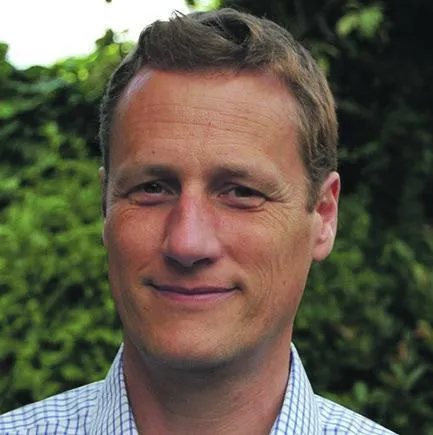
The Church of England’s lead bishop for the controversial ‘Living in Love and Faith’ (LLF) sexuality discussions – tipped by some as the next Archbishop of Canterbury – says he continues to believe sex is only for heterosexual marriage.
Martyn Snow, Bishop of Leicester, who is being touted as a possible successor to Justin Welby, answered ‘yes’ when pressed on the point in an interview with en. And he said Church of England evangelicals in the Alliance (the umbrella group of orthodox believers in the denomination) should not yet despair about their wishes for alternative structural provision being met.
However, Snow refused to answer questions about the meaning of specific Bible passages relating to sexuality, and said he did not believe the Church of England was in a Jude verse 4 situation (‘contend for the faith once for all delivered to the saints’), claiming the contradictory views on sexuality were part of ‘a season of discernment’.
And in a comment which is likely to dismay evangelicals, he said: ‘I think we are in a season of discernment around how we respond pastorally to LGBTQi people, and therefore, for this period, [en italics] we do need to live with difference on this.’
Despite also being the Church of England’s ‘lead bishop’ in relation to ‘transparency,’ Snow declined to publish legal advice the Church of England had received in relation to issues surrounding Living in Love and Faith (LLF).
A 'frontrunner' to succeed Welby
Snow’s interview took place just before the earlier-than-expected publication of the Makin Report and the subsequent resignation of Justin Welby. It is unclear how much the ongoing Living in Love and Faith process will be affected or disrupted. The Times has suggested that Snow is ‘a frontrunner’ to succeed Welby as he has ‘experience in trying to hold together warring church factions as leader of the discussions around same-sex unions.’ The Guardian also reported that he ‘abstained during a vote at the General Synod last year on the introduction of standalone services to bless same-sex couples.’
Although playing a pivotal role in the 'Living in Love and Faith' process, Snow's personal views on issues such as Scripture, sexuality and marriage have not always been easy to discern. This interview was an endeavour to gain some clarity on them, both for the sake of evangelicals both in the CofE, who are directly affected, and also those evangelicals outside it who pray for their brothers and sisters within it.
Here is a transcript of our interview with Snow, edited for clarity. It was preceded by prayer.
en: For us as evangelicals, this is all about the Bible. So: a gay couple come to see you and ask you about Romans, 1v26, and 27 and 1 Corinthians 6v9. ‘Does this mean us?’ they ask. ‘What do you say?’
Snow (laughing): I'm not usually given to answering hypothetical questions. The requests I've had from gay couples haven't usually involved direct quotes of Scripture. I mean, more generally, I would certainly say yes, I have been asked plenty of times, does the Bible say that we're sinful, or whatever? But I absolutely want to say, for me, it depends largely on the context. So, if this is a non-Christian couple who have had no contact with the church at all before, then, I would want to take very much a pastoral approach to the conversation and make it very clear that that I'm not going to be issuing condemnations or anything like that at all. But I would want a conversation with them. I think if it's a Christian couple within the life of the church who are exploring their own discipleship and so on, then absolutely, I would then want to sit down with them and the Bible passages and look at those in detail. But it wouldn't just be those Bible passages. For me, one of the issues is that we do focus on very particular verses, whereas I would want to place that within a much wider sweep, if you like, of the Biblical narrative.
en: Understood. But nonetheless, those verses say something; you are a teacher of doctrine, and you have taken a vow to uphold Anglican doctrine. So, specifically, what do you think, for example, Romans 1v26 and 27 mean?
Snow: So, in the upholding of Christian doctrine, I'm very clear that my own understanding is absolutely that marriage is intended for a man and a woman. It's intended to be lifelong. It's intended to be monogamous, you know, all of those, those things which are very clear in terms of Anglican teaching. In terms of Romans 1 I think there is a whole discussion to be had in terms of what is being referred to.
en: But as a Bible teacher, if you preached on this passage, what would you teach?
Snow: I'm sorry… but I'm not going to give a direct answer to that, because what I teach depends in large part on who I'm preaching to and hence the message is always tailored to the people. So that's where hypothetical questions, I'm afraid, are always, always kind of tricky.
en: Let's move to another Bible passage, Jude. Jude verse four: do we not face a situation now in the Church of England that is exactly embodied by Jude verse four?
Snow: No, I don't think we do. I think that my colleagues who would take a different line to me on marriage are doing so out of a desire to be faithful to Scripture and a desire to be faithful to the historic teachings of the Church. But they would also argue that in a new context, inevitably we come back to those Scriptures and we look at them afresh. So, I don't think Jude verse four is referring to that at all. And I'm actually concerned when people use that sort of language to describe this debate.
en: How is it possible for any church to simultaneously espouse two contradictory doctrines on sexuality? It makes no sense. Plainly, they are incompatible.
Snow: No, I don't think so. I think there are a number of ways within the life of the church, a number of instances through history, where we have taken our time to discern what God is saying to the church. I think in terms of our understanding of relationships and identity and so on, there are huge dangers going on within society, and I think for the church to simply ignore that and say that actually we don't have to pay attention any attention to that, would be very unwise. So, I do see that we're in a season of discernment around all this. So, it means for me that actually, yes, we are feeling our way around what is appropriate for this day and age. And I think there are plenty of other examples. One of the absolute reasons that I am an Anglican is the genius, if you like, of the Prayer Book, and other parts of Anglican history which hold together different doctrines of the Eucharist, for instance.
'I would agree that the process has not been perfect, and I'm very open in saying that with people.'
en: Article 20 of the 39 Articles of the Church of England in that Prayer Book says it's never lawful for the church to ordain anything that is contrary to God's Word written. And there has been no Biblical or theological basis offered for introducing Prayers and Love and Faith, no theological and Biblical basis offered for same-sex marriage for clergy which has been talked about, no theological basis for the trajectory that's been offered. Why has there been no theological work done on these things to even set out an argument for them?
Snow: I would agree that the process has not been perfect, and I'm very open in saying that with people. But I think that work is being and will be coming to General Synod. There are theological papers being produced which we intend to bring to Synod in February of next year, and probably further work in July as well. So that work is being done absolutely. Should we have done it before starting out on all of this? Yes, but you know, hindsight is a wonderful thing with these things.
en: Forgive me, it's not a question of hindsight. It's a basic theological principle. If we are disciples of Jesus, we take our authority from the Word of God. That's what we start with. We don't start with discussion from bishops, and then, retrospectively, try to justify them Scripturally. That's nonsense, isn't it, as an approach?
Snow: You say it's nonsense, but I think, actually, we do that a lot of the time. And I think if we're honest with ourselves, very often, there are changes that go on in society which, yes, cause us to ask new questions of Scripture. I'm talking from a missionary background here, having worked in different parts of the world, having encountered all sorts of contexts where the English church, in all our sort of cultural superiority, if you like, has had nothing to say on some of these issues. But suddenly I've discovered in Africa I've been faced with questions which are completely new. The apostles, they had to work on this as they were going along.
en: Forgive me, but I think you're confusing mission work and theological work. And any missionary who is equipped with even a basic theological framework will, of course, listen to the questions. But they will always start with Scripture and bring those questions to Scripture. It is quite legitimate to bring the questions to Scripture. What is not legitimate is to come up with the answers and then do the theological work afterwards, which is exactly what the bishops have done.
Snow: No, I disagree with you again. I’m afraid I think that to assume that bishops weren't doing any theological work until the start of the LLF process is wrong. All of us as bishops have been thinking about this for a very long time. This goes back to my own time at theological college, and even before when I sort of first became aware of these sorts of issues. So, so that has been done. But the context has changed dramatically: none of us saw the change in law coming in 2014 [same-sex marriage became legal in England and Wales on March 29th, 2014]. It wasn't anticipated to come as soon as it did, in the way that it did. So again, I'll openly admit, you know, the process hasn't been ideal. I do think there are parallels between this and the sort of missionary work that I encountered in in other parts of the world where questions are forced on you.
en: I still want to reiterate that we start with Scripture. Let's talk then about this theological thinking that you say the bishops have been doing. It hasn't been published. And in the Synod in July, there was a major report presented to Synod on ‘low levels of trust’, especially low levels of trust in the House of Bishops. The House of Bishops have also hidden their legal advice. You have taken on the role of lead Bishop committed to greater transparency. So, will you publish that legal advice? And why have you not done so, thus far?
Snow: I'm committed to greater transparency. I think, though, for reasons that I've stated at Synod, that doesn't necessarily mean looking backwards – that everything that has been produced on LLF is now going to be published. Inevitably, there were conversations as well as documents that were produced, and the feeling at the time was that it would not be helpful to share all of that publicly. What I can tell you now is that yes, again, at February Synod and at July Synod, the work that we have doing, we are doing currently, will be published and will be made clear, and I am committed to that.
Let me just take a step back for a moment in terms of how I'm approaching this. The whole reason I took on this brief with LLF is because I do believe now this is about the unity of the church. So I was very clear with the archbishops that I was only prepared to do this phase of the LLF programme, because it is now about the unity of the church, and that's something I believe passionately. I think we are in a season of discernment around how we respond pastorally to LGBTQI people, and therefore, for this period, we do need to live with difference on this. Now that's not to say that's a long-term thing, and it's not to say that I'm endorsing, you know, two doctrines of marriage. I am simply saying that for this period in the life of the church, I do believe we are going to have to live with a difference on all this and, I hold that with conviction, because in my own diocese, there are churches that take particularly different stances on this, both of which are growing.
'I get that there are really strong, really deep feelings on this. And yet I hold to the hope that as a church, we can stay together...'
en: Going ahead, you said this is not going to carry on forever. Does that mean that orthodox Christians will no longer have a place in the Church of England? And if they do have a place in the Church of England, why is the Alliance [the umbrella group of orthodox Anglicans], which represents half of regular attendance in the Church of England, simply not being listened to?
Snow: Clearly, the Alliance are being listened to. I have spent hours in meetings with them, listening to them. I have relayed their concerns to the House of Bishops. I think they are being listened to. I'm very encouraged by the fact the directors of the Alliance are engaging with the working groups that we've got running at the moment and are willing to work with us.
en: But the decision-making bishops have not been in the room. And our understanding is that the Alliance have reached understandings with you, that the college of Bishops has then thrown out. So, from where we as orthodox evangelicals sit, it seems that bishops are more than happy to negotiate on doctrine. The one thing they won't negotiate on is their own power.
Snow: There is a difference of opinion within the House of Bishops, so I'm trying to negotiate, as bishops are as well. It's enormously complex. And of course, when people say they've not been listened to, what they sometimes mean by that is that people haven't agreed with them.
en: We can't speak on behalf of the Alliance, but from what we know, some of them regard what has been said so far as completely and utterly inadequate in every respect.
Snow: My plea really is to say that we've not reached that point of being able to say categorically that what the Alliance are looking for has not been met. We are in a process. We have a number of working groups meeting at the moment, as I say, we have representatives from the Alliance on those working groups. We aim to bring those things to Synod in February. So at that moment, you can come back to me and say, ‘This hasn't been this or that or whatever,’ but we're not at that point yet. So my plea to people is to say, there is still some way to go, and I hope people will withhold judgment until they see what is actually on offer in terms of pastoral provision.
As I say, I'm only taking this on because I believe now it is about the unity of the church, and that really matters to me. And I completely get that there are very strong feelings on both ends of this discussion. So, you know, I don't mind telling you now, I’ve sat through meetings where I have been shouted at. I've been sworn out. I have been told, either on one hand, that I'm a heretic, or on the other hand that I am causing people to commit suicide, or whatever it may be. So, you know, I get that there are really strong, really deep feelings on this. And yet I hold to the hope that as a church, we can stay together, and actually over a long period of time, and I suspect it will be a long period of time, we will find there can be a way of staying together within the church which honours the very strong feelings on both sides.
en: Is that not the very flaw in your reasoning? Because it is not the role of bishops, first and foremost, to hold together everybody by trying to appease everybody. The role of Bishops is to teach Biblical truth and to exercise church discipline. And again, I can only tell you that the vast majority of Christian denominations around the world, including Roman Catholicism, including Eastern Orthodoxy, including the overwhelming majority of the Anglican Communion, including the overwhelming majority of evangelicals, Pentecostals and Protestants continue to hold to orthodox scriptural teaching, and yet we see bishops who have completely failed in their duty to uphold Scriptural teaching. And I want to humbly but genuinely encourage you to repent and to return to Biblical roots and to uphold the teaching of the Church.
Snow: I am doing that. I truly believe I am doing that. My conscience is clear, and I get that there may be a difference of opinion between us, but I think to imply that I've moved away from Biblical teaching, I am sorry, but I don't think you know me well enough to know that.
en: Let me close by just giving one more opportunity to make it absolutely clear if you haven't moved away from Biblical teaching: are you still clear that the right place for a sexual relationship is between a man and a woman in lifelong heterosexual marriage? Yes or no?
Snow: Yes.
en: Do you uphold that?
Snow: I am upholding that, I do believe. I believe I'm upholding Biblical teaching, and I believe I'm being pastoral in the way I do that. So I think there is a difference between stating clearly here, yes, that's what I believe, and then saying to an LGBT person that, or at least giving the impression that, simply who they are is somehow an abomination to God.
The interview concluded due to time constraints and other commitments.
This online version was edited 27.11.24 to make the purpose of the interview clearer.
Should the CofE pay slavery reparations?
During a recent trip to Ghana, Archbishop of Canterbury Sarah Mullally renewed her commitment to a £100 million reparation fund …