Preaching today is ‘like hot food on a cold plate’

en staff  |  UK & Ireland
Date posted:  1 Nov 2023
Share Add       
Preaching today is ‘like hot food on a cold plate’

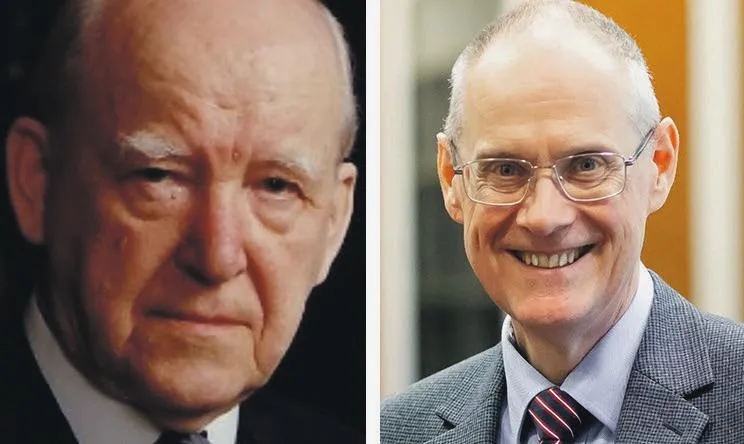
Left: Martyn Lloyd-Jones: Right: Bill James

Preaching today is too often ‘like hot food served on a cold plate,’ says a member of the FIEC’s new theology team.

Bill James, Principal of London Seminary, joins Paul Mallard, Sarah Allen, Yannick Christos-Wahab, Jon Gemmell and Martin Salter in the group, which the Fellowship of Independent Evangelical Churches says aims to provide ‘clear resources which will deepen our understanding and equip us to address pastoral needs and respond to contemporary challenges’.

In comments sent to en, James states: ‘When I was young, I remember having a profound sense of the presence of God when listening to sermons. I was brought up in Westminster Chapel and was part of the congregation that Doctor Martyn Lloyd-Jones ministered to until he retired in 1968. While I was only a child and had limited understanding, the experience left an enormous impression on me at the time and has impacted my life ever since.

‘While Lloyd-Jones was undoubtedly a genius, it was not the biggest reason for his powerful preaching. He lived in the shadow of the 1904 Welsh revival, and preached with a sense of spiritual reality and a tangible sense of the supernatural. He was, above all else, a man of prayer with a supreme sense of the Lord’s presence.

‘In the generations following Lloyd-Jones, there has been less of a sense of the supernatural in church preaching. While there is still an emphasis on his orthodox and reformed theology, there is more focus now on teaching rather than preaching, on intellectual understanding instead of moving the heart. It is like hot food served on a cold plate. There is a greater emphasis now on pragmatism in ministry and the Christian life.’

James goes on: ‘Lloyd-Jones (known as “the Doctor”) was able to engage with people’s hearts in his sermons, bringing spiritual reality into their lives and giving them a sense of being personally transformed. As a result, hundreds, if not thousands, of people became Christians through his ministry. Imagine how extraordinary it would be today if our congregations were to queue up to speak to the minister at our churches after a sermon because they were so impacted by what had been spoken. This is what I grew up with.

‘The Doctor was one of the few voices that stood against the trend of theological liberalism and unbelief that had swept through many denominations. It was for this reason that he rejected the academic model of pastoral training, as it involved alliances with secular universities which substituted the spiritual ethos of the training for a competitive, academic environment. London Seminary, which he founded, still operates on the principle of “pastors training pastors” today, and emphasises preparation for ministry rather than academic qualifications.

‘Lloyd-Jones was also instrumental in making reformed theology a mainstream conviction in evangelicalism in the UK. Back in the 50s reformed views were considered unusual, and even unacceptable. My late father-in-law, Erroll Hulse, was working in evangelistic ministry with the Nurses’ Christian Fellowship when he came to reformed convictions through the Doctor’s ministry, and was effectively expelled from the NCF. Nowadays reformed theology is widely accepted.

‘As a result, the ministry of Martyn Lloyd-Jones is still as powerful, relevant, and spiritually refreshing today as it was 50 years ago. And an appetite for his sermons is growing amongst modern believers. The Martyn Lloyd-Jones Trust – which makes his sermons freely available on their website, app and YouTube channel – has experienced unprecedented demand in recent years, with Lloyd-Jones’ sermon recordings being listened to almost 20 million times’ [see en October, p.3].

James concludes: ‘While there are many encouragements in modern evangelicalism in the UK today, we look to the Lord to bring revival. We pray for a new generation of Spirit-filled preachers who can present the gospel with power and conviction. We pray for Christian pastors and preachers today to be empowered by the Spirit to change hearts and lives. When Lloyd-Jones was asked: ‘What is the chief end of preaching?’, he replied that ‘… it is to give men and women a sense of God and His presence’. That is what we long for today.’

See also this month's editorial

Share
< Previous article| UK & Ireland| Next article >
Read more articles on:   preaching
Read more articles by en staff >>
World
‘New’ ancient sermons found

‘New’ ancient sermons found

Two newly-discovered sermons by one of the early church’s leading theologians, both on a notoriously difficult Biblical passage, are set …

UK & Ireland
I spy, with my drone in the sky...

I spy, with my drone in the sky...

… something beginning with UBM.Have you guessed it yet? It is, of course, United Beach Missions.The aerial shot …

New here?

Register and get three free articles each month!

Register

Need to advertise?

We can help you reach Christians across the country

Find out more