A radical ‘gospel rescue mission’ that began just last year in Derbyshire is seeing powerful conversions to Christ – and community leaders witnessing the extraordinary impact of the gospel.
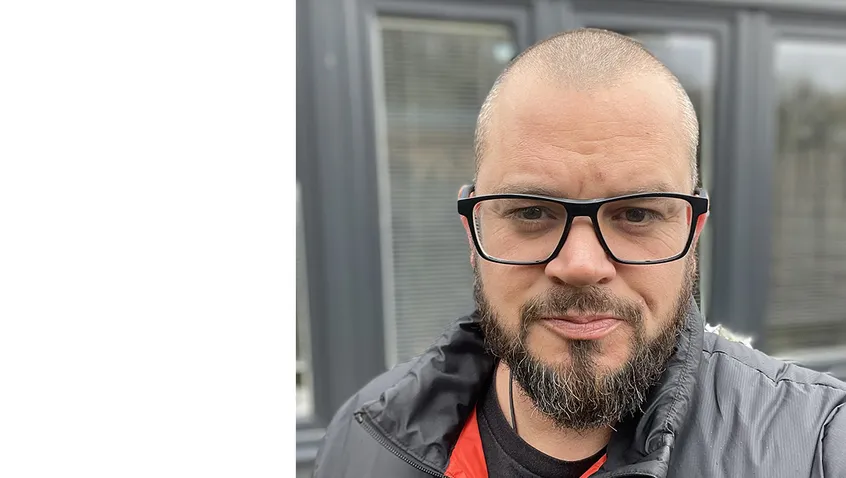
Edge Faith Community, part of the national Edge Ministries, is pioneering a form of church and faith community in super-deprived communities. Carl Beech (see photo), who runs Edge Ministries, said white working-class people are probably the most unreached people in Europe and among the most vilified.
Yet, in a matter of months, Christ’s power in the community has already been recognised by the world. ‘As the director of clinical care [at the local GP group] said to me,’ said Beech, ‘ “We can’t fix everything, but you have something we don’t.” That would be Jesus…’
The mission began locally with just four or five Christians and has grown to at least 130 with many new converts. Regular communion meals are a focal point – ‘bring and share meals’ where the gospel is always preached. Beech said: ‘Everything we do here is intended to point to gathering around a table – with the table pointing to Christ’ (see p.3 for the account of a remarkable conversion).
Edge Faith Community’s operational HQ is in Staveley, which lies nine miles south of Sheffield. Staveley has a population of around 20,000 people, with fewer than 60 attending evangelical churches.
When the local evangelical church in Tupton recognised that, while its congregation was declining, the Edge ministry was leading people to Christ and doing fruitful things, it contacted Beech and offered Edge Faith Community their building. The ministry runs a third centre in Holmehall, with a fourth building also being taken on.
Beech explains: ‘The faith community commits to eat together in communion meals; we commit to serve our wider community because if you serve it’s a good pathway to healing. We follow a very simple rule of life: Stuff We Do (see picture), which is a discipleship tool. And we commit to keeping the Sabbath holy – we’re Jesus’ hands and feet all week, we’re seeing people “in church” every day, and then we rest. And then we go again. At the centres, people come in to a public living room, and can “warm their bones” and get a hot meal.’
He explains: ‘We have fused the best of early Salvation Army – the William Booth days of radical gospel proclamation to the poor; Wesleyan principles of discipline and of holistic mission; the principles of the Brethren in terms of commitment to the Word of God; and community life and rampant charismatic house church, to create a faith community.’
‘We woo people to Jesus,’ he added, ‘not by policing them to Christ but by loving them. These are very broken, very vulnerable people who we’re healing.’ And people have repented, believed and have been baptised.
‘It’s hard and painful work,’ said Beech, ‘but the light shines in the darkness.’
The ministry provides a raft of practical help to the community: free cafes; free advice around housing, benefits and debt; free ‘preloved’ uniform shops; community gardens; pop-up health clinics, and addiction work.
They have received ‘amazing’ support from community leaders, said Beech: ‘They absolutely love us. On a Thursday in Staveley they all pop in for a cup of tea and a piece of cake’.
He tells them: ‘You do know I’m telling people about Jesus, don’t you?
And they say: ‘Oh lovely! No problem.’
Birdsong
Carl Beech tells en how he led an ex-paratrooper to Christ:
I would often see a man [let’s call him Bob] living a few doors away, walking his dogs and he’d never look at me – always looking down. He turned up at the centre in April – a former sergeant major with massive post-traumatic stress disorder (he saw his best mate get killed). We helped him with his military pension and got him involved in community gardening.
I invited him on the road with me to a ‘normal’ church where I was going to be preaching Jesus, and he came. He cried most of the day telling his stories. I dropped him home at 1am and he texted me at 8am saying: ‘Beechy, I’ve had a weird dream!’ In his dream there was a whiteboard in a rectangular room next to a small chair. On it was written ‘Airborne soldier. Identity: injustice’.
I told Bob to come over. Two weeks earlier I’d woken in the morning and told my wife I needed to buy a whiteboard. She thought it was a silly idea because I never write anything down. I bought one anyway and it sat in my office, still wrapped.
I showed Bob the whiteboard and he said: ‘That’s my dream!’ So we unwrapped it and on it he wrote ‘Airborne soldier. Identity: injustice’.
We talked for two hours about the cross. We talked about identity and Romans 8:15, about shame and survivor guilt. I said to him: ‘Being a paratrooper for 32 years was what you did, not who you are.’
We went for a walk in the woods and we stood by the bluebells, held hands and he gave his life to Christ. Then Bob looked up and he was crying and said: ‘I can hear the birds singing.’ I said: ‘What do you mean?’
He said: ‘Since I saw my mate blown up I’ve not been able to hear birdsong. As soon as I said, “Jesus help me”, my ears unblocked and I can hear the birds singing.’
And he came back to my house and he wiped the white board clean and wrote:
‘[ name ]
Son of God, father and friend
25th April 12.15pm 2022’ (see picture).
He’s a new man. I baptised him in a hot tub.
The other night, I watched him at our communion meal counselling and praying with another guy who has PTSD. This is the kind of thing we’re seeing. But we don’t sit in rows.
And my wife was right – I’ve not used the whiteboard since.

Why do I feel vulnerable when I evangelise?
What do you think the greatest fear in the Western World is? Death? Poverty? Climate Change? For decades, the number …