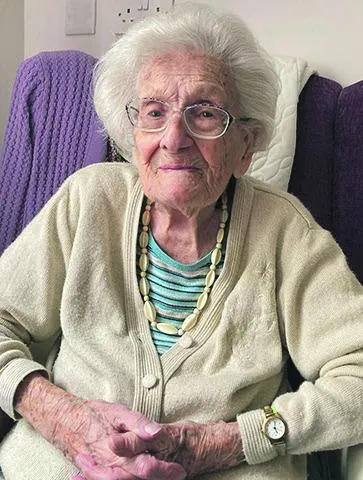
Missionary who survived massacre dies age 99
Brian Davis
Date posted: 23 Nov 2024
A missionary who survived a massacre at a mission station where she was working, many years ago, has died.
Margaret Hayes MBE had to take to the jungle with others where she survived for many weeks before being rescued, having been presumed dead – with a funeral and thanksgiving service being held for her.
Once-in-a-generation Lausanne Congress gathers for fourth time

Milla Ling-Davies
Date posted: 20 Sep 2024
In a magnificent display of unity, over 5,000 Christians from across 202 countries and territories gather in Seoul, South Korea this September. Together they will pray, listen, and discuss how Christians across the world can fulfil Jesus’ command in Matthew 28 to ‘go and make disciples of all nations’.
This ‘once in a generation’ event is run by the Lausanne Movement, which exists to mobilise Christians to collaborate in order to fulfil the Great Commission. This gathering, their fourth Congress, is only the fourth time such meeting has taken place since the movement was formed in 1974.
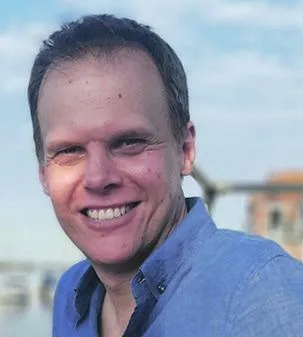
Alex Hawke appointed
SIM UK
Date posted: 10 Sep 2024
Alex Hawke has been appointed as the new UK Director for Serving in Mission (SIM).
Alex has previously served as a mission worker in West Africa, Mozambique and Cambodia, where he was the team leader of a large mission team.
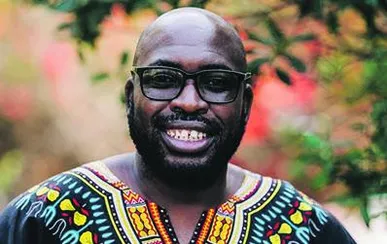
Africa Inland Mission completes merger

James Patterson
Date posted: 29 Jun 2025
Africa Inland Mission (AIM), an evangelical missionary agency, has merged its South Africa Mobilizing Office and Southern Region receiving office, forming a new ministry called AIM Southern Africa Region.
Tshepang Basupi has been appointed Director of AIM Southern Africa Region, consolidating the processes of sending and receiving missionaries, training leaders and sharing the gospel. The merger is intended to “better reflect the current and future realities of global missions” and will “enhance efforts to minister to the unreached peoples of Southern Africa”.
Tributes paid for Daniel Bourdanné
Milla Ling-Davies
Date posted: 1 Nov 2024
Daniel Bourdanné, former General Secretary of the International Fellowship of Evangelical Students (IFES), has died from cancer, aged 64.
Born in Chad, Bourdanné moved to Oxford in 2007 to lead IFES for 12 years – and from then to his death he worked with charity Africa Speaks to promote publishing Christian books across the continent. IFES Chair Michel Kenmogne said: ‘The history of the advance of the gospel throughout the world over the last four decades cannot be written without mentioning Daniel Bourdanné.’

Two complementary models of planting

Andy Lines
Date posted: 10 Mar 2026
As I look back on five years since the official launch of the Anglican Network in Europe (ANiE), it has been fascinating to reflect on the way our ministry has developed under the Lord’s guidance. In particular I’ve been able to discern two complementary models of mission through church planting.
In 2017 I was appointed as “Missionary Bishop to Europe” by GAFCON, to promote a Biblically-faithful Anglican movement in our region as an alternative to alignment with Canterbury. What is a “missionary bishop”? To summarise, we could say that it is a leader who gathers faithful individuals and emerging congregations into an Anglican fellowship and polity in a designated area. And it is to actively instigate the establishment of the church, ordaining and pastoring clergy, linking the new local movement with orthodox Anglicans globally, under the leadership of the GAFCON senior archbishops.
Caffeine and Kingdom?

Emily Pollok
Date posted: 25 Mar 2026
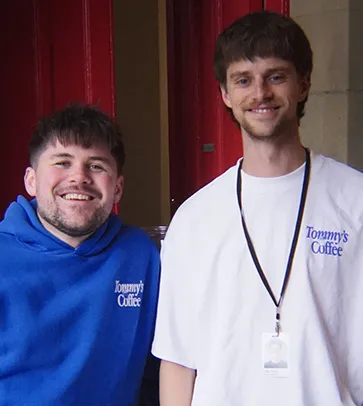
Can coffee fuel evangelism? If it’s Tommy’s Coffee, then “yes!” say directors Luke Porter and Joel Barwick, who founded the kingdom-building coffee ministry last year.
The coffee cart, based in St Thomas’ Church, Newcastle, first started serving customers in May with a mission to simultaneously caffeinate and connect with the city’s residents.
A Passion for Life ignites church outreach

Lydia Houghton
Date posted: 23 Mar 2026
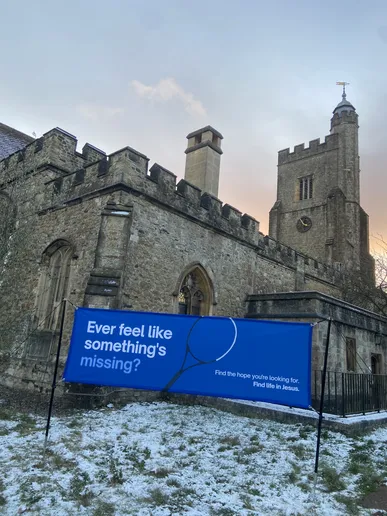
More than 340 churches are taking part in a nationwide evangelistic mission around the Easter period.
Churches as far north as Thurso, Scotland and as far south as Jersey (plus a church in France, en has been told!) are participating in Life’26 – facilitated by outreach organisation A Passion for Life (APFL) and covered in detail in both the January and February print editions of en.

1,500 attend teen mission event in Germany

Luke Randall
Date posted: 3 Aug 2025
About 1,500 people attended the 51st Teen Mission Meeting in Monbachtal, in the northern Black Forest in Germany.
The event, organised by the Liebenzellar Mission, Christian guest houses in Monbachtal and Entschieden für Christus (Decided for Jesus), featured seminars and workshops alongside discussions with missionaries and praise.
Mission isn’t easy – but isn’t that the point of it to start with?

Jonny Pollock
Date posted: 30 Mar 2025
In Western Europe, the refrain is common: mission and evangelism are hard.
It’s an oft-heard lament, one that sparks endless discussion, strategy sessions, and even discouragement among Christians. But what do we really mean when we say it’s “hard”? Beneath the surface, it often seems we’re using “hard” as a catch-all term for something deeper – uncomfortable, difficult, and complicated. These realities, while challenging, are not legitimate reasons to abandon the Great Commission, or to throw in the towel in despair. Instead, they demand that we reframe our approach, recalibrate our expectations, and reaffirm our commitment to the task at hand.
New memorial

en staff
Date posted: 5 Apr 2026
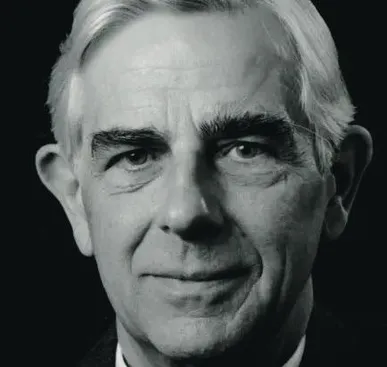
A memorial plaque was set to be unveiled in Norwich Cathedral in late March, in memory of noted evangelical bishop and hymn writer Timothy Dudley-Smith. He died in 2024.
He is best known as a writer of hymns, and the memorial stone being unveiled in Norwich Cathedral bears the line: “Tell out, my soul, the greatness of the Lord.” The unveiling and dedication of the stone was set to take place at the Cathedral’s Evensong on 22 March at 3:30pm. Timothy Dudley-Smith was greatly involved with the Church Pastoral Aid Society (CPAS), Billy Graham’s Mission England (1984) and the Evangelical Alliance from 1987 to 1992. He was Archdeacon of Norwich and Bishop of Thetford.

AI’s assault on the press

Jenny Taylor
Date posted: 2 Apr 2026
My father had a saying, an old Suffolk “saw”: “While fools go prating far and wide, we stops at ’ome, my dog and I.”
There is a certain truth in that. The world seems to be getting more “foolish”, and I am less convinced that prating far and wide – a public life of activism for its own sake, be it political or journalistic – makes much difference to the betterment of the human condition. And anything with “global” in its name makes me run for the hills.
Leading evangelical missiologist Andrew Kirk dies
Daniel Kirk
Date posted: 1 Feb 2026
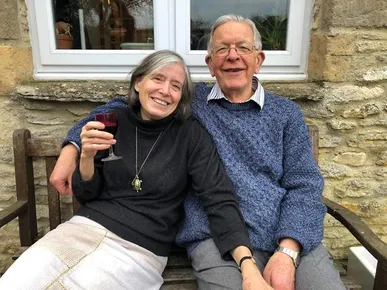
J. Andrew Kirk died on the first of January, at the age of 88, from an unexpected heart attack.
Kirk, an ordained Anglican minister for over 60 years, was a leading Evangelical missiologist in the second half of the 20th century, who was a co-founder of the influential Latin American Theological Fraternity (FTL in Spanish) as well as the London Institute of Contemporary Christianity (LICC). He wrote over 20 books, co-authored many more and wrote hundreds of journal articles; firstly as a New Testament scholar and then as a missiologist. His most important books were Liberation Theology: an Evangelical View from the Third World (1979), What is Mission? Theological Explorations (1999) and Being Human: An Historical Enquiry Into Who We Are (2019). Kirk visited and lectured in over a hundred countries and supervised postgraduate students from all the world’s continents.
en's 40th: Thanking God
en staff
Date posted: 30 Mar 2026
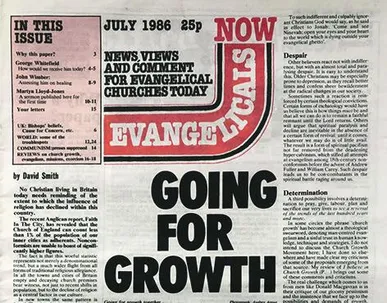
Evangelicals Now was first published in July 1986 and so, from Easter for the rest of this year, we will be celebrating the paper’s 40th anniversary with a series of events to mark the occasion.
It’s an excellent opportunity for regular readers to thank God for sustaining the publication for so long, to take stock of en’s current situation and assess future plans. You might say that this article is about Evangelicals Then, Evangelicals Now and Evangelicals to Come.
Martin Goldsmith: Much-loved Jewish disciple of Jesus

Charles Gardner
Date posted: 21 Feb 2026
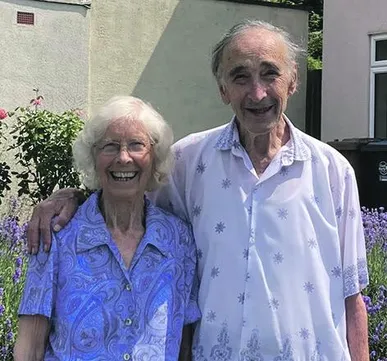
One of Britain’s most well-known Jewish disciples of Jesus, Martin Goldsmith, has died peacefully, aged 91, after an extraordinary life of service to Christ.
After ten colourful years as a missionary in South East Asia with the Overseas Missionary Fellowship (OMF), he served for over 50 years as a gifted teacher at All Nations Christian College in Hertfordshire.
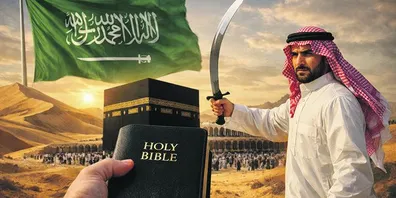
Saudi Arabia: Is a door opening for the gospel?
Luke Randall
Date posted: 28 Mar 2026
Gospel opportunities are on the rise amidst surging investment in tourism in Saudi Arabia.
The Middle Eastern nation has invested almost £600 million in its tourism sector as it aims to become a key global competitor in the industry by 2030. Platform 67, an organisation which liaises with missionaries around the world, says opportunities to share the gospel on the ground have increased as tourism booms.

Iran: ‘Streets smell of blood’
Luke Randall
Date posted: 20 Feb 2026
Christians in Iran continue to meet to grieve and pray amidst ongoing unrest and state brutality, with one person on the ground revealing that “the streets smell of blood”.
Early 2026 has seen Iran plagued by mass demonstrations, fuelled by economic hardship, against the nation’s brutal Islamic regime, led by Ayatollah Ali Khamenei and the Islamic Revolutionary Guard Corps (IRGC).
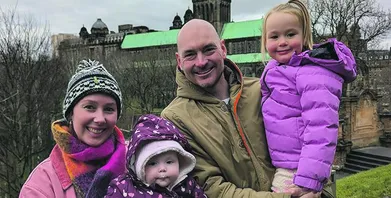
10,000 mile journey to proclaim gospel in Glasgow
Emily Pollok
Date posted: 27 Mar 2026
Scottish band The Proclaimers famously sang that they would “walk 500 miles” and indeed “walk 500 more”.
But Tim Scoular and his family have moved their lives more than 10,000 miles from Sydney to Scotland – all for the sake of sharing the gospel in Glasgow.
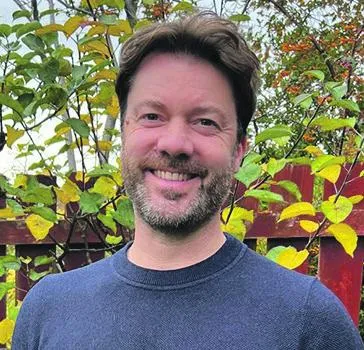
Tom Muir
Sarah Robinson
Date posted: 25 Mar 2026
Tom Muir has been inducted into the role of Church Planting Director in the Free Church of Scotland.
The induction took place at a meeting of the Edinburgh and Perth Presbytery. The Free Church is seeking to strengthen church planting across the denomination and support the development of new gospel communities in the years ahead.
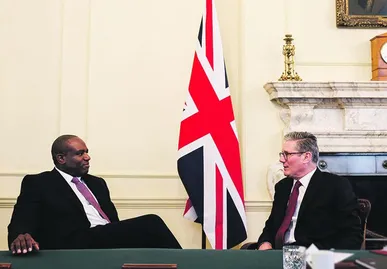
Foreign aid: An open letter to David Lammy

James Burnett
Date posted: 21 Mar 2026
Dear David, I trust you are well. I am writing to you about foreign aid cuts.
Red Nose Day, 2019
In response to Stacy Dooley’s visit to Uganda in 2019, you sought to redress the Red Nose Day narrative which, in your words, promoted a “white saviour” colonial attitude to Africa. You opined on the Victoria Derbyshire show: “Comic Relief is a 20-year-old formula that asks comedians to perform and sends celebrities – most often white – out to Africa, and that image evokes for lots of ethnic minorities in Britain a colonial image of a white beautiful heroine holding a black child, with no agency, no parents in sight.”

Evangelical alarm over Baptist vote
Emily Pollok
Date posted: 19 Mar 2026
Evangelicals in the Baptist Union say voting “none of the above” in this year’s presidential elections for the denomination may be the best option.
They say the choice of candidates on offer does not reflect the Biblical truth they wish to stand for.
Ten Questions with Steffan Job
en staff
Date posted: 8 Mar 2026
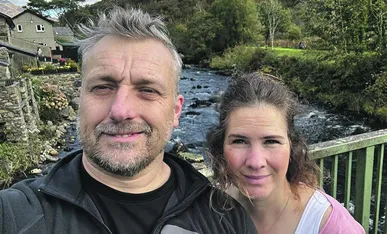
Steffan Job is the Ministry Director of the Evangelical Movement of Wales, and an elder at Capel y Ffynnon, Bangor.
1. How did you become a Christian?
Ben Stansfield to lead Global Connections
Luke Randall
Date posted: 17 Jul 2024
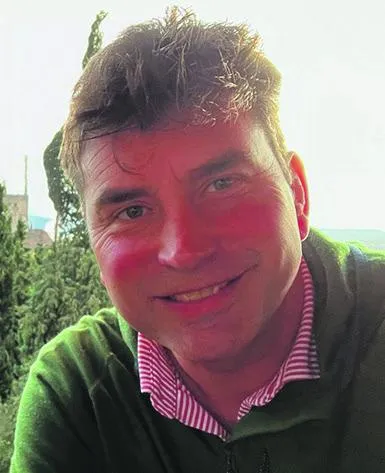
Ben Stansfield has been appointed as the new Chief Executive Officer of Global Connections, (GC) replacing Chris Wigram who had served in an interim capacity in recent months.
GC exists to equip the UK church and mission community in the world. Ben has spent over 25 years working for international charities, church ministries and discipleship ministries, so has helpful experience ahead of taking on the role.
letter from Kenya
My great-grandfather was a murderer
Kip’ Chelashaw
Date posted: 7 Mar 2026
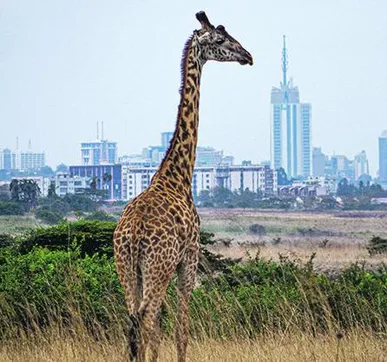
Do you know who was the first Christian in your family tree? My great-grandfather was a murderer. Shocking, and even today many traditional cattle herders in Northern Kenya kill and are killed in violent cattle raids.
After some time in prison, this murderer started attending church and was baptised with the name Noah. His son, Laban, walked 60km to find a school where he could learn to read and write. He was sent away, being too old for school, but found a mission station where he learnt to read the Bible. Laban was sent back home to start a school and a church, and he was the first in his family to reject the practice of polygamy.
Two complementary models of planting
As I look back on five years since the official launch of the Anglican Network in Europe (ANiE), it has been fascinating to reflect on the way our ministry has developed under the Lord’s guidance. In particular I’ve been able to discern two complementary models of mission through church planting.
In 2017 I was appointed as “Missionary Bishop to Europe” by GAFCON, to promote a Biblically-faithful Anglican movement in our region as an alternative to alignment with Canterbury. What is a “missionary bishop”? To summarise, we could say that it is a leader who gathers faithful individuals and emerging congregations into an Anglican fellowship and polity in a designated area. And it is to actively instigate the establishment of the church, ordaining and pastoring clergy, linking the new local movement with orthodox Anglicans globally, under the leadership of the GAFCON senior archbishops.