Politics USA
The US Supreme Court and questions of justice

Tony Bennett
Date posted: 26 Jul 2025
In the UK we are used to Parliament being the law-making body for the nation. But a recent ruling by the UK Supreme Court on the meaning of “sex” for the purposes of gender discrimination showed that sometimes it’s the Supreme Court that has the final word.
How the US Supreme Court works
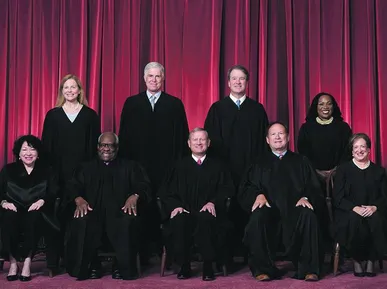
Our Supreme Court is not yet 20 years old and is only just beginning to make its mark. The United States Supreme Court, on the other hand, was created back in 1789 as a coequal branch of the federal government, alongside Congress and the Presidency. It even has the power to declare Acts of Congress unconstitutional, and thereby null and void. (The UK Supreme Court has no comparable power.) Through this power, the US Supreme Court has become the final arbiter of what the laws mean and, most importantly, what the Constitution means. That’s why most important cases of legal and constitutional importance end up there.
USA: New task force to remove ‘anti-Christian’ bias

Emily Pollok
Date posted: 18 Apr 2025
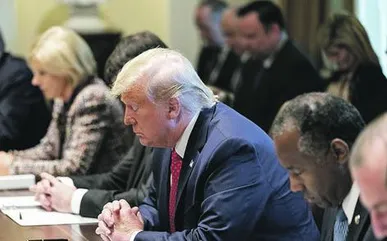
President Trump is on a mission to get rid of “anti-Christian bias” in the US, creating a task force especially for the purpose.
Headed up by Attorney General Pam Bondi, the task force is to “immediately halt all forms of anti-Christian targeting and discrimination within the federal government”, Trump announced in Washington recently during National Prayer Breakfast events.

letter from Australia
Prayer? Unlawful. Puberty blockers? Fine

David Robertson
Date posted: 4 Jun 2025
In April the New South Wales Conversion Practices Ban Act came into effect. Its stated aim is “to ban practices directed to changing or suppressing the sexual orientation or gender identity of individuals”. The reaction from the churches has been mixed.
Churches of a more “progressive” bent broadly welcome the ban. More-Biblical churches are concerned – although some leaders think that it will not make much difference. They argue that prayer is not banned. The legislation explicitly states that general religious teachings, sermons, private prayer or personal reflection are not considered conversion practices and are not illegal. For example, expressing religious beliefs or seeking spiritual guidance through prayer is permitted.