How to live in a ‘negative world’
Kenneth Brownell
Date posted: 1 May 2024
Aaron Renn is one of the most perceptive commentators on American evangelicalism as well as the broader culture.
A few years ago, he turned an online post into an article for First Things, an influential American journal on Christian public engagement, in which he described what he called the three worlds of evangelicalism. It became one of the most read and talked-about articles in the Christian world and even the secular media in the United States. He has now turned the article into a book.

A call for Christian convicted civility
Ross Hendry
Date posted: 13 Jun 2024
'It is a fact of public life that when it comes to religion and politics, the committed lack civility and the civil often lack conviction. And what we need is convicted civility' - Dr. Martin Marty.
I have long believed that this quote holds important truth for our age. In fact, ‘convicted civility’ has become something of a trademark phrase for me. CARE’s staff will exchange knowing looks when I use it in meetings, or whilst doing external media. I believe that Christians should be the preeminent embodiment of ‘convicted civility’ in the public square. Why?
Our goal is to speak truth, and to be people of confident faith; it is to apply our faith to every aspect of life, certain in God’s better story being true and good for every person. But while the gospel will cause offense, we should never seek to be offensive (Romans 1). Put another way, the ends never justify the means for a Christian.
But we do not honour God by ignoring what Jesus taught and how he lived his life. Our goal must also be to present God’s wisdom with humility, love, grace, and respect for others, especially those with whom we disagree. Our deep love for our neighbour means that, yes, we speak truth, but we always seek to do so with grace, and in love (Zech 8:16, Eph 4:15).
It is tempting, when the world’s tactics seem so effective, to justify using those same tactics for what we believe to be virtuous goals. Or we justify certain behaviours by seeking to compare ourselves to Jesus’ righteous anger and straight talking.
But when we adopt the world’s tactics, we disparage our own integrity and sacrifice our sanctification. How we do politics, and how we think and engage with political debates and activities, reveals much about where we place our trust and about who and what we wish to become.
If our goal is to become like the Lord Jesus, how is that achieved by denying every person – especially those who hold different views – with anything less than the dignity of being those who bear the image of God? How can my attitude towards those with whom we disagree not be transformed, when we remember that Jesus loved and died for them as much as me? Our witness is powerful, radical, and distinctive when we seek to live out Jesus’ teaching and example of loving our enemies, not just our friends.
Adopting political ‘dark arts’, suggests that we think the power of the Holy Spirit is insufficient, or that the world’s play book is more reliable than God’s word. When we make our priority winning arguments and seeing our desires, needs, and will win the day, it says something profound about us, that we are trusting in ourselves and in worldly powers more than in God’s plan, provision, and better story.
Looking to model convicted civility is a spiritual discipline that grows our own faith, for as John Stott wrote, 'our love grows soft if it is not strengthened by truth, and our truth grows hard if it is not softened by love.'
It is also our way of seeking the common good – a healthy public square.
Few can deny this is desperately needed. We live in a time when politicians and public figures are threatened and vilified for holding views that are counter cultural, or that disagree with vocal and active groups. Recent surveys suggest that half of us do not trust the government, and only 9% believe that politicians can be trusted to tell the truth. There is a sense that politics is broken, and the public square is toxic. We need light to guide us on a better way.
Our mission must be far greater, broader, and more ambitious than winning debates, or passing laws, important though these are. We are to be Christ-like in how we do politics, not just in what we seek from it.
So, what does Christian convicted civility look like? Well at the very least, it means we are for truth, for beauty, for listening, for respect and dignity; for kindness, conversation and accountability. And we are against falsehood, ugliness, ignorance, hate, abuse, cruelty, division, and self-righteousness.
Although this may sound like motherhood-and-apple-pie – a self-evidently ‘good’ list that no can disagree with – consider how it might look in your personal life and on a national scale.
Do we engage in conversation with those of other viewpoints humbly seeking to learn, or do we talk at others? Do we really love truth, even if it challenges our own standpoint, or do we want to stick to our own echo chamber’s talking points? What role does accountability play in promoting virtue – or is it a concept we only use when calling for those we disagree with to be silenced or sacked?
What does a beautiful public square look like, and what is our role in a beautification process that exemplifies and promotes the fruit of the Holy Spirit?
Christian convicted civility can be one of our greatest and most distinctive offerings to shape the public square for this and future generations. It is neither conditional on reciprocity nor on getting our own way. It is a remarkable, courageous, beautiful act of faithfulness and love for God and for our neighbour.
Find a range of resources to help you think, act, and pray before you cast your vote at CARE’s dedicated election website: engaGE24
Ross Hendry is CEO of Christian Action Research and Education (CARE)

Social media and our children
Glynn Harrison
Date posted: 1 Jun 2024
If you missed all the headlines about the link between smartphones and the epidemic of mental illness in children and young people, then you have not been paying sufficient attention to your social media feed.
The demand for young people’s mental health services currently stands at record levels. It began around 2012, which saw a sharp uptick in rates of childhood anxiety, depression and self-harm. And since then, the graphs have continued their upward march. Even sceptical mental health epidemiologists like me, who prefer to look at data from several different sources before making up their minds, now believe that something serious is happening to our children.

sharing Christ with Muslims
Reflecting the person of Christ – love them!
Hisham E.M.
Date posted: 1 Jun 2024
Many Western Christians see Islam as a threat, but should we not rather consider that the presence of millions of Muslims in Europe is an opportunity for mission work?
Nothing can catch God off guard (Matt.10:29; Isa. 46:9-11). Do you believe this? The Triune God never holds an urgent general assembly or an emergency committee meeting to deal with a situation He did not foresee. He knows what He is doing.

What shapes your faith? The Trinity?

Michael Reeves
Date posted: 1 Apr 2024
‘God is love’ (1 John 4:8). Those three words could hardly be more bouncy.
They seem lively, lovely, and as warming as a crackling fire. But ‘God is Trinity’? No, hardly the same effect: that just sounds cold and stodgy. All quite understandable, but Christians must see the reality behind what can be off-putting language. Yes, the Trinity can be presented as a fusty and irrelevant dogma, but the truth is that God is love because God is a Trinity.

What made Jesus tick? What does it show?
Andrew Nicholls
Date posted: 1 Mar 2024
Have you ever watched someone be far, far more loving than you, and wondered how they do it?
I can think of a lady who, in caring for her husband with worsening dementia, showed endless patience, day after day, hour after hour, minute after minute, helping him with the same ordinary little things, over and over and over again. I never saw her cross, or even a little irritated at her husband for his inability to do the simplest things or to remember anything from one minute to the next. I often wondered how I would be in a similar situation, and I’m pretty sure I would soon be irritated. Her beautiful character was a mystery to me – how did she do it? What made her tick so much better than me?

everyday evangelism
Should we ‘forget church, and just look at Jesus’?

Glen Scrivener
Date posted: 1 May 2024
In evangelism Christians have an incredible asset which too many think is a liability: the church.
Last month we considered the advertising campaign ‘He Gets Us’, and its tendency to pit a compassionate Jesus against His judgmental people. But it happens in personal conversations too. The failures of Christ’s people might come up, and the strong temptation can be to throw the church ‘under the bus’.
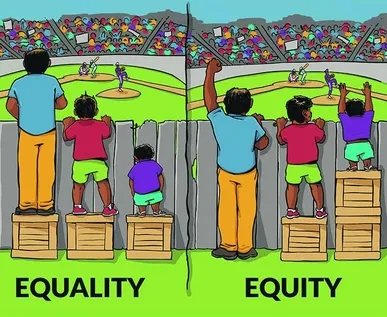
Move over Equality, Equity is the new kid in town: Here’s what it means
Tom Underhill
Date posted: 1 May 2024
Over the past few years, corporate HR departments and public bodies have quietly been wielding their Tipp-Ex in a bulk deletion of the letters ‘a’ and ‘l’. ‘Equality’ has been changed to ‘equity’ in a mass rebranding of EDI (Equity, Diversity and Inclusion) departments and initiatives.
Or maybe it wasn’t quiet: perhaps in your experience it was heralded with great fanfare. Either way, this deletion represents a significant extension of the EDI mission, now almost synonymous with the one term, Equity. So what is Equity, what does this change imply, and how should we think Christianly about these matters?

a Jewish Christian perspective
‘Are you for us or our enemies?’ Joshua 5:13

Joseph Steinberg
Date posted: 1 May 2024
Joshua entered the boundaries of Jericho at the start of Israel’s move into Canaan after the Exodus and 40 years of desert wanderings. There seems to have been a misunderstanding about the nature of what God was seeking to do – using Israel to eradicate sin from the land and establish a kingdom of righteous true-God worshippers.
It is no accident then that Joshua meets a man with a sword drawn in his hand. ‘Are you for us or our enemies?’ The man exclaims ‘No!’ He is for neither and reveals that he is none other than the ‘Commander of the LORD’s army’. Joshua, realising that he was standing before the Lord God, fell face down to the ground in reverence.
'Intense discussions' as Anglican Primates gather in Rome

Rebecca Chapman
Date posted: 1 May 2024
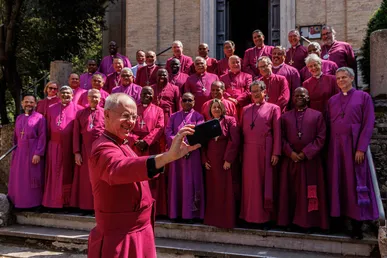
As I write, humid and thundery showers are predicted in Rome, Italy, as the Primates of the Anglican Communion reach half-time in their historic meeting.
Senior archbishops, presiding bishops, and moderators from churches across the globe have gathered for what we are told will be a time conceived as a pilgrimage. They will pray and study the book of Acts, visit holy sites in Rome, and reflect together about the mission and witness of the Church in the world.

Ten Questions: Obedience and tribalism
William Wilson
1. How did you become a Christian?
What is the value of running intensive preaching training weeks cross-culturally?
Neil Watkinson
Date posted: 1 May 2024
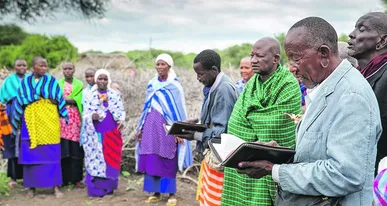
Having been involved in short intensive weeks of preaching training for pastor-preachers and Bible teachers in Africa and Asia for the last 17 years – six of them based in SE Asia with Crosslinks – it’s been good to reflect on the question: ‘Of what value are these – do they not simply run the risk of cultural imperialism, even in preaching style?’
Local churches across the globe are growing without us, as Christ is proclaimed and the gospel bears fruit. So why do such Bible teaching and preaching training?

The crossroads of evangelism

Jason Roach
Date posted: 1 Mar 2024
The most powerful information we hold as Christians is the good news of Jesus. But how can we be confident in sharing the gospel?
Picture the scene: a busy day, rushing to your local corner shop to quickly get something you have run out of at home. In the chaotic moment, you start observing the other people there, hearing the echoes of their steps and catching snippets of various conversations. Amidst the bustle, your attention is drawn to the woman behind the till. Your heart is prompted to remember that she's an image-bearer of God, precious and treasured. As your focus shifts towards her, you find yourself curious about who she is, her expression and her story - does she know Jesus? As you approach her to pay, you see the opportunity. An opportunity to reach out, spark up a conversation and find a way to talk to her about Jesus. You find yourself conflicted because you're in a hurry and there's a chance you might be misunderstood, or she might not be interested.

women in mission
Two mums, terminal cancer, shared tears - and gospel hope

Naomi Dawson
Date posted: 22 Jul 2024
For two years, Chloe and I stood in the same playground, at the same time, picking our daughters up from the same class and yet our conversation and friendship never went much further than a brief chat.
At times in those first few years it felt like I was back at school myself, wondering how everyone knew each other and how on earth I could make friends.
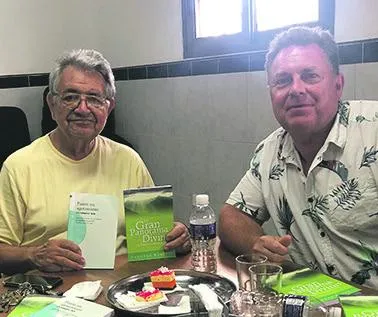
Ten Questions: Addressing your own heart
Carl Chambers
1. How did you become a Christian?
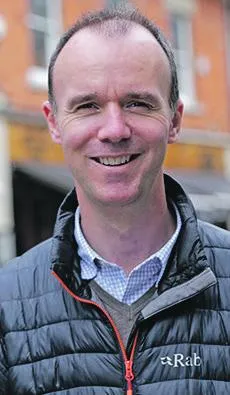
Ten Questions: Is our gospel ‘too safe’?
Paul Woolley
1. How did you become a Christian?
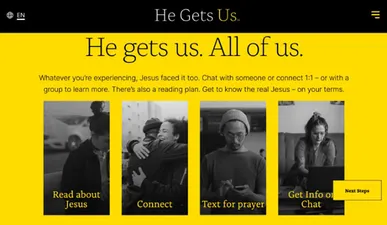
everyday evangelism
Lessons from ‘He Gets Us’
Glen Scrivener
Date posted: 1 Apr 2024
‘He Gets Us’ is a US ad campaign spending hundreds of millions of dollars to prompt faith conversations in America.
It also seeks to lead interested enquirers to do Bible reading programmes and to connect with local Alpha groups. Their most prominent advertisement to date was their 60-second Superbowl commercial, ‘Foot Washing’, re-imagining John 13 with various representatives of polarised groups washing one another’s feet. It finished with the line ‘Jesus didn’t preach hate. Jesus washed feet.’

Contagious holiness in contentious settings? Making holy the unholy
Craig Blomberg
Date posted: 1 Mar 2024
In the ancient Middle East, people took hospitality more seriously than most of us, and were more guarded with whom they ate. Most cultures had dietary restrictions and taboos. In some instances, eating the wrong food could render a person ritually unclean.
But whereas the Pharisees avoided contact with ‘sinners’ so that they would not become ritually unclean, Jesus befriended sinners – because He believed that His holiness was contagious.

defending our faith
The church is an apologetic!

Chris Sinkinson
Date posted: 1 Mar 2024
I have been writing this column in Evangelicals Now for many years. The general theme is apologetics – the defence of our faith – using reliable evidence and being aware of contemporary questions.
I have done so as a lecturer at one of our nation’s Bible colleges. Archaeology, Biblical texts, ethical dilemmas and philosophical questions are all familiar territory for anyone studying academic theology.

Are you ‘two-kingdoms’ or ‘transformationist’?
Al Gibbs
Date posted: 1 Jan 2024
One of the perennial questions that Christians ask is how the church should engage with society.
The Bible is clear that individual Christians should share God’s love with everyone in the contexts that God has placed them, but to what extent should the church, as the church, seek to influence society? There are several ways of addressing this question, but in recent years many evangelicals have gravitated to one of two paradigms – either a two-kingdoms model, or a transformationist model. These models or views can get complicated, but it’s useful for Christians to have a basic sense of the strengths and weaknesses of each, as well as being aware of the history.
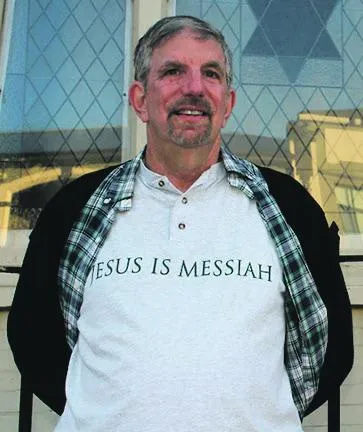
a Jewish Christian perspective
Life from the dead!
Joseph Steinberg
Date posted: 1 Feb 2024
Twenty years ago I faced a personal catastrophic event. My 65-year-old Jewish mother suddenly died from a massive heart attack. She was not a believer in Jesus. The shock of the news choked me because I had no assurance of my mother’s salvation.
A powerful feeling of fear and anxiety overcame me as I imagined my mother lost in the loneliness of outer darkness, separated from God. Those thoughts haunted me for the weeks and months that followed.

pastoral care
The God of small things

Helen Thorne-Allenson
Date posted: 1 Dec 2023
There are days when the to-do list does not feel very exciting. Weeks when the things calling for our attention feel deeply mundane.
That pile of emails, that piece of bureaucracy, that message that needs passing on – hardly cutting-edge ministry, just stuff that needs to be done. Many of us would prefer to spend our time on things that feel more strategic, more impactful – after all, what eternal fruit comes from signing some cards, chatting about refreshments or filling in a form? But take a closer look at God’s word and we see the little things of life can be filled with meaning and value; they are the context in which much can be transformed.

Are we robbing Peter to pay Paul?
David Baldwin
Date posted: 1 Dec 2023
The message of Christ is for ‘all the nations’. Every Christian celebrates this little Biblical phrase because without it we wouldn’t have heard the gospel.
Of course over time many involved in missions have found it more manageable to focus on one particular region or people group. There’s some good sense in that, but I’m far less happy when I hear missionaries saying things like I heard again the other day: ‘The Lord has only sent us among (name of people group)’.