Well, we are roughly a month into the Trump presidency and the character of the new White House is becoming very clear.
Although I have a track record of sounding the alarm regarding Donald J. Trump, in the New Year of 2025 I was trying to be quite balanced on a number of occasions. In one column I pondered whether we would get ‘Trump unleashed’ or ‘Trump lite’? That I even suggested the latter was a sign that I thought it might be possible: lots of aggressive noise but not the political meltdown that many (myself at times) feared. A few weeks in, I would like to amend that brave optimism on my part. It is ‘Trump unleashed.’
Over the years, I have become more and more convinced that, from a human perspective at least, the most important factor in determining the growth and fruitfulness of the local church is leadership.
I have studied and analysed a large number of churches that have split, closed or gone into maintenance mode, and almost without exception the problem can be traced back to a leadership issue – either a lack of leadership, the wrong people in leadership, the wrong exercising of leadership or the wrong attitude towards leaders on the part of the congregation as a whole.
Much of the response to Donald Trump’s presidency from Christians in the UK has centred on ethical assessment. Christians rightly recognise that character matters and have a concern for the disadvantaged and disenfranchised.
Moral clarity is indeed a gift Christians can offer society. And yet, discussions like this risk reducing conversations to comments from one group saying, "We need to morally condemn this thing Trump’s done," whilst others respond, "This thing he's done is good."
As Christians, we know that “Blessed are the peacemakers” (Matthew 5:9).
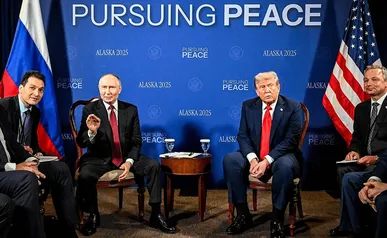
And yet we also know that what is required is more than the absence of conflict, as important as that is. For justice, wholeness and restoration are also values that are deeply embedded in scripture. The Greek-speaking writers of the New Testament used the Greek word eirene to translate Hebrew shalom and communicate its values, derived as they are from a root denoting ‘wholeness,’ ‘completeness.’ This reminds us that, as Christians, we need to look at the content of peace and what it brings. Which brings us to the recent conversation between Donald Trump and Vladimir Putin.
A response to a previously-publisheden article by Rhys Laverty which was entitled"In Defence of Trump"
In October 1922, George Orwell stepped on board the SS Herefordshire, on his way to his new life as an Indian Imperial Policeman. It was to be a short career - he resigned in 1928 to commit himself to writing.
Yet it contained one formative moment. In his short essay ‘Shooting the Elephant’, Orwell recalls the exact day he realised how powerless his role actually was. A runner had been sent for him with this message: a runaway elephant was causing damage, could he come and shoot it? Orwell arrived on scene to find not a rampaging beast, but a docile creature munching on grass. He shot it nonetheless. Not to save property, or people, but because he didn't want to look like a fool in front of the native Burmese. He was officially there as the righteous deliverer of British imperial power and justice. In fact he was a lone marionette, at the mercy of the popular mood and pressures of his role.
The first sign was a hand-written note and a whisper in the ear of the American President. Indirect negotiations between Israel and Palestine had yielded fruit. Donald Trump’s 20-point plan for peace in the Middle East could be the basis for a serious and lasting end to the conflict in Gaza.
It came two years and two days after the incident that started the war: Hamas’ devastating attack on 7 October 2023 that killed over a thousand Israelis. As Israel then attacked and invaded the Palestinian territory of Gaza, it has resulted in many thousands more deaths. The war has also led to a humanitarian crisis within Gaza leaving people without food, shelter and clean water.
The term “fin de siècle” literally means “end of the century”. But it has often been used to refer to the last decade of the 1890s, and also, more widely, to a sense of moral decay, world-weariness, and pessimism about the future of civilisation, combined with a feeling that one era is closing and another is in the process of coming.
It is a suitable term to sum up how many feel about the 2020s. It’s a decade that has already seen, in no particular order, Covid, four UK Prime Ministers, wars in Ukraine, Sudan, the DRC and the Middle East, the re-election of Donald Trump, the death of Queen Elizabeth II, the assassination of Charlie Kirk, the return of the Taliban in Afghanistan, increasing (and often under-reported) persecution of Christians globally and the continuing rise of China (see John Stevens, p.8). Technology continues to change rapidly, with the increasing adoption of Artificial Intelligence, alongside fears about how it might develop. Environmental issues continue to generate strong emotions, with negotiations for a Global Plastics Treaty, which might have alleviated pollution, collapsing in August.
One thing most British evangelicals have in common with the majority of their fellow countrymen is a shared dislike of Donald Trump. What’s more, many of us experience bafflement at Trump’s popularity among our American evangelical cousins.
I do not share this dislike and bafflement, however. As a Brit, my attitude toward American politics is largely "not my circus, not my monkey." But I want to offer a defence of Trump. And not just of why people may have voted for him back in November 2024, but why they can feel justified in having done so six months later.
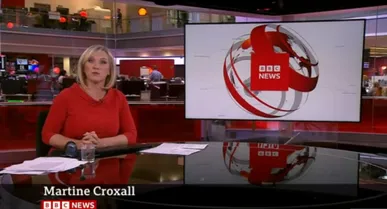
When top BBC journalist and Christian Robin Aitken put together a dossier of what he felt were glaring examples of biased broadcasts, and sent it to the then Director General and Board of the BBC in 2007, he knew his career was on the line. What he had not expected – as a BBC executive and flagship Today Programme reporter - was to be ignored completely.
Instead of addressing the message, they pensioned him off.
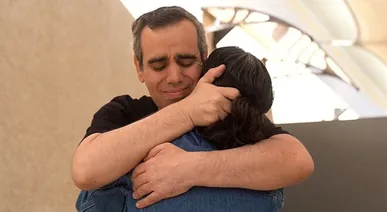
Last week there was jubilation and relief as the remaining 20 living Israeli hostages were released from Gaza. In return, Israel released 250 Palestinian prisoners and a further 1,700 detainees. This is hopefully a first tentative step towards building a peace process in the Middle East.
Of course there are many issues still to be resolved – for example, how Gaza might be governed and what the proposed multinational "stabilisation force" might look like.
There is a palpable sense that the world order is changing from the “rules-based” order established after the end of the Second World War and the American hegemony that followed the end of the Cold War, to be replaced by a multi-polar world of competing empires and spheres of influence.
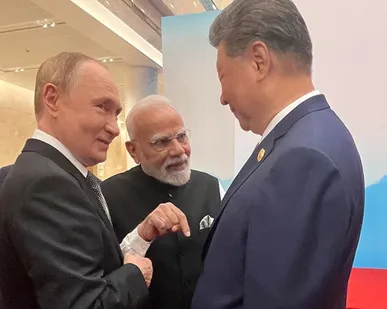
Whilst Donald Trump may speak of “making America great again”, the reality is that American isolationism is seeing a diminution of US power and influence as other nations increase their military and economic power. The military parade held in Beijing on 3 September to celebrate victory over Japan was a very visual demonstration of this new reality, as Presidents Xi Jinping and Putin stood shoulder to shoulder alongside Prime Minister Modi of India and Kim Jong Un of North Korea.
Prior to his election to a second presidency in November 2024, Donald Trump repeatedly claimed that he would easily and swiftly bring the conflict to an end.
“It’s a very easy negotiation to take place. I will have it solved within one day, a peace between them”, he said as early as March 2023, in a Fox News Interview with Sean Hannity.
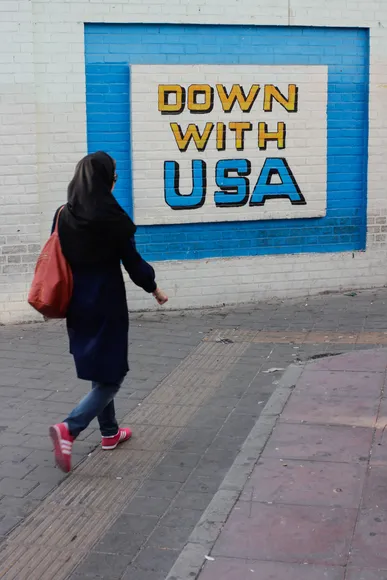
Over the weekend, the US conducted bombing strikes by air on three sites of nuclear infrastructure in Iran.
President Trump lauded the operation as a "spectacular military success" against the "world’s number one state sponsor of terror", claiming that Iran’s nuclear enrichment facilities had been "completely and totally obliterated".
The “great man theory” of history, often ascribed to the 19th-century philosopher and historian Thomas Carlyle, has a lot at least superficially going for it.
The concept posits that “universal History, the history of what man has accomplished in this world, is at bottom the History of the Great Men who have worked here. They were the leaders of men, these great ones; the modellers, patterns, and in a wide sense creators,” as Carlyle puts it.
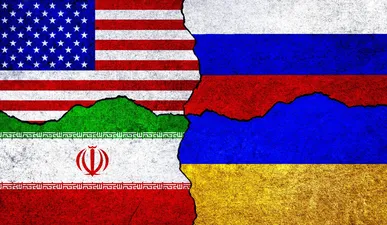
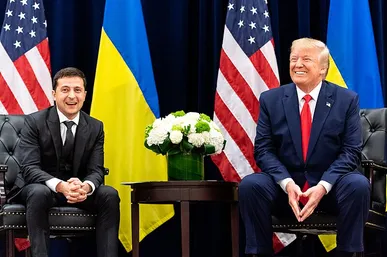
We have just marked the third anniversary of Russia’s invasion of Ukraine. Foreign leaders gathered in Kyiv to commemorate the invasion and pledge continued support to Ukraine.
President Zelensky has estimated that 46,000 Ukrainian soldiers have been killed, 380,000 wounded, and 35,000 are missing in action, likely dead.
‘US President Donald Trump has signed an executive order that prevents transgender women from competing in female categories of sports,’ a recent BBC item says.
Trump’s move followed on an earlier order which restated traditional and indeed scientific truths about men and women, declaring: ‘Ideologues who deny the biological reality of sex have increasingly used legal and other socially coercive means to permit men to self-identify as women and gain access to intimate single-sex spaces and activities designed for women, from women’s domestic abuse shelters to women’s workplace showers. This is wrong.’
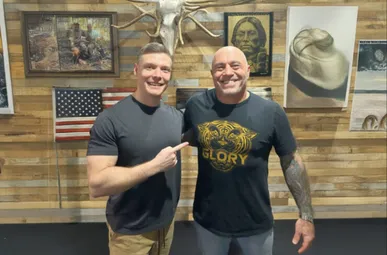
The Joe Rogan Experience is a global phenomenon. The podcast features up to three hour long conversations with diverse and interesting guests, including recently with President-elect Donald Trump.
Encapsulating the zeitgeist of our age
Rogan's laid-back interview technique allows him to explore controversial subjects in ways that mainstream media cannot. The Joe Rogan experience has attracted millions of followers for this reason.
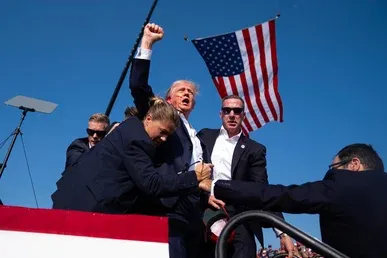

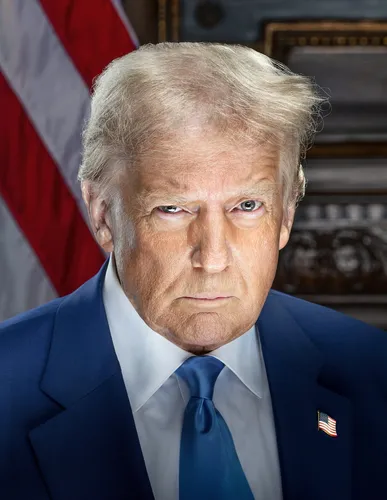


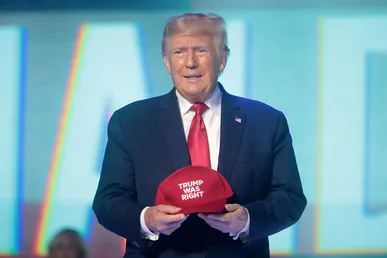





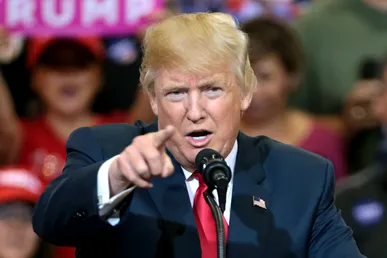






Donald Trump unleashed
Well, we are roughly a month into the Trump presidency and the character of the new White House is becoming very clear.
Although I have a track record of sounding the alarm regarding Donald J. Trump, in the New Year of 2025 I was trying to be quite balanced on a number of occasions. In one column I pondered whether we would get ‘Trump unleashed’ or ‘Trump lite’? That I even suggested the latter was a sign that I thought it might be possible: lots of aggressive noise but not the political meltdown that many (myself at times) feared. A few weeks in, I would like to amend that brave optimism on my part. It is ‘Trump unleashed.’