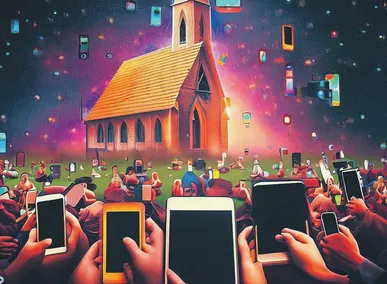
Christian community and today’s rising loneliness in the digital era
Ours is perhaps the most socially connected generation in history.
We live in an age when people can communicate almost instantaneously by email and messaging programs, talk with one another over video, and be in contact with a large number of others through social media.

UCCF: tackling loneliness at university
As campuses get bigger and social media gets louder, there is an increasing danger of loneliness in our universities.
According to recent research, people between the ages of 16 and 24 are the loneliest in our society, with one in six saying they have not found any real friends while at university.1

Loneliness
Steve Pashley
Date posted: 1 Oct 2015
Dear Sir,
I read with interest Geoff Treasure’s article ‘Loneliness’ in the September edition of en. There is however another form of loneliness distinct from the social isolation covered by the article, and which may become especially poignant if sleeplessness should invade the small hours. It is existential loneliness.




Connection and community for the lonely
After seeing a poster recently about the problem of loneliness in aged people, I wondered how bad the problem actually was. So I looked at the latest results from the Office for National Statistics about loneliness in the UK (for November).
It wasn’t as bad as I expected. Overall, only 7% feel lonely often or always, but men more than women when you break it down. As far as I could tell, the highest percentage in the “I feel lonely often or always” was 9%, and that was in the 30– 49 age group. The over-70s were actually the lowest, at 4%.