engaging with culture today
Honouring human creativity in an age of AI

Becca Nunes
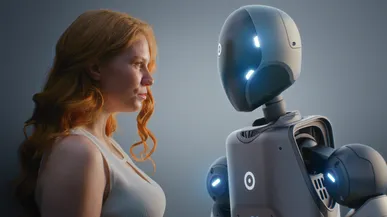
I noticed a young artist’s face drop as she watched the projected AI-generated animation playing at the front of the church. It was a quick, fun animation made as part of a children’s talk. Most people hadn’t noticed it was AI, but the subtle tells were clear to anyone familiar with image creation.
AI-generated images and videos are increasingly appearing in our social media feeds, in advertisements, education, publishing and media – and now, it seems, even in our churches. And while we discuss how much ChatGPT should shape sermons or Bible studies, the use of AI in the artwork and design we use is often overlooked. It makes sense – when budgets are tight and time short, it’s tempting to use a tool that can turn a prompt into an image in moments. But what do we lose when we are too quick to do this?

Bible app marks a billion downloads

Luke Randall
The founder and CEO of YouVersion has described the influence of their Bible app as “unimaginable” as it celebrates its billionth download less than 20 years since its inception.
The rapid development of AI has prompted questions around how far technology should go when it comes to matters of faith. However, Bobby Gruenewald believes the news that the world’s most popular Bible app is celebrating its billionth download worldwide shows the positive potential of modern technology for gospel opportunities.
AI ‘scarily parallels Biblical prophecy’

en staff
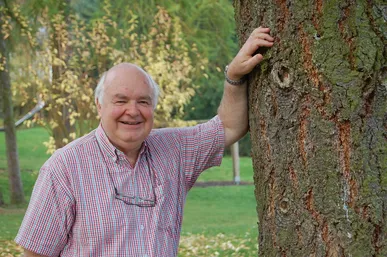
Theologian, mathematician and bioethicist John Lennox says some predictions about Artificial Intelligence (AI) taking over the world “scarily parallel Biblical prophecy”.
Writing in The Times, Lennox – whose thinking has been extensively covered in en – said: “If we are going to take seriously the view of leading scientists and engineers that AI poses an increasing threat to humanity, should we not also take seriously Biblical predictions that become more realistic by the day?”

























'AI psychosis' - a dark spiritual reality?
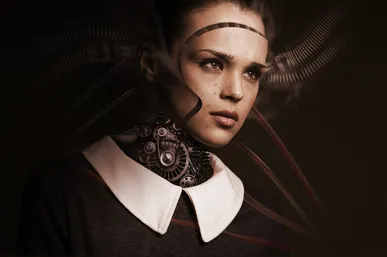
Over recent weeks, there has been growing public discussion about the concerning tech phenomenon known as “AI psychosis”.
The non-clinical term refers to the rising numbers of people who are being led into fixed false beliefs by AI large language models such as ChatGPT or Grok.