
Loving our Jewish friends in the wake of tragedy

Ziggy Rogoff
This week (7 October) marked two years since the world witnessed, with horror, a modern-day pogrom, events that shocked the modern conscience. And just last week, two British Jewish men were shot dead outside a synagogue in Manchester. How must the Jewish community be feeling?
This moment is not only about the fear and loss of the present; it’s also a reminder of deep, generational wounds.
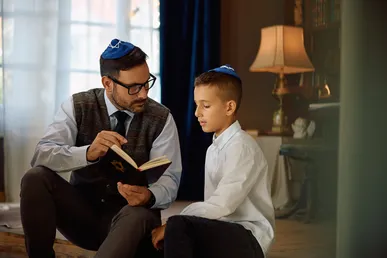
Jewish tradition and radically different interpretations of the Bible
Ziggy Rogoff
Jewish tradition is rich with interpretation, layers of meaning passed down through oral teachings, commentaries, and midrash.
Many modern Orthodox Jews hold these traditions in high regard, often giving more weight to the oral interpretations than to the written text of the Bible itself.

Rediscovering the Jewish roots of the Gospels
Ziggy Rogoff
In today's world, where Christianity is seen as distinct from Judaism, it's easy to overlook the profound Jewish roots of the New Testament. Yet, understanding the Gospels through a Jewish lens can transform our evangelism when speaking to Jewish people.
The Jewish identity of Jesus and His message
One of the most common objections to Jesus being the Messiah is that His message doesn’t seem Jewish. But Yeshua (Jesus) isn’t just Jewish; He is the Jewish King. The gospel is a message for all people but especially for Jewish people, as they were the recipients of God's promises. This good news remains as relevant for Jewish people today as it was in the first century, when 3,000 Jewish men received the Holy Spirit during the Jewish festival of Pentecost. Understanding that the gospel is rooted in Jewish culture will help you approach your Jewish friends with confidence, knowing that Jesus' message speaks directly to what it truly means to be Jewish.

Sharing Jesus with your Jewish friend
Ziggy Rogoff
You are an evangelical wanting to share the gospel with your Jewish friend.
Last year, you invited them to the carol service at Christmas, but they didn’t want to come. In January, you tried again to open a conversation about Jesus at the water cooler, and they shut you down with the answer, 'But I’m Jewish; this is not for me!'

Reaching our Jewish friends with the gospel
Ziggy Rogoff
I work with the charity Jews for Jesus. I live in a Jewish area. My neighbours are Jewish, the clubs I attend draw many Jewish people, and those I meet along the way are Jewish. However, all this said, most Jewish people hear the gospel from a gentile.
So, the first thing I encourage you to think about is, how do I go about meeting Jewish people? Do you meet Jewish people in your neighbourhood, or at work or on holiday?







Antisemitism, paradoxical accusations and the human heart
For many Jewish people in Britain today, antisemitism no longer feels like a shadow from history.
Since 7 October 2023, many Jewish communities have spoken of increased fear, hostility, and insecurity. Synagogues have strengthened security. Jewish students have described feeling more vulnerable on university campuses. Ordinary Jewish families are not quietly asking, “Why are we hated?” but, with weary resignation, saying, “We are hated.”