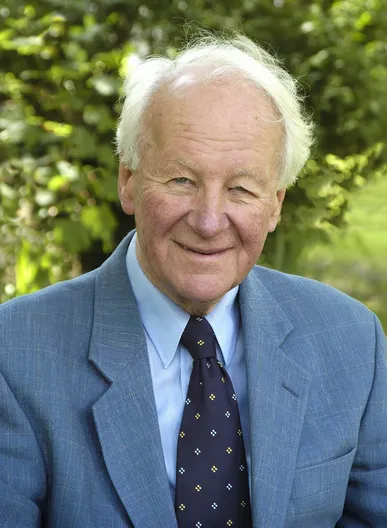
John Stott: Abrahamic and apostolic?
Chris Wright suggests the scale and scope of Stott’s ministry were epic
‘I am a great believer,’ John Stott would often say, ‘in the importance of B.B.C. Not the British Broadcasting Company, nor Bethelehem Bible College, nor even Beautiful British Columbia. But “Balanced Biblical Christianity”.’ In my own assessment of John’s life and ministry I suggest a Biblical balance of Old and New Testaments by saying that the scale and scope of John Stott’s significance within the global church has been both Abrahamic and apostolic.

AS FEAR GOES VIRAL…
‘If you think you’re too small to make a difference, you’ve never spent a sleepless night with a single mosquito.’ So runs a saying we learned while living in India. Tiny things punch way above their weight. And a virus is a lot smaller than a mosquito.
In fact, viruses are among the smallest life forms on our planet. Somewhere between 20–400 nanometres, 100 times smaller than bacteria, and too small to see even with a normal microscope. You’ll need an electron microscope to spot a coronavirus, or Covid-19, as we must now call it, like somebody out of Star Wars. But what an impact that infinitesimally small organism has made!




Why evangelism and social engagement go together
John Stott advocated “double listening” – that is, listening to the Word of God (to believe and obey it), and listening to the world around us (to understand and engage with it). He also insisted that evangelism and social engagement are both integral parts of the church’s holistic mission – like two blades of a pair of scissors or two wings of a bird.
The trouble is that some churches are good at one or the other but not both. Some preach and teach the Word, but avoid too much involvement in social issues. Others invest heavily in addressing the needs they see in the world around them, but are not known for evangelism or Biblical preaching.