In Western Europe, the refrain is common: mission and evangelism are hard.
It’s an oft-heard lament, one that sparks endless discussion, strategy sessions, and even discouragement among Christians. But what do we really mean when we say it’s “hard”? Beneath the surface, it often seems we’re using “hard” as a catch-all term for something deeper – uncomfortable, difficult, and complicated. These realities, while challenging, are not legitimate reasons to abandon the Great Commission, or to throw in the towel in despair. Instead, they demand that we reframe our approach, recalibrate our expectations, and reaffirm our commitment to the task at hand.
Facing the challenge of ‘uncomfortable’
At its heart, evangelism requires stepping out of our comfort zones. The command of Jesus was that we would go first and foremost, and His words to the apostles in Acts 1:8 sent them towards Jerusalem, Judea, Samaria and to the ends of the earth. Each sphere was further from the centre, but also differing in terms of knowledge and culture. What they shared would be very much the same, the gospel of the Kingdom, but how they would share it would inevitably be different, as would be the responses of the hearers. In Western Europe, where secularism reigns and religious discourse is often unwelcome, sharing the gospel can feel like swimming against the tide of cultural norms. The fear of rejection, the potential awkwardness of spiritual conversations, and the risk of being misunderstood make the task profoundly uncomfortable. Possibly.

However, discomfort is not a valid excuse for inaction. The gospel is inherently counter-cultural – it calls people to repentance, to acknowledge their sin, and to follow Jesus as Lord. These are not easy truths to share or receive, but they are necessary. Consider the apostle Paul, who declared: “We proclaim Christ crucified, a stumbling block to Jews and folly to Gentiles” (1 Cor. 1:23). Paul didn’t shy away from the discomfort of sharing a message that offended cultural sensibilities. Instead, he leaned into the reality that the gospel would always challenge the status quo.
For us, the challenge is to embrace discomfort as part of our calling. Whether it’s initiating a conversation with a sceptical colleague or explaining our faith to a friend steeped in secular assumptions, we must trust that the Holy Spirit works in our weakness (2 Cor.12:9).
Navigating the ‘difficult’
Mission work is also difficult because it often yields results that are slow and incremental. In an age of instant gratification, we are conditioned to expect quick wins and measurable outcomes. Yet the kingdom of God operates on a different timeline, just as God’s economy is not like ours. Jesus compared it to a mustard seed, the smallest of all seeds, which grows into the largest of garden plants (Mark 4:31-32). This imagery reminds us that kingdom growth often starts small and requires patience. Indeed, we must not neglect to realise that it is in the waiting that God is often working in us before He works through us.
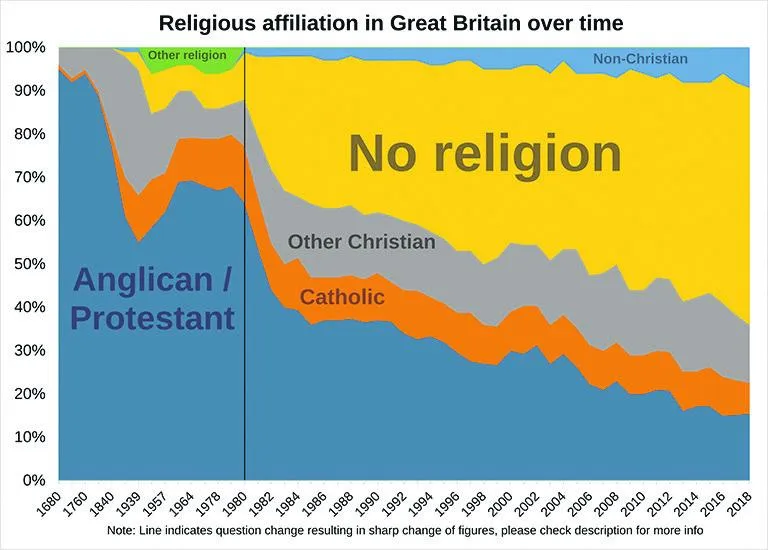
The difficulty of mission is compounded by the reality that Western Europe is spiritually resistant. Churches face dwindling attendance, and the gospel is often met with apathy rather than hostility. But difficulty is not the same as impossibility. The early church thrived in an environment far more hostile than ours. It was born in the shadow of the Roman Empire, a context where proclaiming Jesus as Lord was both dangerous and counter-cultural.
Our task is not to lament the difficulty, but to persevere through it. We must trust that God is still at work, even when the fruit of our labour is not immediately visible. As Paul reminds us in Galatians 6:9: “Let us not grow weary of doing good, for in due season we will reap, if we do not give up.” Yes, mission and evangelism are hard work, and yet understanding theologically that it is primarily God’s work to open eyes, ears, minds and hearts to receive His gospel will help us considerably.
Untangling the ‘complicated’
Western Europe’s post-Christian landscape is undeniably complicated. Cultural shifts, historical baggage and intellectual scepticism create a tangled web of obstacles for mission and evangelism. The decline of institutional trust, including trust specifically in the church, means that many people view Christianity with suspicion. Additionally, the rise of pluralism has fostered a belief that all religions are equally valid – or indeed equally irrelevant.
Complication, however, should not lead to a paralysis of indecision. The complexity of our context calls for creativity, adaptability, and a willingness to listen. Yet, we must ask ourselves if we are wading through the mud of traditions that are no longer contextually applicable, or training people for a context that doesn’t exist anymore. Jesus modelled this when He met people where they were – whether it was the Samaritan woman at the well, the tax collector in the tree, or the fisherman by the sea. He engaged them on their terms, addressing their questions and needs before calling them to follow Him.
For us, untangling the complications of mission means prioritising relationships. Evangelism is not about delivering a one-size-fits-all presentation of the gospel but about entering into people’s lives incarnationally, understanding their stories, and walking with them toward Jesus. It is connecting their story to the story of the gospel. It also means grappling with the tough questions people have about faith – questions about suffering, justice, and the reliability of Scripture. While these conversations are challenging, they are opportunities to demonstrate the richness and relevance of the gospel. Nevertheless, these aren’t questions disconnected from life, so our mission and evangelism may be complicated by the fact that we are engaging in the lives of a complicated people – and that is the way it should be!
Why ‘hard’ is no excuse
When we boil down evangelism and mission to being “hard”, we risk obscuring the deeper issues at play. We also risk excusing ourselves from obedience. Jesus never promised that following Him would be easy. In fact, He said quite the opposite: “If anyone would come after me, let him deny himself and take up his cross and follow me” (Matt.16:24).
The reality is that mission and evangelism have always been hard. They were hard in the first century, and they are hard in the 21st. But the hardness of the task does not negate its importance. The Great Commission is not contingent on ease or comfort – it is a command rooted in the authority of Jesus and the power of the Holy Spirit (Matt. 28:18-20).
Instead of lamenting the hardness of mission, we should ask ourselves some hard questions. Why are we avoiding certain places or people? Is it because we genuinely believe the task is impossible, or because it feels too uncomfortable, difficult, or complicated? Are we measuring success by cultural standards of efficiency and visibility, or by kingdom standards of faithfulness and perseverance?
Moving forward with faithfulness
To be faithful in mission and evangelism in Western Europe, we must confront our excuses head-on. Yes, it is uncomfortable to share the gospel in a secular culture. Yes, it is difficult to persevere when results are slow. Yes, it is complicated to navigate the barriers of scepticism and pluralism. But none of these realities are reasons to shrink back.
Instead, we must rely on the power of the Holy Spirit, who equips us for the task. We must cultivate a deep love for the people we are trying to reach, seeing them not as projects, but as individuals made in the image of God. And we must anchor ourselves in the hope that the gospel is still “the power of God for salvation to everyone who believes” (Rom. 1:16).
Mission and evangelism are hard – but that’s precisely why they matter. If we are willing to embrace the discomfort, persevere through the difficulty, and untangle the complications, we will find that God is faithful to work through our obedience. Let us not abandon the task but press on, trusting that the Lord of the harvest is still at work in Western Europe.
Beyond the algorithm: Faithfulness in a 'viral' age
My son does social media for his part-time job. Part of the task is creating posts for the business's social …