
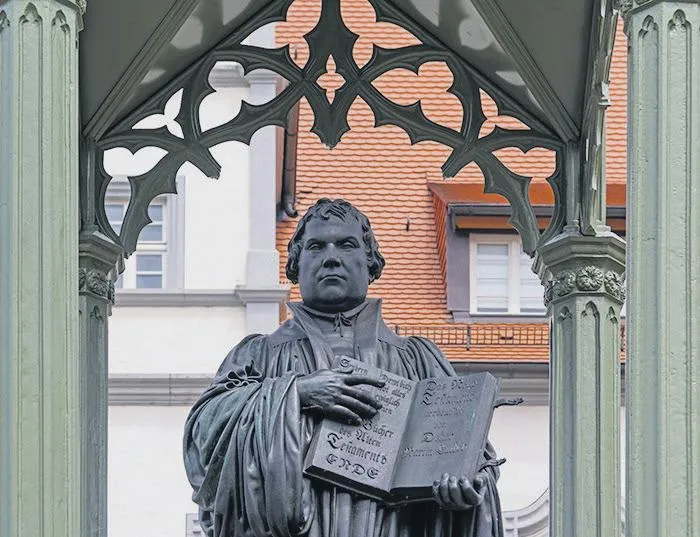
On 18 April, 1521, almost exactly 500 years ago, Martin Luther experienced what was probably the most dangerous moment of his entire life.
He had been asked to appear before the Holy Roman Emperor, the Spaniard Charles V, at the imperial Parliament (Diet) which had been called to meet at Worms, which was situated on the Upper Rhine, about 40 miles south of Frankfurt.
Luther’s teaching
In the previous four years there had been a number of attempts by key authorities in the Roman Church to convince Luther of the errors of his teaching that Christians are declared righteous by a holy God simply by faith alone in the crucified Christ. It was rightly understood by all who took part in the ensuing controversy that Luther’s views rendered much of the medieval system of piety utterly worthless. Charles had been given the authority to burn Luther at the stake if he refused to recant.





'An angular Messiah is our only hope'
Having devoured Jonathan Freedland’s The Escape Artist (2022) with fascination, I wasn’t going to miss reading his latest, The Traitors …