It is all too easy for teachers to use Biblical words but for the meaning to be far from Biblical. The apostle Peter longed for all God’s people to think clearly, saying:
'Dear friends, this is now my second letter to you. I have written both of them as reminders to stimulate you to wholesome thinking. I want you to recall the words spoken in the past by the holy prophets and the command given by our Lord and Saviour through your apostles.' 2 Peter 3:1-2
Christians need to be constantly reminded what God is teaching us in His Word.
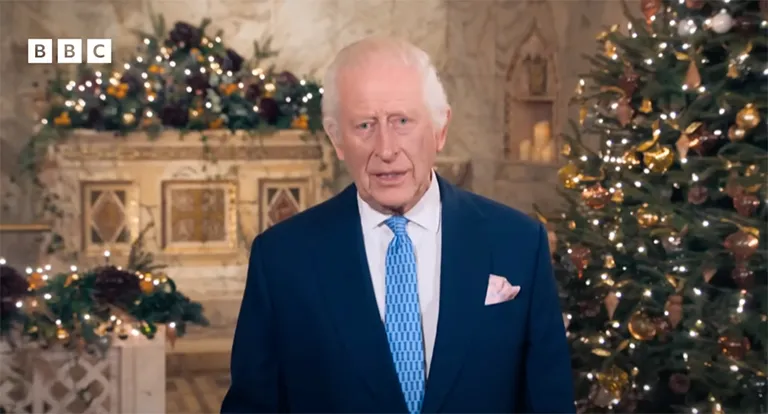
We can all applaud the desire of Charles III, our King, to bring the varied people of Britain into a harmonious United Kingdom. However it is not right to sacrifice truth for this ambition. The King’s Christmas Speech to the Nation in 2024 did refer to Jesus’ behaviour, his example, but sadly omitted what he taught. These are some of the words our King said in this speech:
'The example that Jesus gave us is timeless and universal. It is to enter the world of those who suffer, to make a difference to their lives and so bring hope where there is despair.'
'As the famous Christmas Carol, Once In Royal David’s City reminds us, "Our Saviour holy" "came down to Earth from Heaven", lived among "the poor and mean and lowly" and transformed the lives of those he met, through God’s "redeeming love".'
'That is the heart of the Nativity Story and we can hear its beat in the belief of all the great faiths in the love and mercy of God in times of joy and of suffering, calling us to bring light where there is darkness.'
Biblical words were used, but their meaning has been changed. The King talked about the example of Jesus who suffered for others and suggests that this love is the point of his coming. He used the words ‘Saviour holy’ and ‘who came down to Earth from Heaven,‘ but only as the words of a hymn not the Bible. What he goes on to say about other faiths suggests that his Jesus is only ‘a Saviour’ and not ‘the Saviour of the whole world’.
Charles then returned to the doctrine that Jesus came to remind us to love others. He says that this is ‘the heart of the Nativity Story’ which he thinks is also the core of the teaching of ‘all the great faiths’. No, no, no - the heart of the ‘Nativity Story’ is that Jesus is the embodiment of God, the creator and Lord of all people, who has entered his world to save a people from the consequences of their rebellion against God.
He mentioned redemption in such a way that makes it mean that it is our love for others that redeems relationships. Again no, in the Bible redemption is a uniquely Christian teaching and refers to what Jesus entered this world to do, to buy back lost people so we can enjoy a relationship with God. He did this by paying the price that our sin deserves. He became our substitute or scape-goat.
Other faiths suggest that if we live good enough lives God will accept us but the Bible repeatedly rejects this. It teaches that no-one can think and live as God requires and that our sin separates us from God. Our only hope is to be ransomed or saved by God himself. This is what Jesus did for his people when he died for us on the cross. Those who become followers of Jesus become his chosen people whom he will firstly save and then empower to live with him both now and in eternity. The Bible is clear that those who reject the rule of Christ in their lives will be eternally separated from God.
This Protestant message is certainly not the core teaching of all great faiths and to suggest that it is is wrong.
How can the head of the Church of England be so mistaken? Who advised him over his script? At his coronation King Charles had given a promise to uphold the Protestant faith given us in the Bible. These are the words he said:
Archbishop of Canterbury: 'Will you to the utmost of your power maintain the Laws of God and the true profession of the Gospel? Will you to the utmost of your power maintain in the United Kingdom the Protestant Reformed Religion established by law?'
The King: 'All this I promise to do.'
The King also gave an oath: 'I, Charles, do solemnly and sincerely in the presence of God profess, testify, and declare that I am a faithful Protestant, and that I will, according to the true intent of the enactments which secure the Protestant succession to the Throne, uphold and maintain the said enactments to the best of my powers according to law.'
How can he now claim that the faith of the Bible is similar to ‘the belief of all the great faiths’. Buddhism does not even believe in a God. The teaching of the Qur’an is very different to that of the Bible. Faith in Jesus is built on the rock of truth whereas, as my book ‘the Origins of Islam’ indicates, Islam is built on very shaky sands. Without a personal faith in Jesus there is no salvation, according to the Bible.
The apostle John clearly expresses the teaching of the apostles: 'For God so loved the world that he gave his one and only Son, that whoever believes in him shall not perish but have eternal life.' John 3:16
The apostles were very clear, to reject the rule of Jesus is to reject eternal life. John concludes: 'Whoever believes in the Son has eternal life, but whoever rejects the Son will not see life, for God’s wrath remains on him.' John 3:36
'And this is the testimony: God has given us eternal life, and this life is in his Son. Whoever has the Son has life; whoever does not have the Son of God does not have life.' 1 John 5:11-12
These passages emphasise that eternal life is inseparable from having a personal relationship with Jesus. This is the clear teaching of Jesus: 'Whoever acknowledges me before others, I will also acknowledge before my Father in heaven. But whoever disowns me before others, I will disown before my Father in heaven.' Matthew 10:32-33
Clearly Jesus is not just concerned that we love others but that we first we love him, our creator and Lord. His message has never changed; this, indeed, is ‘the true profession of the gospel’.